
Introduction
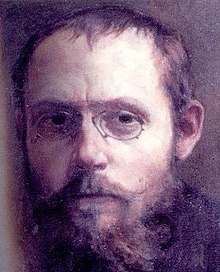
Charles Péguy, born on January 7, 1873, in Orléans, France, remains a profound and complex figure in French literature, philosophy, and religious thought. His journey from humble beginnings to becoming a renowned essayist, poet, playwright, and critic reflects the evolving intellectual landscape of late 19th and early 20th century France. Péguy’s life, marked by significant transitions from socialism to Catholicism, is emblematic of the broader ideological shifts occurring in Europe during this period. His works, deeply rooted in his personal experiences and philosophical convictions, continue to resonate, offering insights into the interplay between faith, politics, and art.
Early Life and Education
Charles Péguy was born into a family of modest means in rural Orléans. His father, Désiré Péguy, was a carpenter who tragically passed away from injuries sustained during the Franco-Prussian War, just months after Charles was born. This left his mother, Cécile Quéré, to raise him and his siblings. Cécile, along with Charles’s grandmother, worked as chair-caners, a trade that Péguy himself assisted with during his youth. Despite their illiteracy, these maternal figures played a crucial role in shaping Péguy’s early understanding of the world, particularly through oral storytelling, which instilled in him a deep appreciation for the French language and rural traditions.
At the age of seven, Péguy was enrolled in school, where he began to excel academically. His first teacher, Monsieur Fautras, who Péguy later described as “gentle and serious,” introduced him to the basics of education, including catechism. Péguy’s intellectual potential quickly became evident, and in 1884, he obtained his elementary school certificate.
Thanks to a scholarship, Péguy was able to continue his education at a local lycée. His academic journey eventually led him to the prestigious Lycée Lakanal in Paris in 1891. Here, Péguy was exposed to a broader intellectual milieu, further fueling his burgeoning interest in literature, philosophy, and politics.
University Years and Early Political Engagement
In 1894, after an initial failure, Péguy was admitted to the École Normale Supérieure, one of France’s most elite institutions of higher learning. This period was pivotal in Péguy’s intellectual development. He immersed himself in the study of classical Greek and Latin texts, while also exploring the ideas of socialism and revolution espoused by thinkers like Pierre-Joseph Proudhon and Pierre Leroux. Péguy’s engagement with these radical ideas reflected his deep-seated desire for social justice and a utopian vision of a society where all could find salvation.
During this time, Péguy also encountered Henri Bergson, a philosopher whose ideas on time and free will would leave a lasting impression on him. However, Péguy’s intellectual journey was not confined to academia. He became increasingly involved in the political movements of his day, aligning himself with socialist causes and participating in the defense of Alfred Dreyfus, a Jewish officer wrongfully accused of treason in a highly publicized scandal that divided France.
The Shift from Socialism to Catholicism
Péguy’s early fervor for socialism began to wane as he grew disillusioned with the movement’s increasingly materialistic focus. On May 1, 1898, he founded the “Libreria Bellais” near the Sorbonne in Paris, a bookstore that he hoped would serve as a hub for intellectual and political discourse. Unfortunately, the venture was short-lived, leading Péguy to focus his energies on other projects.
One of these projects was the founding of the literary journal Cahiers de la Quinzaine in 1900. The journal, which published works by emerging literary talents, became a platform for Péguy’s evolving ideas. Over the next thirteen years, Péguy published 229 issues of Cahiers, establishing himself as a significant figure in French literary and intellectual circles. During this period, he also formed close relationships with prominent writers and thinkers, including Romain Rolland, Julien Benda, and André Suarès.
By 1907, Péguy had undergone a profound spiritual transformation, converting to Catholicism. This conversion marked a significant turning point in his life and work. Péguy revisited and revised his earlier play about Joan of Arc, infusing it with a renewed religious fervor. His portrayal of Joan as a symbol of divine salvation reflected his own spiritual journey and his belief in the redemptive power of faith.
Literary Achievements and Legacy
Péguy’s literary output during the early 20th century was prolific, though not always well-received by the public. His works, often characterized by their intense spirituality and moral urgency, struggled to find a wide audience. Despite this, Péguy remained undeterred, continuing to write and publish in Cahiers de la Quinzaine.
Among his most notable works are the “mysteries” he wrote after his conversion, including The Portal of the Mystery of Hope (1911) and The Mystery of the Holy Innocents (1912). These texts, blending poetry, drama, and theological reflection, are considered some of his most profound contributions to French literature. They explore themes of suffering, redemption, and the nature of divine grace, reflecting Péguy’s deepening Catholic faith.
In 1912, Péguy’s youngest son, Pierre, fell seriously ill. Péguy, in a display of devout faith, vowed to undertake a pilgrimage to the Cathedral of Chartres if his son recovered. When Pierre indeed recovered, Péguy fulfilled his vow, walking 144 kilometers over three days to the cathedral. This pilgrimage, completed in the heat of summer, was a testament to Péguy’s profound religious devotion.
In December 1913, Péguy published Eve, a monumental poem consisting of 7,644 verses. The work, though challenging and complex, is regarded as one of his most ambitious literary achievements. It offers a sweeping meditation on human history, sin, and redemption, blending Péguy’s literary prowess with his deep theological insights.
The Outbreak of World War I and Péguy’s Death
The outbreak of World War I in 1914 marked the final chapter of Péguy’s life. Despite his age and the risks involved, Péguy volunteered to serve in the French army. His decision to enlist was driven by a sense of duty and patriotism, as well as his belief in the justness of the French cause.
Tragically, Péguy’s life was cut short on September 5, 1914, during the first day of the Battle of the Marne. He was killed in action, becoming one of the many intellectuals and artists who perished in the war. Péguy’s death was a significant loss to French culture, but his legacy lived on through his writings, which continued to influence future generations.
Conclusion
Charles Péguy’s life and work offer a rich tapestry of intellectual and spiritual exploration. His journey from socialism to Catholicism, from political activism to literary achievement, reflects the complexities of his character and the turbulent times in which he lived. Péguy’s unwavering commitment to his beliefs, despite the challenges he faced, makes him a compelling figure in the history of French thought.
Péguy’s legacy is one of profound intellectual and spiritual inquiry, a legacy that continues to inspire those who seek to understand the intersections of faith, politics, and literature. His works, though often challenging, remain essential reading for anyone interested in the rich cultural and philosophical heritage of early 20th century France.


