
Introduction
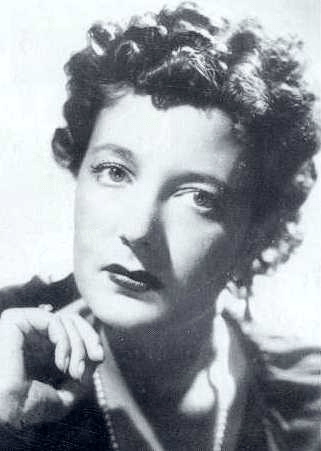
Clara Petacci, often referred to as Claretta, is one of the most enigmatic figures of 20th-century Italian history. Born on February 28, 1912, in Rome, Italy, Petacci’s life is inextricably linked to her infamous relationship with Benito Mussolini, the Italian dictator who led the country during World War II. Her story is one of passion, devotion, and ultimate tragedy, reflecting the tumultuous times in which she lived. This article delves deep into Clara Petacci’s life, exploring her rise to notoriety, her relationship with Mussolini, and the dramatic end that sealed her place in history.
Early Life and Background
Clara Petacci was born into a well-to-do family in Rome. Her father, Dr. Francesco Saverio Petacci, was a prominent physician who served as the primary doctor to the Vatican, while her mother, Giuseppina Persichetti, came from a noble family. Growing up in a privileged environment, Clara, along with her siblings, enjoyed a comfortable upbringing. However, it was clear from an early age that Clara harbored ambitions beyond the conventional life expected of her.
From a young age, Clara showed a strong interest in the arts, particularly painting and cinema. Her beauty and charm were noted by many, and she possessed a keen intellect and a strong will. These qualities would later attract the attention of one of Italy’s most powerful men, Benito Mussolini.
The Fateful Encounter with Mussolini
Clara Petacci’s life changed irrevocably on April 24, 1932, when she first met Benito Mussolini at the Rotonda di Ostia, a popular seaside resort near Rome. At the time, Clara was just 20 years old, while Mussolini was 48 and already the established leader of Italy. This meeting marked the beginning of an intense and clandestine relationship that would last until their deaths.
Despite her youth and beauty, Clara was captivated by Mussolini, a man nearly 30 years her senior. She admired him not only for his political power but also for his charisma and commanding presence. For Mussolini, Clara represented an idealized form of feminine devotion and loyalty, traits he valued deeply. Their relationship quickly evolved into a passionate affair, despite the fact that Mussolini was married with children.
A Life in the Shadows
Clara Petacci’s relationship with Mussolini was marked by secrecy and discretion. Although their affair was widely rumored, it remained largely hidden from the public eye. Clara was fiercely devoted to Mussolini, often waiting for hours in a small room where they would meet, patiently enduring the indignities and humiliations that came with being the mistress of a powerful man.
Despite the intensity of their relationship, Clara never demanded that Mussolini leave his wife, Rachele, for her. Instead, she accepted the role of the “other woman,” fully aware of the limitations and sacrifices it entailed. Her loyalty to Mussolini was absolute, and she remained by his side through the highs and lows of his political career, including the dark days of World War II and the eventual collapse of the Fascist regime.
The Impact of World War II
The outbreak of World War II brought significant challenges to Clara Petacci’s life. As Mussolini’s grip on power weakened and Italy became increasingly embroiled in the conflict, Clara’s position became more precarious. Following the fall of the Fascist regime in 1943, Mussolini was arrested and deposed, leading to a period of intense uncertainty for Clara.
On July 25, 1943, after the collapse of the regime, Clara was arrested along with Mussolini but was released a few weeks later on September 8, 1943, following the signing of the Armistice of Cassibile. As Italy descended into chaos, Clara and her family fled Rome, eventually seeking refuge in northern Italy, which was under German control.
During this period, Mussolini established the Italian Social Republic, also known as the Republic of Salò, a puppet state supported by Nazi Germany. Clara relocated to a villa in Gardone, near Mussolini’s residence, where she remained close to him during these final, tumultuous years of his life.
The Final Days: Flight and Capture
As Allied forces advanced through Italy in 1945, it became clear that the war was coming to an end, and Mussolini’s regime was on the brink of collapse. On April 25, 1945, Clara Petacci and her brother Marcello joined Mussolini and other high-ranking Fascists in a desperate attempt to flee north toward the Swiss border. Their plan was to escape capture by the advancing Allied and partisan forces.
On April 27, 1945, Mussolini and Clara were intercepted by Italian partisans in the town of Dongo, near Lake Como. Despite efforts to disguise themselves, the group was recognized and detained. The following day, April 28, 1945, Clara and Mussolini were executed by firing squad in the small village of Giulino di Mezzegra.
Clara’s execution, unlike Mussolini’s, was not based on any formal charges or legal proceedings. Her death was primarily a result of her association with Mussolini and her unwavering loyalty to him. Despite offers from the partisans to spare her life, Clara refused to leave Mussolini’s side, choosing instead to die with him.
The Tragic Aftermath
The day after their execution, the bodies of Clara Petacci and Benito Mussolini, along with several other Fascist leaders, were transported to Milan. In a grim spectacle, their corpses were hung upside down at Piazzale Loreto, a public square in the city, where they were subjected to brutal acts of desecration by the vengeful crowd. This public display was a symbolic act of retribution for the atrocities committed during Mussolini’s rule, particularly the massacre of 15 partisans at the same site in August 1944.
Clara Petacci’s death at the age of 33 marked the end of a life defined by intense passion, loyalty, and a tragic devotion to a man whose legacy would forever be stained by the horrors of war and dictatorship.
Historical Context and Legacy
Clara Petacci’s life and death are inextricably linked to one of the most turbulent periods in Italian history. Her relationship with Mussolini offers a unique window into the personal dimensions of power, loyalty, and love during a time of intense political and social upheaval. While Mussolini’s legacy is one of infamy, marked by the brutalities of Fascism, Clara’s story is often viewed through a more nuanced lens, as a tale of tragic devotion and the personal cost of political ambition.
Clara Petacci has been both vilified and romanticized in the years since her death. Some view her as a naive young woman who fell under the spell of a charismatic dictator, while others see her as a willing accomplice to Mussolini’s crimes. The truth likely lies somewhere in between. Clara’s letters and diaries, which have been published posthumously, reveal a woman deeply in love, fiercely loyal, and committed to the man she saw as her soulmate, even as his regime crumbled around them.
In the broader context of history, Clara Petacci’s story serves as a reminder of the often-overlooked personal lives of historical figures, and how these private relationships can influence the course of public events. Her life and death underscore the complexities of human relationships in the shadow of power, and the ways in which personal choices can have far-reaching consequences.
Conclusion
Clara Petacci’s life is a fascinating, albeit tragic, chapter in the history of 20th-century Italy. From her early years as a privileged young woman in Rome to her fateful encounter with Mussolini, and ultimately her death beside him, Clara’s story is one of love, loyalty, and loss. Her life, though largely overshadowed by the man she loved, offers valuable insights into the human dimensions of history, reminding us that behind every great or terrible leader, there are those whose lives are profoundly affected by their actions.
As we reflect on Clara Petacci’s story, it is important to consider the broader implications of her life and death. In many ways, she represents the countless individuals whose lives were shaped by the political and social forces of their time, often in ways they could not control. Her legacy, while intertwined with Mussolini’s, stands as a testament to the enduring power of personal relationships in shaping history.


