
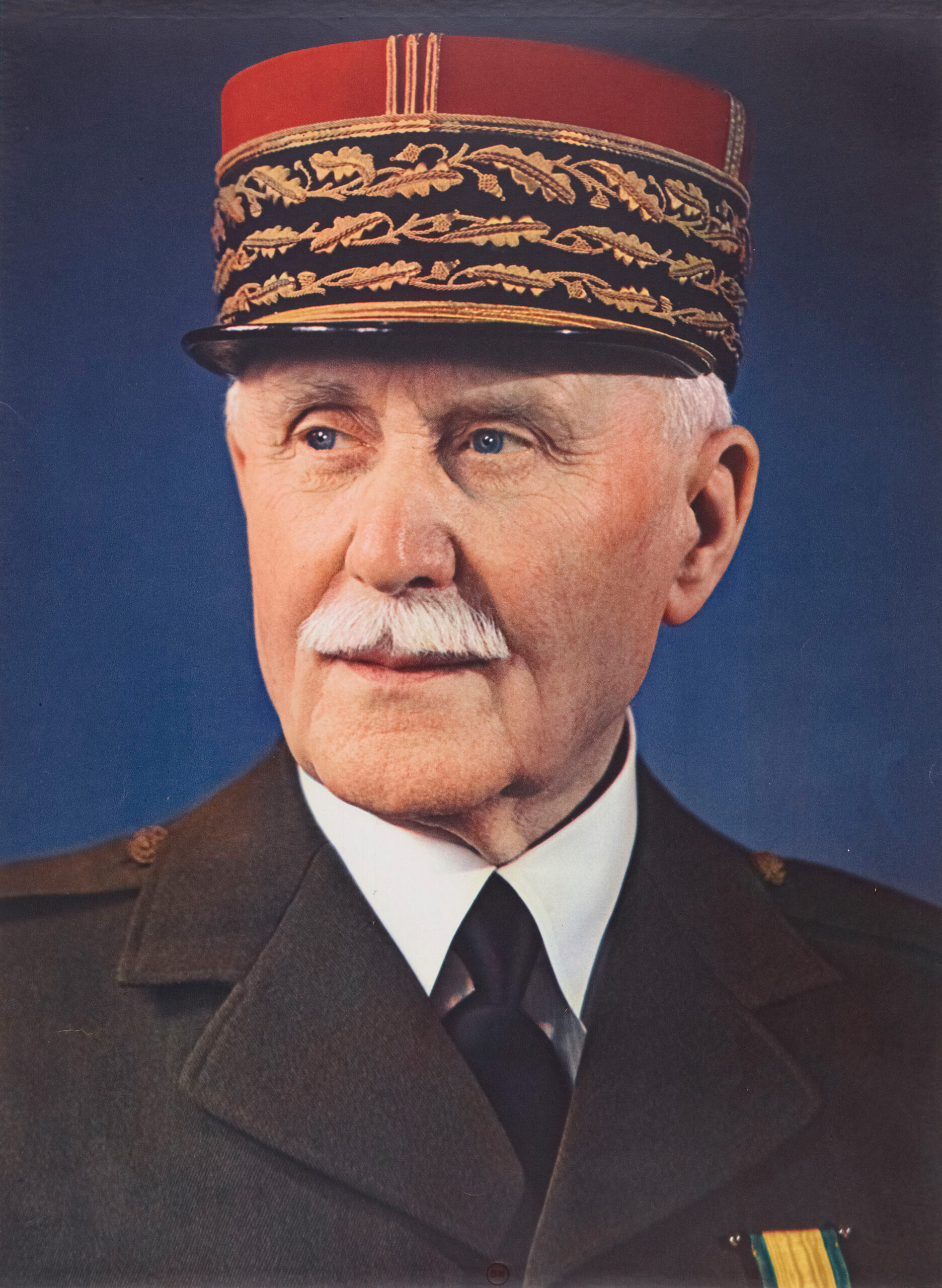
Henri Philippe Omer Pétain, commonly known as Philippe Pétain, is a controversial figure in French history. Born on April 24, 1856, in Cauchy-à-la-Tour, France, Pétain’s life was marked by his military career, his role during World War I, and his infamous leadership during World War II. His journey from a revered military strategist to a vilified political leader offers a complex narrative of heroism, controversy, and tragedy. This article delves deep into his life, exploring his rise to fame, his military and political strategies, and the decisions that led to his downfall.
Early Life and Military Career
Philippe Pétain was born into a modest farming family in northern France. His early decision to pursue a military career took him to the École spéciale militaire de Saint-Cyr, France’s premier military academy, where he began his journey as an officer. Pétain did not initially distinguish himself academically; his rise within the French military was slow. He became an infantry officer in 1878 and later joined the Châlons shooting school, where he clashed with the director over differing military doctrines. Pétain favored precision in warfare over the sheer volume of fire, a philosophy that would shape his approach in the years to come.
World War I: The Hero of Verdun
Pétain’s career took a significant turn during World War I, particularly during the Battle of Verdun in 1916. At this time, he had already achieved the rank of brigadier general and was recognized for his ability to inspire and organize troops. The Battle of Verdun was one of the longest and bloodiest battles of the war, characterized by intense trench warfare. Pétain’s strategy focused on defensive tactics and the maximization of artillery to hold off German forces, contrasting sharply with the offensive strategies advocated by others.
His leadership at Verdun, where he emphasized rotation of troops and ensured a steady supply line for reinforcements and supplies, earned him national acclaim. Pétain’s approach to this brutal, attritional warfare helped solidify his reputation as a protector of his soldiers and a master of defensive strategy. His success at Verdun led to his promotion to Marshal of France, the highest military distinction in the French army.
Post-War Career and Political Involvement
After World War I, Pétain continued to play a prominent role in France’s military affairs. He married Eugénie Hardon in the 1920s, and his career extended beyond the battlefield as he took on roles that involved shaping military policy and doctrine. He became Vice President of the Supreme War Council and Inspector General of the Army. His influence on military strategy was profound; he advocated for a defensive approach to future conflicts, underscored by his support for the construction of the Maginot Line, a series of fortifications along France’s borders intended to deter German aggression.
In 1934, Pétain entered politics when he was appointed as Minister of War under Prime Minister Gaston Doumergue. His tenure was brief due to a government reshuffle, but it marked the beginning of his involvement in French politics. Pétain’s political views leaned towards conservatism and the extreme right, which influenced his decisions during the tumultuous years leading up to World War II.
World War II and the Vichy Regime
With the outbreak of World War II and the rapid advance of German forces into France, Pétain’s role shifted dramatically. Following the German invasion in May 1940, the French government, led by Prime Minister Paul Reynaud, found itself in crisis. Reynaud resigned, and Pétain, by then a respected figure in the public eye due to his World War I heroics, was appointed as Vice President of the Council. On June 14, 1940, Paris fell to the Germans, and France was on the brink of collapse.
Pétain advocated for an armistice with Germany, believing that further resistance would only lead to needless destruction. On June 22, 1940, the Armistice of Rethondes was signed, leading to the establishment of the Vichy regime, a German puppet state in unoccupied France. As head of state, Pétain assumed sweeping powers and transformed the French Third Republic into an authoritarian regime.
Under Pétain’s leadership, the Vichy government adopted a collaborationist stance with Nazi Germany, which included the suppression of political opposition, censorship of the press, and the implementation of anti-Semitic laws. This period of collaboration is one of the most contentious aspects of Pétain’s legacy. While some argue that his actions were aimed at preserving some semblance of French sovereignty and sparing the nation from worse devastation, others view them as a betrayal of French values and a complicity in Nazi atrocities.
The Fall of the Vichy Government and Pétain’s Downfall
The tide of World War II turned against Germany by 1944, and as the Allies began liberating France, Pétain’s position became increasingly precarious. In August 1944, with the liberation of Paris imminent, Pétain and the Vichy government were evacuated to the town of Sigmaringen in Germany. With the war drawing to a close and Allied victory assured, Pétain chose to return to France in April 1945 to stand trial for his actions during the war.
Pétain was charged with treason by the French Provisional Government and faced a highly publicized trial. In August 1945, he was found guilty and sentenced to death. However, due to his advanced age and his service during World War I, General Charles de Gaulle, then the leader of the French Provisional Government, commuted his sentence to life imprisonment. Pétain was imprisoned on the Île d’Yeu, an island off the coast of western France, where he spent the remaining years of his life.
Death and Legacy
Philippe Pétain died on July 23, 1951, at the age of 95. His legacy remains deeply divisive in France. On one hand, he is remembered as the “Lion of Verdun,” a hero who protected France during World War I. On the other, his role as head of the Vichy regime and his collaboration with Nazi Germany during World War II overshadow his earlier achievements and cast a long shadow over his reputation.
The nuances of Pétain’s actions during World War II have been the subject of much historical debate. Some argue that his choices were driven by a desire to shield France from total destruction, while others see his collaboration as an unforgivable betrayal. His policies during the Vichy regime had lasting impacts, contributing to a legacy of division and controversy. The story of Philippe Pétain is a reminder of how quickly the tides of history can turn, transforming a national hero into a figure of public scorn.
The Historical Context of Pétain’s Decisions
Understanding Pétain’s decisions during both world wars requires a grasp of the broader historical context. During World War I, Pétain’s defensive strategies reflected the horrific realities of trench warfare and the importance of preserving human life amidst unprecedented slaughter. His leadership at Verdun was marked by his commitment to maintaining troop morale and his strategic acumen, which were crucial in a war characterized by grueling stalemates and massive casualties.
In contrast, World War II presented a vastly different scenario. The rapid advances in military technology and tactics, including Blitzkrieg, rendered static defense strategies like the Maginot Line obsolete. The swift collapse of French defenses in 1940 was a shock to a nation still scarred by the Great War, and Pétain’s decision to seek an armistice can be seen as a response to the desire to avoid another devastating conflict.
However, Pétain’s collaboration with Nazi Germany went beyond pragmatic concerns. The Vichy regime’s embrace of authoritarianism and its participation in the deportation of Jews to concentration camps remain indelible stains on his record. These actions cannot be fully justified by the context of the time and reflect a darker side of Pétain’s governance and ideology.
Conclusion
Philippe Pétain’s life is a stark illustration of the complexities of leadership during times of national crisis. His transition from a celebrated military hero to a reviled political figure encapsulates the moral ambiguities and difficult choices faced by leaders in wartime. Today, Pétain’s legacy is a subject of reflection and debate, serving as a powerful example of how history judges the actions of individuals based on their consequences and the values they reflect. His story is a poignant reminder of the thin line between heroism and infamy in the annals of history.
As France continues to grapple with the memory of World War II and the Vichy regime, Pétain’s legacy remains a potent symbol of the challenges of collaboration, resistance, and the pursuit of national survival under occupation. His life and career are studied not only for the lessons they provide in military strategy and political decision-making but also for the ethical questions they raise about leadership and morality in times of war.


