
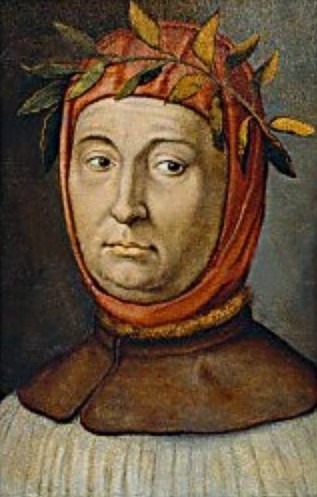
Francesco Petrarca, born on July 20, 1304, in Arezzo, Italy, is one of the most influential figures in Western literature. Renowned as a poet, scholar, and philosopher, Petrarca (commonly known as Petrarch) is often regarded as the father of Humanism, a key intellectual movement of the Renaissance. His contributions to the development of the Italian language, poetry, and literary criticism have left a lasting legacy that continues to be studied and celebrated today. This article delves into his life, exploring his age, fame, and the key highlights that defined his remarkable career.
Early Life and Education
Francesco Petrarca was born into a family that was deeply rooted in the political and cultural life of Italy. His father, Ser Petracco, was a notary who was exiled from Florence due to his involvement with the White Guelphs, a political faction opposed to the ruling Black Guelphs. This exile led the family to relocate to various cities, including Avignon, which at the time was the seat of the Papacy.
Petrarca’s early education was marked by a strong emphasis on classical studies. He was sent to study law at the University of Montpellier in France and later at the University of Bologna in Italy. Despite his father’s wishes for him to pursue a career in law, Petrarca’s true passion lay in literature. He immersed himself in the works of classical authors such as Cicero, Virgil, and Seneca, whose writings would profoundly influence his own literary endeavors.
The Turning Point: Meeting Laura
One of the most pivotal moments in Petrarca’s life occurred on April 6, 1327, when he first encountered Laura, a woman who would become the muse for his most famous works. While the true identity of Laura remains a subject of debate among scholars, she is often believed to be Laura de Noves, a noblewoman from Avignon. Regardless of her true identity, Laura became the embodiment of idealized love for Petrarca, inspiring him to write some of the most beautiful and poignant poetry in the Italian language.
Petrarca’s love for Laura was not merely romantic; it was deeply spiritual and intellectual. He saw Laura as a symbol of divine beauty and virtue, a woman who could elevate his soul and lead him closer to God. This concept of love as a path to spiritual enlightenment is a recurring theme in Petrarca’s works, particularly in his magnum opus, the “Canzoniere” (Songbook).
The “Canzoniere”: A Literary Masterpiece
The “Canzoniere” is undoubtedly Petrarca’s most celebrated work. Comprising 366 poems, including sonnets, ballads, and madrigals, the “Canzoniere” is a profound exploration of love, desire, and the human condition. Written in Italian, the collection is divided into two parts: poems written during Laura’s life and those written after her death.
Petrarca’s sonnets are renowned for their lyrical beauty, emotional depth, and intricate use of language. They reflect the poet’s inner turmoil as he grapples with his intense love for Laura, his feelings of longing and despair, and his desire for spiritual redemption. The sonnets are not just expressions of personal emotion; they also represent a broader philosophical meditation on the nature of love, the passage of time, and the inevitability of death.
One of the most famous sonnets in the “Canzoniere” is the opening poem, “Voi ch’ascoltate in rime sparse il suono” (“You who hear the sound in scattered rhymes”), in which Petrarca reflects on the pain and futility of his unrequited love. Another notable sonnet is “Pace non trovo, et non ò da far guerra” (“I find no peace, and I am not at war”), which captures the poet’s inner conflict and paradoxical feelings of love and suffering.
The “Canzoniere” not only established Petrarca as a master of Italian poetry but also played a crucial role in shaping the development of the Italian language. Petrarca’s use of the vernacular, rather than Latin, helped to elevate the status of Italian as a literary language and set a precedent for future poets and writers.
Humanism and the Revival of Classical Antiquity
Petrarca’s influence extends far beyond his poetry. He is widely regarded as the father of Humanism, a cultural and intellectual movement that sought to revive the study of classical antiquity and place a greater emphasis on the dignity and potential of the individual. Humanism would later become one of the defining characteristics of the Renaissance, influencing art, literature, philosophy, and science.
Petrarca’s interest in classical antiquity was fueled by his extensive travels and his encounters with ancient texts. He amassed a vast collection of classical manuscripts and was instrumental in rediscovering and preserving many works of Greek and Roman literature that had been lost or forgotten. His scholarly work laid the foundation for the revival of classical learning that would sweep across Europe in the centuries to come.
In addition to his literary and scholarly pursuits, Petrarca was also deeply engaged in the intellectual and political life of his time. He served as an ambassador for various Italian states, including Milan and Venice, and corresponded with some of the most prominent figures of his era, including rulers, scholars, and artists. His writings on moral philosophy, politics, and religion reflect his belief in the importance of virtue, wisdom, and civic responsibility.
The Crowning Achievement: Poet Laureate
Petrarca’s contributions to literature and scholarship were recognized in 1341 when he was crowned as the Poet Laureate of Rome, a highly prestigious honor that had not been bestowed on anyone since the time of the Roman Empire. The coronation took place on April 8, 1341, on the Capitoline Hill in Rome, and was attended by a large assembly of dignitaries, scholars, and poets.
The title of Poet Laureate was not merely a recognition of Petrarca’s poetic talents; it was also a symbol of his role as a cultural leader and a champion of the revival of classical learning. The laurel wreath, a traditional symbol of victory and honor, was placed on his head as a testament to his achievements and his contributions to the intellectual and cultural life of Italy.
Petrarca’s coronation as Poet Laureate marked the culmination of his career and solidified his reputation as one of the greatest poets of his time. It also served as a reminder of the enduring power of literature and the arts to inspire and elevate the human spirit.
Later Years and Legacy
In the years following his coronation, Petrarca continued to write and travel extensively. He spent much of his later life in the Italian city of Arquà, where he dedicated himself to his literary and scholarly pursuits. Despite his advancing age, Petrarca remained intellectually active and continued to correspond with scholars and writers from across Europe.
Petrarca’s later works include a series of letters, known as the “Epistolae familiares” (Familiar Letters), in which he reflects on various aspects of life, literature, and philosophy. These letters offer valuable insights into Petrarca’s thoughts on topics such as friendship, virtue, and the passage of time. They also reveal his deep admiration for the classical authors who had shaped his intellectual development.
Petrarca passed away on July 19, 1374, just one day before his 70th birthday. His death marked the end of an era, but his influence continued to resonate throughout the Renaissance and beyond. His works were studied and imitated by generations of poets, including Giovanni Boccaccio and Dante Alighieri, who regarded Petrarca as a mentor and inspiration.
Historical Context and Nuances
To fully appreciate Francesco Petrarca’s impact on literature and culture, it is important to understand the historical context in which he lived. The 14th century was a period of significant social, political, and cultural change in Europe. The rise of the merchant class, the spread of education, and the decline of feudalism all contributed to a shift in the way people thought about themselves and the world around them.
Petrarca’s emphasis on individualism, personal expression, and the study of classical antiquity was a response to these changing times. His works reflect a growing interest in the human experience and the potential for individual achievement, ideas that would come to define the Renaissance. Petrarca’s belief in the value of classical learning and his efforts to revive the study of ancient texts helped to lay the groundwork for the intellectual and cultural flourishing of the Renaissance.
Moreover, Petrarca’s writings on love, morality, and spirituality resonated with readers who were grappling with the uncertainties and challenges of their own lives. His exploration of the tension between earthly desires and spiritual aspirations spoke to the universal human experience, making his works timeless and enduring.
Conclusion
Francesco Petrarca’s life and work are a testament to the enduring power of literature to inspire, challenge, and transform. From his early encounters with classical texts to his passionate love for Laura, Petrarca’s journey as a poet and scholar reflects his deep commitment to the pursuit of knowledge and the exploration of the human condition.
His contributions to the development of the Italian language, his role in the revival of classical antiquity, and his influence on the intellectual life of his time have earned him a place among the greatest figures in Western history. Petrarca’s legacy continues to be celebrated by scholars, poets, and readers around the world, and his works remain a source of inspiration and insight for all who seek to understand the complexities of the human experience.
For anyone interested in the history of literature, Francesco Petrarca’s life offers valuable lessons on the importance of intellectual curiosity, the pursuit of excellence, and the enduring impact of the written word. His story is a reminder of the transformative power of literature and the arts, and the ways in which they can shape our understanding of ourselves and the world around us.


