
Introduction
Joe Petrosino, born as Giuseppe Petrosino on August 30, 1860, in Padula, Italy, is a figure who has etched his name in the annals of law enforcement history. Petrosino’s life story is one of determination, courage, and an unyielding commitment to justice. His journey from an immigrant in New York’s Little Italy to becoming one of the most revered police officers in the city’s history is a narrative filled with triumphs and tragedies, with his relentless pursuit of organized crime ultimately leading to his untimely death. This article explores the life, fame, and legacy of Joe Petrosino, delving into the nuances of his career and the historical context that shaped his actions.
Early Life and Immigration
Joe Petrosino was born into a humble family in the small town of Padula, located in the province of Salerno, Italy. His father, Prospero Petrosino, was a tailor by profession. In search of better opportunities, Prospero decided to emigrate to the United States, taking with him his entire family, including Joe, his mother, two sisters, and three brothers. The Petrosino family settled in New York City’s Little Italy, a neighborhood that was a melting pot of Italian immigrants seeking the American dream.
Growing up in Little Italy, Joe was acutely aware of the struggles faced by his community. The neighborhood was rife with crime, poverty, and exploitation, particularly from organized crime groups. To support his family, Joe took on various jobs, all the while attending evening classes to learn English. This determination to improve his circumstances and those of his family set the stage for his future career in law enforcement.
The Beginning of a Legendary Career
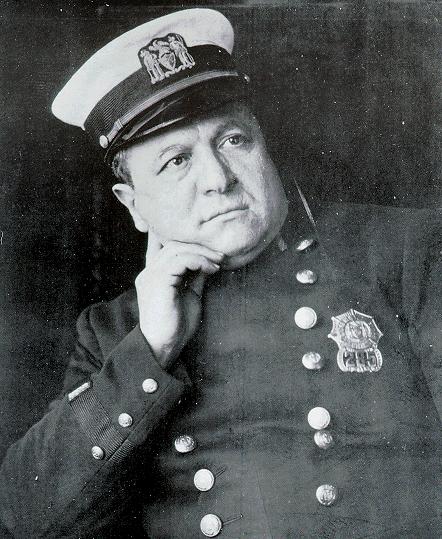
In 1883, Joe Petrosino took the first step towards what would become a legendary career in law enforcement by joining the New York Police Department (NYPD). His silver badge bore the number 285, a symbol of his entry into a world where he would soon make an indelible mark. Petrosino started as a patrol officer on Avenue 13th, a position that allowed him to become intimately familiar with the streets he was sworn to protect.
Petrosino quickly distinguished himself as a dedicated and effective police officer. His superiors noted his keen instincts, professionalism, and an almost uncanny ability to solve cases that baffled others. His work ethic and passion for justice did not go unnoticed, and he soon began to rise through the ranks of the NYPD.
Fighting the Black Hand: Petrosino’s Crusade Against the Mafia
Joe Petrosino’s career is most notably defined by his battle against the organization known as the “Black Hand,” a precursor to the American Mafia. The Black Hand was notorious for its extortion tactics, which primarily targeted Italian immigrants. These criminal elements would send threatening letters to their victims, often accompanied by a black handprint, demanding money under the threat of violence.
Petrosino, understanding the fear and helplessness that gripped his community, made it his mission to dismantle the Black Hand’s operations. He employed innovative and daring tactics, often going undercover to infiltrate the criminal underworld. His efforts were not only aimed at arresting criminals but also at restoring a sense of safety and security to the immigrant population.
One of Petrosino’s most famous cases involved tracking down a notorious Black Hand leader who had terrorized the Italian community. His success in apprehending this criminal and others like him earned Petrosino the respect of his peers and the admiration of the public. Even President Theodore Roosevelt, who was then the Police Commissioner of New York City, recognized Petrosino’s contributions and became a personal friend.
The Trip to Sicily: A Fateful Mission
As Petrosino’s fame grew, so did his enemies. The Mafia, both in the United States and in Italy, viewed him as a formidable threat. In 1909, Petrosino embarked on a secret mission to Sicily, the birthplace of many of the Mafia’s leaders. His goal was to gather intelligence on Mafia activities that could be used to prosecute criminals in the United States. This mission was part of a larger strategy to curb the flow of criminal elements from Italy to America, an initiative that Petrosino believed was crucial to winning the war against organized crime.
Tragically, Petrosino’s mission would end in his assassination. On March 12, 1909, in Piazza Marina, Palermo, Petrosino was ambushed and shot to death by Mafia gunmen. His murder sent shockwaves through both Italy and the United States, underscoring the dangers faced by those who dared to challenge the Mafia’s power.
The Legacy of Joe Petrosino
Joe Petrosino’s death was a significant blow to the fight against organized crime, but his legacy endured. He was the first Italian-American police officer to be killed in the line of duty, and his sacrifice galvanized efforts to combat the Mafia on both sides of the Atlantic. Petrosino’s story became a symbol of the immigrant struggle for justice and the fight against corruption and violence.
Petrosino’s life and work have been commemorated in various ways. His story has been told through books, films, and television series, ensuring that his contributions are not forgotten. Among the most notable portrayals is the 1960 film “Pay or Die,” starring Ernest Borgnine, and the 1972 Italian television series “Joe Petrosino,” in which Adolfo Celi played the titular role. These adaptations have helped to cement Petrosino’s status as a cultural icon, representing the ideals of bravery and integrity.
In addition to these portrayals, Petrosino’s legacy is honored in New York City, where a park in Little Italy bears his name. The “Joe Petrosino Square” serves as a reminder of the sacrifices made by this courageous detective in the service of justice. His story continues to inspire new generations of law enforcement officers and civilians alike.
Historical Context: The Rise of Organized Crime in America
To fully appreciate Joe Petrosino’s impact, it is essential to understand the historical context in which he operated. The late 19th and early 20th centuries were a period of significant immigration to the United States, particularly from Southern and Eastern Europe. Among these immigrants were many Italians who settled in cities like New York, bringing with them their traditions, culture, and, unfortunately, some elements of organized crime.
The Mafia, which originated in Sicily, found fertile ground in the United States, particularly in communities where Italian immigrants sought protection from the law. The lack of trust in local authorities, combined with the economic hardships faced by these immigrants, made them vulnerable to exploitation by criminal organizations. The Black Hand was one such organization that preyed on its own community, using fear and violence to maintain control.
Joe Petrosino’s efforts to combat the Mafia were groundbreaking because they represented one of the first organized attempts by law enforcement to tackle organized crime on a large scale. His work laid the foundation for future efforts to combat the Mafia, including the establishment of specialized units within the NYPD and the eventual creation of federal agencies like the FBI.
The Influence of Joe Petrosino on Modern Law Enforcement
Joe Petrosino’s legacy extends beyond his immediate impact on the fight against organized crime. His innovative approaches to law enforcement, particularly his use of undercover operations and intelligence gathering, have influenced modern policing methods. Petrosino understood the importance of gathering evidence and building strong cases against criminals, a principle that remains central to law enforcement today.
Moreover, Petrosino’s work highlighted the importance of cooperation between law enforcement agencies in different countries. His mission to Sicily was an early example of international law enforcement collaboration, a practice that has become increasingly important in the globalized world of crime.
Conclusion
Joe Petrosino’s life is a testament to the power of determination, bravery, and a commitment to justice. From his humble beginnings as an immigrant in New York’s Little Italy to his rise as one of the most respected and feared police officers of his time, Petrosino’s story is one of triumph over adversity. His relentless pursuit of the Mafia and his ultimate sacrifice have left an indelible mark on the history of law enforcement, making him a true American hero.
As we reflect on Petrosino’s contributions, it is important to recognize the broader implications of his work. His efforts not only helped to protect the immigrant community from exploitation but also set the stage for future battles against organized crime. In honoring Joe Petrosino, we honor the ideals of justice and integrity that continue to guide law enforcement officers around the world.


