
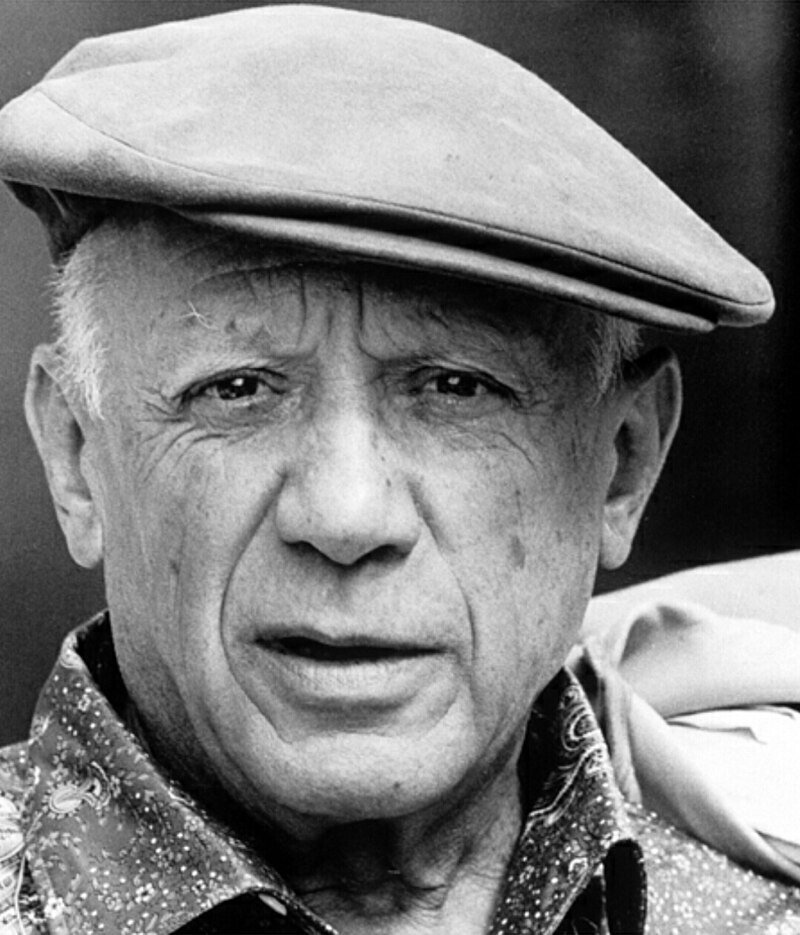
Pablo Picasso is one of the most influential and celebrated artists of the 20th century. Born on October 25, 1881, in Málaga, Spain, Picasso’s life and work have left an indelible mark on the world of art. He is best known as a painter, but his contributions extend to sculpture, printmaking, ceramics, and more. This article delves into the life of Pablo Picasso, exploring his age, rise to fame, and significant life highlights that have shaped his legacy.
Early Life and Artistic Beginnings
Pablo Diego José Francisco de Paula Juan Nepomuceno Crispín Crispiniano María Remedios de la Santísima Trinidad Ruiz Picasso—this was the full name of the man who would come to be known simply as Pablo Picasso. Born to José Ruiz Blasco, an art professor and museum curator, and María Picasso y López, Picasso was surrounded by art from an early age. His father, a painter himself, focused on decorating dining rooms with images of birds, particularly doves, which he studied meticulously.
Picasso’s early immersion in art had a profound impact on him. It is said that his first word was “piz,” short for “lápiz,” which means pencil in Spanish. Even before he could speak fluently, Picasso was drawing, and his talent was evident to those around him. Recognizing this, his father allowed him to collaborate on some of his own works, entrusting the young Picasso with the detailing—a task that the budding artist handled with remarkable skill.
Education and Early Work
In 1891, the Picasso family moved to La Coruña, where José Ruiz Blasco took up a position as a drawing teacher at the local School of Fine Arts. It was here that Picasso began formal art education, attending classes at the School of Fine Arts. During this period, he also developed a fascination with creating his own magazines, which he would illustrate and write himself.
In 1895, the family relocated again, this time to Barcelona, where Picasso continued his studies at the city’s prestigious La Llotja School of Fine Arts. His rapid progress led to his admission into advanced classes, and he soon began to make a name for himself within the local artistic community.
Picasso’s time in Barcelona was formative. He found a group of like-minded artists and intellectuals who gathered at “Els Quatre Gats” (The Four Cats), a café modeled after the famous Parisian cabaret “Le Chat Noir.” This bohemian environment nurtured Picasso’s creativity and provided a platform for his first solo exhibition in 1900.
The Move to Paris and Artistic Revolution
By the turn of the century, Picasso was ready for new challenges. In 1900, he moved to Paris, the epicenter of the art world. Initially, life in Paris was difficult. Picasso lived in poverty, sharing a studio with fellow artist Isidro Nonell and selling his work for meager sums. However, his time in Paris was also incredibly productive. He began to develop his style, drawing inspiration from the city’s vibrant art scene and the works of artists like Henri de Toulouse-Lautrec.
In Paris, Picasso met influential figures who would shape his career, including the poet and critic Max Jacob, who became a close friend and supporter. Jacob introduced Picasso to the darker side of the city, which would later influence his work during the “Blue Period.” This phase, characterized by somber tones and melancholic subjects, was deeply influenced by the suicide of his friend Carlos Casagemas in 1901.
The Birth of Cubism
The early 20th century was a time of experimentation and innovation in art, and Picasso was at the forefront of these changes. After absorbing influences from Post-Impressionism and African art, he co-founded Cubism, one of the most revolutionary movements in modern art, alongside Georges Braque.
Cubism deconstructed objects into geometric forms and reassembled them in abstract compositions. This approach challenged traditional perspectives and was initially met with resistance. However, it eventually gained widespread recognition and would influence countless artists in the years to come.
One of the most significant works from this period is “Les Demoiselles d’Avignon” (1907), a painting that broke conventional norms and paved the way for Cubism. The piece was radical in both its subject matter and execution, with fragmented forms and a stark departure from the realism that had dominated Western art for centuries.
Personal Life and Artistic Evolution
As Picasso’s fame grew, so did his personal and artistic life. In 1912, he met Marcelle Humbert, whom he called Eva. Eva became his muse during the Cubist period, and his deep affection for her is evident in his works from that time. The inscription “J’aime Eva” appears in many of his Cubist paintings, symbolizing the intimate connection between his personal life and art.
The outbreak of World War I in 1914 brought about significant changes in Picasso’s life. Many of his friends, including Braque and the poet Guillaume Apollinaire, went off to fight, leaving Picasso in a somewhat isolated position. His work during this period began to reflect a more classical influence, moving away from the radical abstraction of Cubism.
In 1918, Picasso married Olga Khokhlova, a Russian ballerina. This marriage marked the beginning of a more stable period in Picasso’s life, and his work reflected this, with a return to more traditional forms and subjects. However, Picasso’s restless creativity soon led him to explore new styles and themes, including the influence of Surrealism in the 1920s.
Guernica and Political Engagement
The 1930s were a tumultuous time in Europe, and Picasso’s work became increasingly political. The Spanish Civil War, which began in 1936, had a profound impact on him. Although he had lived in France for many years, Picasso remained deeply connected to Spain and was horrified by the violence and destruction that tore his homeland apart.
In 1937, Picasso was commissioned to create a mural for the Spanish pavilion at the Paris World’s Fair. The result was “Guernica,” one of his most famous works. The painting was a response to the bombing of the Basque town of Guernica by Nazi German and Italian Fascist forces at the behest of Spanish Nationalists. “Guernica” is a powerful anti-war statement, depicting the horrors of the bombing and the suffering it caused. The work has since become a universal symbol of the atrocities of war.
Later Years and Legacy
As Picasso entered his later years, he remained as prolific as ever, continuing to explore new techniques and styles. His personal life, however, was marked by tumultuous relationships, including his marriage to Olga Khokhlova and his subsequent affairs with women who would become muses in his later works, such as Marie-Thérèse Walter, Dora Maar, and Françoise Gilot.
During the 1950s and 1960s, Picasso was already regarded as a living legend. His influence extended far beyond the art world, making him a global cultural icon. Despite his fame, Picasso continued to push boundaries, experimenting with ceramics, sculpture, and printmaking. He also became increasingly reclusive, retreating to his various homes in the south of France.
Picasso’s final years were marked by a return to more classical themes, but always with the innovative touch that had characterized his entire career. He continued to work until his death on April 8, 1973, at the age of 91. His last painting, “Personnage avec Oiseau” (1972), is a testament to his enduring creativity and passion for art.
The Enduring Legacy of Picasso
Pablo Picasso’s legacy is vast and multifaceted. He is often credited with having transformed modern art, challenging conventional ideas about representation and reality. His work laid the foundation for many subsequent movements, including Surrealism, Abstract Expressionism, and even Pop Art.
Picasso’s influence can be seen in the works of countless artists who followed in his footsteps. His ability to continually reinvent himself, while remaining true to his unique vision, has made him a lasting figure in the world of art. His works are housed in major museums around the world, and his name is synonymous with creativity and artistic genius.
In addition to his artistic achievements, Picasso’s life story has become a symbol of the artist as a rebel and innovator. His passion, intensity, and dedication to his craft serve as an inspiration to artists and non-artists alike. Even today, more than four decades after his death, Picasso’s work continues to captivate and challenge audiences, ensuring that his influence will endure for generations to come.


