
Introduction
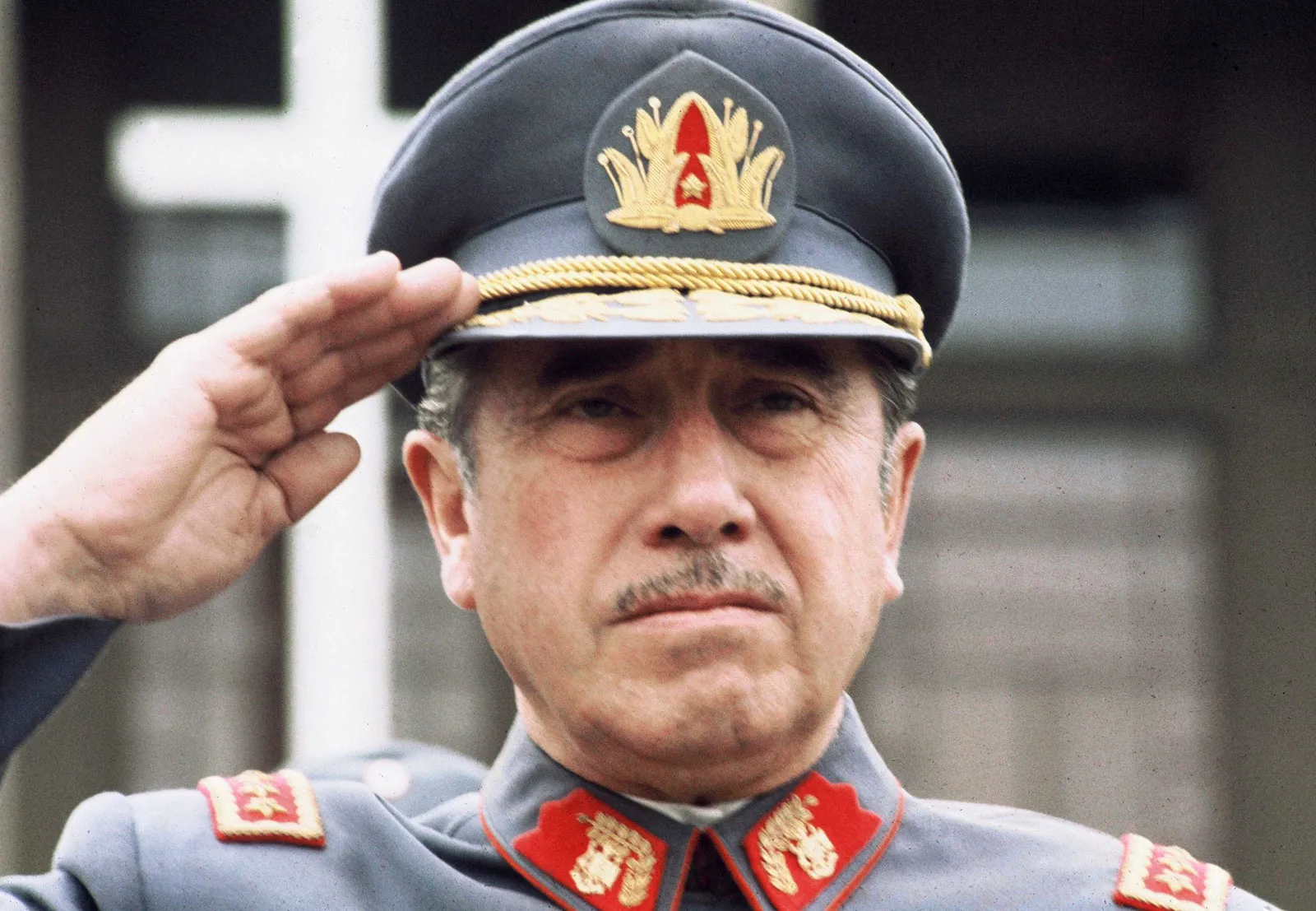
Augusto Pinochet Ugarte, born on November 25, 1915, in Valparaíso, Chile, stands as one of the most controversial and polarizing figures of the 20th century. His name is indelibly linked to the brutal dictatorship that ruled Chile from 1973 to 1990. While some view him as a staunch anti-communist who saved Chile from a Marxist government, others remember him as a dictator whose regime was marked by severe human rights abuses, including torture, disappearances, and executions. This article delves into the life, fame, and legacy of Augusto Pinochet, providing detailed insights into his rise to power, the nature of his dictatorship, and his lasting impact on Chilean society and beyond.
Early Life and Military Career
Augusto Pinochet’s early life was unremarkable. Born into a middle-class family, he joined the Chilean military academy at a young age. His rise through the military ranks was steady but not particularly distinguished. It wasn’t until the 1960s that Pinochet began to make a name for himself within the Chilean military. His reputation was built on his role in suppressing labor strikes in the northern desert region of Chile under the Christian Democratic government of Eduardo Frei Montalva. This period foreshadowed the repressive tactics he would later employ on a much larger scale.
Pinochet’s rise to prominence was as much about being in the right place at the right time as it was about his abilities. In 1973, amid growing unrest and political polarization in Chile, Pinochet was appointed as the Commander-in-Chief of the Chilean Army by President Salvador Allende. His appointment was seen as a safe, apolitical choice meant to placate the military and prevent a coup. However, Pinochet had other plans.
The 1973 Coup and the Establishment of the Dictatorship
On September 11, 1973, Pinochet led a military coup that overthrew Allende’s democratically elected socialist government. The coup was violent, resulting in Allende’s death (officially ruled a suicide, though some speculate it was an assassination) and the installation of a military junta with Pinochet at its head. This marked the beginning of a 17-year dictatorship characterized by severe repression.
The coup was not solely the work of Pinochet; it was supported by various sectors of Chilean society, including the oligarchy, conservative political factions, and business elites, who were alarmed by Allende’s leftist policies. The United States, fearing the spread of communism in Latin America, also played a significant role in the coup, providing financial and logistical support to the Chilean military.
Human Rights Abuses and Repression
Under Pinochet’s rule, Chile became synonymous with state-sponsored terror. The regime’s primary targets were leftist political activists, trade unionists, intellectuals, and anyone perceived as a threat to the junta’s power. The infamous National Intelligence Directorate (DINA) was established to carry out the regime’s dirty work, which included torture, disappearances, and extrajudicial killings.
It is estimated that at least 30,000 people were tortured, more than 3,000 were killed or disappeared, and tens of thousands were forced into exile. The brutality of Pinochet’s regime was widely condemned by the international community, but fear and repression kept opposition in Chile largely subdued during the early years of the dictatorship.
Economic Policies and the Chicago Boys
Despite the regime’s human rights abuses, Pinochet’s government is often credited with implementing economic policies that transformed Chile’s economy. In the late 1970s and 1980s, Pinochet embraced neoliberal economic reforms, advised by a group of Chilean economists known as the “Chicago Boys,” who were trained at the University of Chicago under Milton Friedman.
These policies included privatizing state-owned industries, cutting government spending, and reducing tariffs and trade barriers. While these reforms led to significant economic growth and the stabilization of inflation, they also resulted in increased inequality and social unrest. Many of the benefits of these policies were felt by the wealthy and business elites, while the poor and working-class suffered from reduced social services and job insecurity.
The 1988 Plebiscite and the Transition to Democracy
By the late 1980s, the tide was turning against Pinochet. International pressure, economic downturns, and increasing domestic opposition forced Pinochet to hold a plebiscite in 1988 to determine whether he would remain in power. To the surprise of many, including Pinochet himself, the Chilean people voted against extending his rule.
This plebiscite was a turning point in Chilean history. While it did not immediately end Pinochet’s power, it set the stage for a gradual transition to democracy. Pinochet remained in power until 1990, when he stepped down as president but continued to serve as the commander-in-chief of the military and later as a senator-for-life, positions that granted him immunity from prosecution for many years.
Legal Battles and Legacy
Pinochet’s post-presidency years were marked by numerous legal battles. In 1998, while in London for medical treatment, he was arrested on a Spanish warrant for human rights abuses, marking the first time that a former head of state was detained on such charges in a foreign country. Although he was eventually released and returned to Chile on health grounds, the arrest was a significant blow to his legacy and emboldened human rights activists around the world.
Back in Chile, Pinochet faced multiple investigations and indictments for crimes committed during his dictatorship. However, due to his advanced age and declining health, he was never fully prosecuted. He died on December 10, 2006, at the age of 91, without having been convicted of the atrocities committed under his rule.
Pinochet’s legacy is deeply divisive in Chile. While some Chileans view him as a savior who rescued the country from communism and laid the foundation for its modern economy, others see him as a brutal dictator whose regime inflicted untold suffering on the Chilean people. His era remains a painful chapter in Chilean history, and debates over his legacy continue to polarize Chilean society.
Conclusion
Augusto Pinochet was a man whose name will forever be associated with the dark side of 20th-century history. His rise from a relatively obscure military officer to a dictator who ruled with an iron fist is a testament to the complex and often brutal nature of power. Pinochet’s dictatorship left an indelible mark on Chile, both in terms of the human rights abuses committed during his rule and the economic policies that reshaped the country.
As history continues to evaluate Pinochet’s impact, one thing remains clear: he was a figure who cannot be easily categorized as purely good or evil. His legacy is a complex tapestry of economic success marred by deep social divisions and horrific human rights violations. Understanding Pinochet’s life and rule is crucial for those who seek to grasp the broader dynamics of power, governance, and morality in the modern world.


