
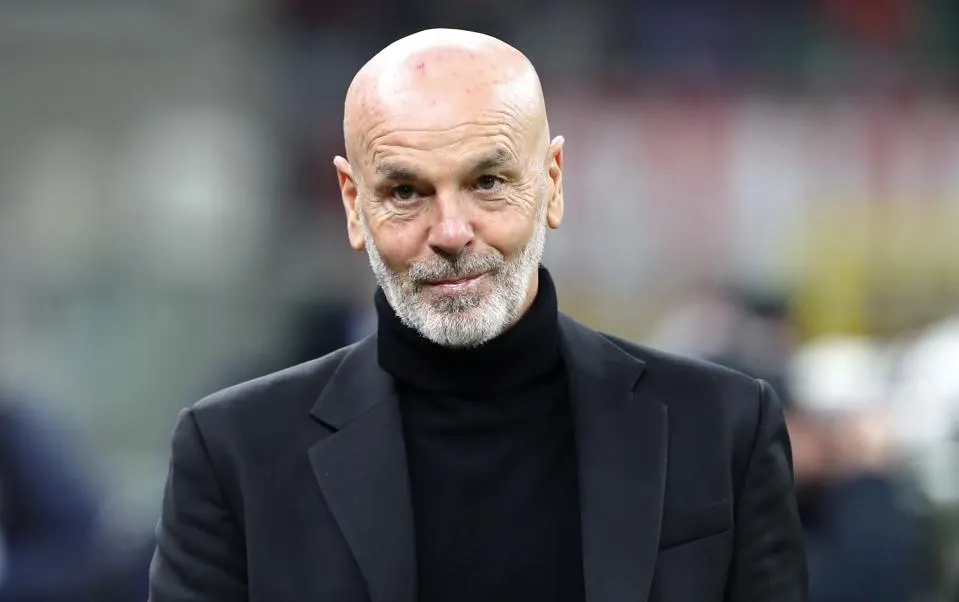
Stefano Pioli is a name synonymous with Italian football, both as a player and as a manager. Born on October 20, 1965, in Parma, Italy, Pioli’s journey in football is a compelling story of perseverance, dedication, and tactical brilliance. His career, marked by highs and lows, reflects the resilience and passion that have defined his life. This article delves deep into the life of Stefano Pioli, exploring his age, rise to fame, and the key highlights that have shaped his journey.
Early Life and Football Beginnings
Stefano Pioli’s love for football began at an early age in Parma, a city known for its rich football culture. As a young boy, Pioli displayed exceptional talent on the football pitch, quickly catching the attention of local clubs. His early years were spent honing his skills as a defender, a role that would define his playing career. At just 18 years old, Pioli made his professional debut with Parma, his hometown club, in 1984. His performances were promising, and it wasn’t long before he attracted the attention of one of Italy’s biggest clubs, Juventus.
Playing Career: Triumphs and Challenges
In 1984, Stefano Pioli joined Juventus, a club that had just won the Scudetto, Italy’s top football honor. His debut for the Bianconeri came on August 22, 1984, in a memorable 6-0 victory against Palermo in the Coppa Italia. Pioli’s versatility as a defender allowed him to make an impact in both domestic and European competitions. He played in the European Cup (now known as the UEFA Champions League), contributing to Juventus’ 4-0 win against Ilves, a Finnish club.
However, Pioli’s time at Juventus was a mix of successes and struggles. Despite showing promise, his three-year stint in Turin did not live up to the high expectations placed upon him. In 1987, after an underwhelming spell, Pioli moved to Verona, where he found more playing time and stability. During his two seasons with Verona, Pioli made 42 appearances, solidifying his reputation as a reliable defender.
The most significant period of Pioli’s playing career came during his time with Fiorentina. From 1989 to 1995, Pioli played an instrumental role in the team, participating in the 1989-1990 UEFA Cup Final and helping Fiorentina win the Serie B title in the 1993-1994 season. Unfortunately, his career was marred by a severe injury in 1994 during a match against Bari, which led to a temporary halt in his career. Despite his recovery, Pioli never regained his previous form, leading to a series of transfers that included stints with Padova, Pistoiese, and Fiorenzuola, before retiring as a player at the age of 34.
Transition to Coaching: The Beginning of a New Chapter
After hanging up his boots, Stefano Pioli transitioned into coaching, where he would find his true calling. His coaching career began with the youth teams of Bologna, where he quickly made a name for himself by winning the Campionato Allievi Nazionali, a prestigious youth competition in Italy. His success with the youth teams earned him his first senior coaching role with Salernitana in Serie B in 2003.
Pioli’s ability to connect with players and his tactical acumen quickly became evident. He guided Salernitana to safety in his first season, a remarkable achievement for a club struggling in the lower tiers of Italian football. This success paved the way for his appointment as the manager of Modena, where he led the team to a fifth-place finish and a spot in the Serie B playoffs.
Climbing the Ranks: Parma, Grosseto, and Sassuolo
The mid-2000s saw Pioli’s coaching career take off as he climbed the ranks of Italian football. In 2006, he returned to Parma, the club where he had started his playing career, this time as a manager. It was a challenging period for Parma, but Pioli managed to guide the team to the knockout stages of the UEFA Cup, although his tenure ended in February due to struggles in the domestic league.
Pioli continued to build his reputation with stints at Grosseto, where he achieved early safety from relegation, and Piacenza, where he delivered impressive results in Serie B. His success with these clubs led to his appointment at Sassuolo, where he made history by leading the club to a fourth-place finish in Serie B, a remarkable achievement that highlighted his growing tactical expertise.
Major Breakthrough: Bologna, Lazio, and Inter Milan
Stefano Pioli’s major breakthrough came when he took over as the head coach of Bologna in 2011. His tenure at Bologna was marked by stability and growth, as he led the team to several mid-table finishes in Serie A. His ability to maximize the potential of his squads caught the attention of larger clubs, and in 2014, he was appointed as the manager of Lazio.
At Lazio, Pioli’s tactical flexibility and man-management skills were on full display. He guided the team to a third-place finish in Serie A in the 2014-2015 season, securing a spot in the UEFA Champions League qualifying rounds. However, the following season did not go as planned, and Pioli was eventually dismissed in 2016.
In November 2016, Pioli took over as the manager of Inter Milan, one of Italy’s most storied clubs. Despite a strong start, his time at Inter was short-lived due to inconsistent results in key matches, leading to his dismissal in May 2017. Nevertheless, Pioli’s reputation as a top-tier manager continued to grow, and he was soon back in the Serie A spotlight.
The Milan Revolution: Scudetto Glory
Stefano Pioli’s most significant achievement as a manager came when he was appointed as the head coach of AC Milan in October 2019. Milan, a club with a rich history but struggling in recent years, needed a leader who could restore their former glory. Pioli was initially seen as a temporary solution, but his impact was immediate.
Under Pioli’s guidance, Milan experienced a renaissance. His tactical approach, which blended experience with youth, revitalized the team. Players like Zlatan Ibrahimović, Theo Hernández, and Franck Kessié flourished under his leadership. The 2020-2021 season saw Milan finish second in Serie A, securing a return to the UEFA Champions League after a seven-year absence.
The following season, Pioli led Milan to their first Serie A title since 2011, winning the Scudetto on the final day of the 2021-2022 season. This triumph was a testament to Pioli’s tactical brilliance, man-management skills, and the belief he instilled in his players. The Scudetto win solidified Pioli’s status as one of the top managers in Italian football.
Personal Life and Interests
Beyond the football pitch, Stefano Pioli leads a relatively private life. He is married to Barbara, and the couple has two children, Carlotta and Gianmarco. Pioli is known for his love of other sports, particularly basketball and cycling, which he enjoys in his free time. His calm demeanor and measured approach to life are reflected in his coaching style, where he emphasizes teamwork, discipline, and continuous improvement.
Conclusion: A Legacy of Resilience and Success
Stefano Pioli’s journey from a promising young footballer to a Scudetto-winning manager is a story of resilience, adaptability, and success. His ability to overcome setbacks, both as a player and as a manager, has made him a respected figure in Italian football. Pioli’s impact on AC Milan and his role in their resurgence will be remembered as one of the defining chapters of his career.
As he continues to lead Milan, Stefano Pioli’s legacy in football is still being written. His story serves as an inspiration to aspiring footballers and managers alike, demonstrating that with dedication, perseverance, and the right mindset, success is always within reach.


