
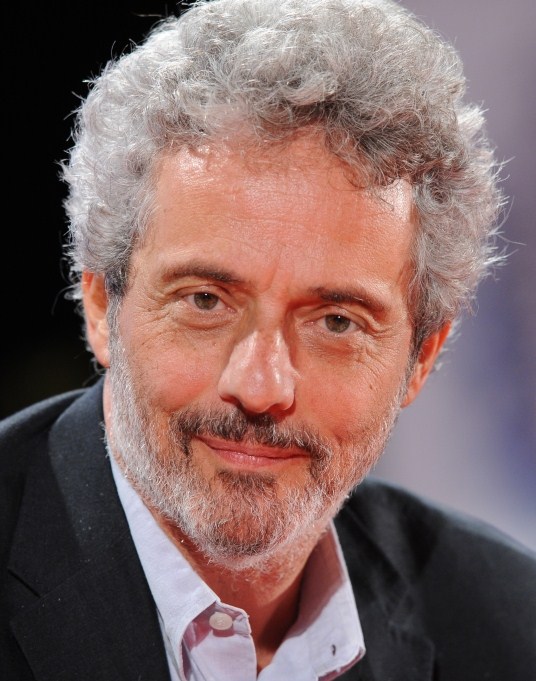
Nicola Piovani, born on May 26, 1946, in Rome, Italy, is a celebrated composer and conductor whose work has left an indelible mark on the world of music, particularly in the realm of film scores. His music is characterized by its ability to evoke deep emotions, enrich narratives, and create immersive experiences for audiences worldwide. Piovani’s contributions to both cinema and theater have earned him widespread recognition, including an Academy Award for his score in “Life is Beautiful” (1999).
Early Life and Beginnings in Music
Nicola Piovani’s journey into music began in his childhood, influenced by the rich cultural environment of Rome. He was a student of the Greek composer Manos Hadjidakis, whose guidance helped shape his early understanding of music composition. Piovani’s career in film music started in 1969 when he composed the score for Silvano Agosti’s film Il segreto. This opportunity opened doors for Piovani, leading to further collaborations in the Italian film industry.
By the early 1970s, Piovani had established himself as a composer of note, working with acclaimed directors such as Marco Bellocchio. Their collaboration began with the film Nel nome del padre in 1970, which marked the start of a fruitful partnership. Piovani’s music played a crucial role in enhancing the emotional depth and narrative complexity of Bellocchio’s films. This partnership continued with significant works like Sbatti il mostro in prima pagina, Marcia trionfale, Il gabbiano, and Salto nel vuoto.
Collaborations with Italian Cinema Giants
Throughout the 1970s and 1980s, Piovani’s music became a defining feature of Italian cinema. He worked with a roster of legendary directors, including Mario Monicelli, Giuseppe Tornatore, Sergio Citti, and Daniele Luchetti. His compositions for Monicelli’s Il marchese del grillo and Speriamo che sia Femmina showcased his versatility and ability to adapt to different cinematic styles and themes.
One of Piovani’s most significant collaborations was with the iconic filmmaker Federico Fellini. After the death of Nino Rota, who had composed scores for most of Fellini’s films, Piovani stepped in to fill the void. He composed the music for Fellini’s last three films: Ginger e Fred (1986), Intervista (1987), and La voce della Luna (1990). These scores are often described as deeply atmospheric, reflecting Fellini’s surreal and dreamlike cinematic style. Piovani’s work with Fellini cemented his reputation as a composer who could capture the essence of a director’s vision through music.
International Recognition and the Oscar-Winning Score
Piovani’s international acclaim grew significantly through his collaboration with Roberto Benigni on the film Life is Beautiful (La vita è bella, 1997). The film, which tells a poignant story set against the backdrop of the Holocaust, required a delicate and emotionally resonant score. Piovani’s music, which blends whimsy with deep pathos, was instrumental in the film’s success. In 1999, Piovani was awarded the Academy Award for Best Original Score, a testament to his ability to create music that transcends language and cultural barriers.
This Oscar win was not Piovani’s first brush with international success. Over the years, he had worked with various international directors, including Bigas Luna, John Irving, and Sergei Bodrov. His ability to adapt his musical style to different cinematic contexts made him a sought-after composer in the global film industry.
Contributions to Theater and Concert Music
In addition to his work in film, Piovani has made significant contributions to theater and concert music. His passion for theater is evident in his collaborations with playwright and screenwriter Vincenzo Cerami. Together, they founded the Compagnia della Luna, a theater company dedicated to producing original works that blend music and drama. Among their notable productions are La cantata del fiore (1988), La cantata del buffo (1990), and Il Signor Novecento (1992). These works are characterized by their innovative use of music to enhance the narrative and emotional impact of the performances.
Piovani’s work in theater is also marked by his exploration of the relationship between music and imagery. His Concerto fotogramma is a unique form of performance that combines music with projected images, creating a dialogue between sound and visual elements. This concert piece, while initially appearing to be a simple film music concert, is, in fact, a sophisticated exploration of how music can influence the interpretation of visual narratives.
Musical Style and Influences
Nicola Piovani’s music is often described as deeply melodic, with a focus on creating themes that are both memorable and emotionally resonant. His compositions frequently incorporate elements of classical music, Italian folk traditions, and contemporary music, resulting in a unique and versatile style.
One of the hallmarks of Piovani’s music is his use of unexpected rhythmic shifts and harmonic deviations, which add a layer of complexity to his compositions. This technique is reminiscent of the work of Nino Rota, who was a significant influence on Piovani, especially in his collaborations with Federico Fellini. Like Rota, Piovani often employs a diatonic structure in his melodies, resisting the pull of chromaticism to maintain clarity and directness in his music.
Despite these classical underpinnings, Piovani’s music is also characterized by its adaptability and modernity. He has shown a willingness to experiment with different musical forms and instruments, including the use of electronic music in a measured and thoughtful way. However, Piovani remains skeptical of over-reliance on technology, preferring to use it as a tool rather than a crutch.
Legacy and Continued Influence
Nicola Piovani’s impact on the world of film and theater music is profound. His ability to craft music that not only complements but enhances the narrative has made him one of the most respected composers in his field. His work continues to influence new generations of composers who seek to bridge the gap between traditional composition techniques and modern cinematic demands.
Beyond his contributions to specific films or theatrical productions, Piovani’s legacy lies in his approach to music as a form of storytelling. His compositions are not merely background scores; they are integral components of the narrative, capable of conveying emotions and ideas that words alone cannot express.
As he continues to compose and perform, Nicola Piovani remains a vital figure in both Italian and international music. His work serves as a reminder of the power of music to transcend cultural and linguistic boundaries, uniting audiences through shared emotional experiences.
Final Thoughts
Nicola Piovani’s career is a testament to the power of music in film and theater. His ability to create emotionally resonant scores that enhance and elevate the visual narrative has earned him a place among the greats in the world of music composition. From his early days in Rome to his collaborations with some of the most famous directors in the world, Piovani has consistently demonstrated a deep understanding of the interplay between music and storytelling.
In a world where music is often seen as a secondary element to visual media, Piovani’s work stands out as a beacon of what can be achieved when music is given the attention and care it deserves. His legacy will undoubtedly continue to inspire and influence composers and musicians for years to come.


