
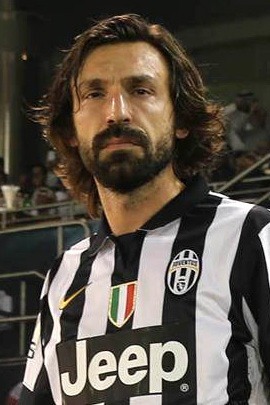
Andrea Pirlo is a name synonymous with elegance, intelligence, and skill in the world of football. Born on May 19, 1979, in Brescia, Italy, Pirlo is widely regarded as one of the greatest midfielders of his generation. His career, spanning over two decades, has been marked by his unique style of play, characterized by his calm demeanor, exceptional vision, and unmatched passing ability. This article delves into the life and career of Andrea Pirlo, exploring his rise to fame, his contributions to football, and his life beyond the pitch.
Early Life and Youth Career
Andrea Pirlo was born in Flero, a small town in the province of Brescia in northern Italy. From an early age, it was clear that Pirlo had a natural talent for football. He began his youth career with Voluntas, a local club, before joining the youth academy of Brescia, one of the prominent teams in the region. His talent quickly became apparent, and Pirlo made his professional debut for Brescia at the age of just 16. On May 21, 1995, with Brescia already relegated from Serie A, Pirlo played his first match against Reggiana, becoming the youngest player to debut for the club in Serie A.
Early Professional Career
After showcasing his potential with Brescia, Pirlo’s abilities caught the attention of several bigger clubs. In 1998, at the age of 19, he was signed by Inter Milan, one of Italy’s top football clubs. However, his time at Inter was challenging. Pirlo struggled to secure a regular starting position in a squad filled with more experienced players, making just 18 league appearances. To gain more playing time and experience, he was loaned out to Reggina for the 1999-2000 season.
At Reggina, Pirlo found his footing, playing an instrumental role in the midfield and showcasing his playmaking abilities. He returned to Inter the following season but once again found opportunities limited. This led to another loan move back to Brescia in the winter of 2001. It was during this period under coach Carlo Mazzone that a significant change in Pirlo’s career occurred. Mazzone recognized Pirlo’s potential in a deeper playmaking role, transitioning him from an attacking midfielder to a regista—a deep-lying playmaker.
Transformation at AC Milan
Pirlo’s career took a decisive turn in the summer of 2001 when he was signed by AC Milan for 35 billion lire. At Milan, under the guidance of coach Carlo Ancelotti, Pirlo’s transformation into one of the best deep-lying playmakers in the world was complete. Ancelotti utilized Pirlo at the base of a diamond midfield formation, where his exceptional vision and passing range could dictate the pace and flow of the game.
Pirlo’s ability to control the game from a deeper position became a hallmark of his style. His technique on the ball, combined with his ability to execute precise long passes and free kicks, made him a unique asset. During his time at Milan, Pirlo won two Serie A titles, two UEFA Champions League titles, a FIFA Club World Cup, a Coppa Italia, and two UEFA Super Cups. His performances not only earned him individual accolades but also made him a pivotal player for both club and country.
International Success with Italy
Pirlo’s success was not confined to club football. He was also a vital player for the Italian national team. After representing Italy at various youth levels, including leading the Under-21 team to a European Championship in 2000, Pirlo made his senior debut on September 7, 2002. His international career reached its pinnacle at the 2006 FIFA World Cup in Germany.
Pirlo was instrumental in Italy’s World Cup campaign, starting with a goal in the opening match against Ghana. His vision and composure under pressure were key throughout the tournament. In the semi-final against Germany, it was Pirlo’s perfectly weighted pass that set up Fabio Grosso’s goal in extra time, sending Italy to the final. In the final against France, Pirlo once again played a crucial role, scoring the first penalty in the shootout that ultimately secured Italy’s fourth World Cup title. His performances earned him three “Man of the Match” awards during the tournament, and he was later named to the Team of the Tournament.
Challenges and Triumphs at Juventus
After a decade with AC Milan, Pirlo moved to Juventus in the summer of 2011, a move that would reinvigorate his career. At Juventus, Pirlo was given a central role in a team that was being rebuilt. His impact was immediate; he helped Juventus win the Serie A title in his first season with the club, marking the beginning of a new era of dominance for the team in Italian football.
Under the management of Antonio Conte and later Massimiliano Allegri, Pirlo continued to thrive as the conductor of Juventus’s midfield. His performances helped Juventus win four consecutive Serie A titles, as well as reach the UEFA Champions League final in 2015. Despite losing the final to Barcelona, Pirlo’s contributions during his time at Juventus solidified his status as one of the best midfielders of his generation.
Style of Play and Legacy
Andrea Pirlo’s style of play was defined by his calm demeanor, exceptional ball control, and his ability to read the game like few others. As a regista, or deep-lying playmaker, Pirlo’s role was to orchestrate the play from a deeper position, utilizing his vision and passing range to control the tempo of the game. His ability to deliver precise long balls and his proficiency in set pieces, particularly free kicks, made him a constant threat.
Pirlo was often described as a player who played the game at his own pace, seemingly unaffected by the pressure around him. This composure on the ball earned him the nickname “l’architetto” (the architect) for his ability to construct plays with precision. His approach to the game has inspired a generation of midfielders who aspire to combine technical skill with strategic thinking.
Personal Life and Ventures Beyond Football
Off the pitch, Andrea Pirlo is known for his reserved personality and his passion for wine. In 2007, he purchased a vineyard in Italy, where he produces his own wine, reflecting his love for the finer things in life. Pirlo’s interest in wine is not merely a hobby but a serious business venture, showcasing another dimension of his character—one that appreciates tradition, quality, and craftsmanship.
Pirlo was married to Deborah Roversi from 2001 to 2014, with whom he has two children, Niccolò and Angela. Following his divorce, Pirlo began a relationship with Valentina Baldini, with whom he has twin sons, Leonardo and Tommaso, born in 2017.
Transition to Coaching
After retiring from professional football in 2017 following a stint with New York City FC in Major League Soccer (MLS), Pirlo turned his attention to coaching. In September 2018, he obtained his UEFA A coaching license, which qualified him to coach youth teams and lower-league sides. In July 2020, he was appointed as the head coach of Juventus U23, the club’s reserve team, marking the beginning of his managerial career.
Just a few days later, Pirlo was unexpectedly promoted to head coach of Juventus’s first team after the dismissal of Maurizio Sarri. His appointment was seen as a bold move by Juventus, given Pirlo’s lack of experience in coaching at the highest level. During his one season in charge, Pirlo led Juventus to win the Coppa Italia and the Supercoppa Italiana but fell short in the Serie A title race and the UEFA Champions League, leading to his departure from the club in May 2021.
In the 2022-2023 season, Pirlo took his managerial career abroad, signing with Turkish club Fatih Karagümrük. The following year, he returned to Italy to manage Sampdoria, a club with a storied history, with the aim of helping them regain promotion to Serie A.
Legacy and Impact on Football
Andrea Pirlo’s impact on football is profound. His unique style of play redefined the role of a deep-lying playmaker, and his influence is evident in the way modern football emphasizes technical skill and strategic thinking in the midfield. Pirlo’s legacy extends beyond his on-field achievements; he is remembered as a player who brought a sense of artistry to the game, combining elegance with effectiveness.
Pirlo’s autobiography, “Penso Quindi Gioco” (“I Think, Therefore I Play”), published in 2013, provides an introspective look into his philosophy on football and life. It reflects his thoughtful approach to the game and offers insights into the mind of one of football’s most cerebral players.
Conclusion
Andrea Pirlo’s journey from a young talent at Brescia to one of the most revered midfielders in football history is a testament to his skill, intelligence, and dedication to the sport. His contributions to AC Milan, Juventus, and the Italian national team have left an indelible mark on the game. As a player, Pirlo was a master of his craft, and as a coach, he continues to impart his knowledge and love for the game to the next generation. His legacy as a player who combined technical excellence with strategic insight will continue to inspire footballers and fans alike for years to come.


