
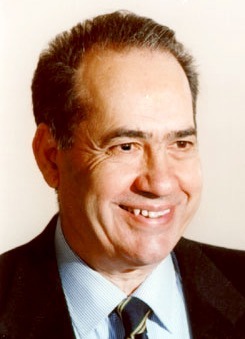
Giuseppe Pisanu, born on January 2, 1937, in Ittiri, Sardinia, is a significant figure in Italian politics with a career spanning several decades. His involvement in the Italian political landscape, particularly with the Christian Democracy party (Democrazia Cristiana) and later with Forza Italia, has shaped various aspects of Italian governance and policy. This article explores Pisanu’s life, his rise to prominence, and his impact on Italian politics.
Early Life and Political Beginnings
Giuseppe Pisanu’s journey in politics began with the Christian Democracy party, a major political force in Italy during the late 20th century. He started his political career at the local level in Sardinia, serving as a provincial leader in Sassari and later as a regional leader in Sardinia. His organizational skills and political acumen soon propelled him to a national level where he became the head of the national political secretariat of the Christian Democracy party from 1975 to 1980.
Pisanu’s political career saw a steady rise, and from 1972 to 1992, he served as a deputy in the Italian Parliament. During this time, he held various influential positions that contributed to his growing reputation in Italian politics. His tenure as a deputy was marked by his involvement in key legislative processes and his role in shaping Italian domestic policies.
Ministerial Positions and Scandals
Pisanu’s career took a significant turn when he was appointed Undersecretary of State for the Treasury from 1980 to 1983 under Prime Minister Arnaldo Forlani. His time in this position was, however, marred by the P2 Masonic lodge scandal, which involved accusations of corruption and illicit activities linked to several high-profile figures, including Flavio Carboni and Roberto Calvi. Pisanu’s association with these scandals led to his resignation, a setback in his political career.
Despite this controversy, Pisanu continued to make a significant impact in Italian politics. From 1986 to 1990, he served as Undersecretary of State for Defense in the DC-PSI (Democratic Party of the Left-Socialist Party) and Pentapartito governments, which were led by Bettino Craxi, Giovanni Goria, and Ciriaco De Mita. His role in the defense sector was crucial during a period of substantial international and domestic political tension.
Transition to Forza Italia
The dissolution of the Christian Democracy party in 1994 marked a pivotal moment in Pisanu’s career. He joined the newly formed Forza Italia party, led by Silvio Berlusconi, a shift that aligned him with the center-right political movement. Pisanu was elected as a deputy for Forza Italia in 1994, 1996, and 2001, reflecting his continued influence and popularity in Italian politics. During this time, he also served as the president of Forza Italia’s parliamentary group, further solidifying his role in the party.
Minister of the Interior and Anti-Terrorism Measures
One of Pisanu’s most notable roles was as Minister of the Interior, a position he held from July 3, 2002, to April 2006 during Berlusconi’s second and third governments. His tenure as Interior Minister was marked by his efforts to address national security concerns, particularly in the context of international terrorism. Pisanu was instrumental in implementing anti-terrorism measures, including a decree that mandated the retention of IP addresses and phone numbers by internet service providers to combat anonymous online activity.
This decree was part of a broader effort to enhance Italy’s counter-terrorism capabilities and improve national security. Pisanu’s work in this area reflected his commitment to addressing the evolving threats faced by Italy and the international community.
Controversies and Electoral Success
In 2006, Pisanu was elected senator for Forza Italia in Campania. His political career, however, was not without controversy. In May 2006, intercepted phone calls between Pisanu and Luciano Moggi, a key figure in the Italian football scandal (Calciopoli), were leaked. The calls revealed Pisanu requesting assistance for his local football team, Torres Calcio, raising questions about his involvement in the scandal and his political integrity.
Despite these controversies, Pisanu remained a prominent figure in Italian politics. In the 2008 elections, he was re-elected on the lists of the Popolo della Libertà (People of Freedom) party, which succeeded Forza Italia. His continued electoral success highlighted his enduring influence and support within Italian political circles.
Legacy and Impact
Giuseppe Pisanu’s career reflects a complex blend of achievements and controversies. His work in various ministerial roles, particularly in defense and internal security, has had a lasting impact on Italian policy. His efforts in combating terrorism and addressing national security concerns were significant during a period of heightened global tension.
Pisanu’s involvement in the Christian Democracy party and his subsequent shift to Forza Italia underscore his adaptability and strategic acumen in navigating Italy’s evolving political landscape. His career also illustrates the challenges faced by politicians in maintaining public trust and managing controversies.
Despite the setbacks, Pisanu’s contributions to Italian politics are notable. His legislative and ministerial roles have shaped various aspects of Italian governance, and his impact on national security policies remains a key part of his legacy.
Conclusion
Giuseppe Pisanu’s life and career offer valuable insights into the complexities of Italian politics. From his early days with the Christian Democracy party to his significant roles in Forza Italia and as Minister of the Interior, Pisanu has played a crucial role in shaping Italian political and security landscapes. His career is a testament to his dedication to public service, even in the face of challenges and controversies.
Pisanu’s story is one of resilience and adaptability, reflecting the dynamic nature of Italian politics and the evolving challenges faced by its leaders. As Italy continues to navigate its political and security challenges, Giuseppe Pisanu’s career remains a significant chapter in the country’s political history.


