
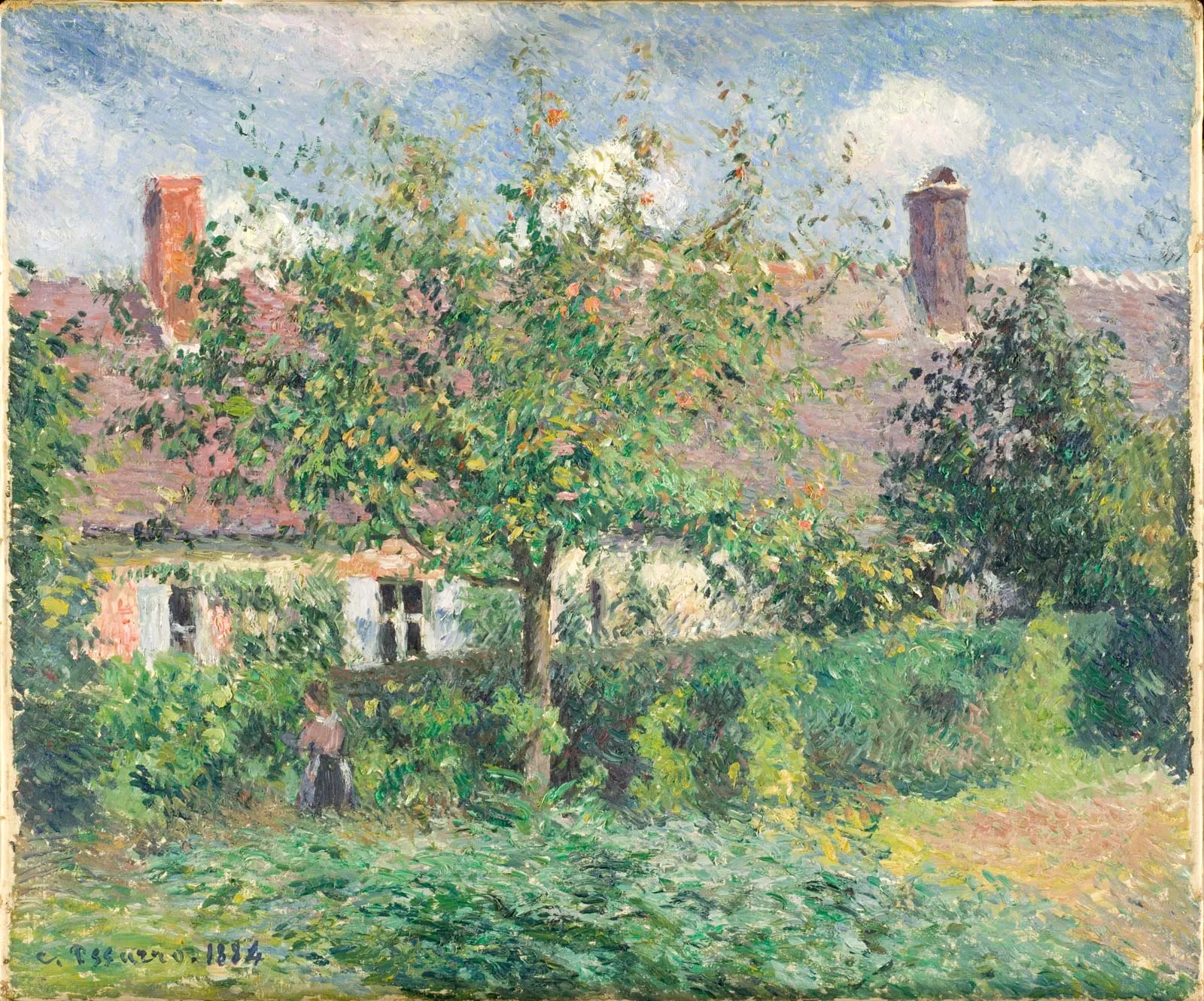
Camille Pissarro, born on July 10, 1830, in the Danish West Indies (modern-day U.S. Virgin Islands), was a key figure in the development of Impressionism and Post-Impressionism. His journey from the Caribbean to becoming one of the most celebrated artists in Paris is a story of persistence, innovation, and a deep commitment to artistic expression. This article delves into the life of Camille Pissarro, exploring his age, rise to fame, and the highlights of his extraordinary life.
Early Life and Education
Pissarro was born to a French-Jewish father of Portuguese descent and a Creole mother, which gave him a diverse cultural background. His father ran a general store on the island of St. Thomas, and young Camille was expected to follow in the family business. However, Pissarro had other plans. At the age of 12, he was sent to France to attend the Savary Academy in Passy, where he first developed an interest in drawing and the arts.
After completing his studies, Pissarro returned to St. Thomas to work in his father’s business. Despite his familial obligations, his passion for art persisted. He began sketching the lush landscapes of the Caribbean and, after a few years, decided to pursue his artistic dreams. In 1852, Pissarro left St. Thomas for Venezuela, where he spent two years honing his skills and saving money for a return to Europe.
Journey to Paris: The Cradle of Impressionism
In 1855, Pissarro finally made his way to Paris, the epicenter of the art world at the time. He enrolled in the École des Beaux-Arts and the Académie Suisse, where he studied under the great masters of the era. Pissarro was deeply influenced by the works of Jean-Baptiste Camille Corot, Gustave Courbet, and Jean-François Daubigny, all of whom advocated for painting outdoors (en plein air) and capturing the natural light and scenery.
Pissarro’s time in Paris also connected him with other artists who would later become central to the Impressionist movement, including Édouard Manet, Claude Monet, and Paul Cézanne. These friendships were crucial in shaping Pissarro’s style, which focused on the effects of light and atmosphere, using loose brushwork and vibrant colors.
The Birth of Impressionism and Pissarro’s Role
The late 1860s and early 1870s were formative years for Pissarro and his contemporaries. The conservative Salon, the official art exhibition of the Académie des Beaux-Arts in Paris, rejected many of their works, leading them to seek alternative ways to display their art. In 1874, Pissarro, along with Monet, Cézanne, and others, organized the first independent group exhibition, which marked the birth of the Impressionist movement.
Pissarro’s contributions to the exhibition were significant. His works, which often depicted rural scenes and everyday life, exemplified the Impressionist focus on capturing the fleeting effects of light and color. Unlike some of his peers who favored urban scenes, Pissarro was drawn to the countryside, particularly the small towns around Paris, such as Pontoise and Louveciennes. His paintings from this period, like “The Road to Versailles, Louveciennes, Snow Effect” (1869), showcase his mastery of light and atmosphere.
Challenges and Perseverance
Despite his growing reputation, Pissarro faced numerous challenges throughout his career. The Franco-Prussian War of 1870-1871 forced him to flee France and take refuge in London. During his absence, his home in Louveciennes was ransacked by soldiers, and many of his early works were destroyed.
Pissarro’s time in London was productive, however. He painted several views of the city, particularly the Norwood and Sydenham areas, and exhibited his work at the London gallery of Paul Durand-Ruel, who would become one of the most important art dealers of the Impressionist movement. Upon returning to France after the war, Pissarro found himself in financial difficulty. Despite these hardships, he continued to paint and support the Impressionist exhibitions, even when they were met with harsh criticism from the public and critics alike.
Later Years: From Impressionism to Neo-Impressionism
In the 1880s, Pissarro began exploring new artistic directions. He was introduced to the technique of pointillism, a style developed by Georges Seurat and Paul Signac. This method involved applying small, distinct dots of color to the canvas, which would blend in the viewer’s eye to create a luminous effect. Pissarro was fascinated by this approach and adopted it in his work, although he eventually returned to his more traditional Impressionist style.
Pissarro’s later works often depicted urban scenes, such as the bustling streets of Paris, Rouen, and Le Havre. His series of paintings of the Boulevard Montmartre in Paris is particularly renowned. These paintings, executed from a high vantage point, capture the vibrancy of city life through different seasons and times of day. Despite his failing eyesight in his later years, Pissarro continued to paint, adapting his techniques to accommodate his limitations.
Personal Life and Legacy
Pissarro was not only a pioneer of Impressionism but also a dedicated family man. He married Julie Vellay, a former domestic servant, in 1871, and together they had seven children. Many of Pissarro’s children, including his sons Lucien, Georges, and Félix, followed in his footsteps and became artists.
Throughout his life, Pissarro remained committed to his principles, both artistic and political. He was an anarchist, believing in social equality and justice, which sometimes put him at odds with the more conservative elements of the art world. However, his gentle nature and dedication to his craft earned him the respect and admiration of his peers.
Pissarro’s influence on the art world cannot be overstated. He was a mentor to many younger artists, including Paul Gauguin and Vincent van Gogh, who both credited him with shaping their artistic development. His willingness to experiment and embrace new techniques kept his work fresh and innovative throughout his career.
Conclusion: The Legacy of Camille Pissarro
Camille Pissarro passed away on November 13, 1903, in Paris, at the age of 73. His death marked the end of an era, but his legacy lived on through his art and the many artists he influenced. Today, Pissarro is celebrated as one of the founding figures of Impressionism, a movement that revolutionized the art world and continues to inspire artists and art lovers alike.
Pissarro’s life is a testament to the power of perseverance, creativity, and innovation. From his humble beginnings in the Caribbean to his role as a central figure in one of the most important art movements in history, Pissarro’s journey is a remarkable story of artistic achievement and personal integrity. His works remain a vital part of art history, celebrated in museums and collections around the world, and his influence continues to be felt in the art world today.


