
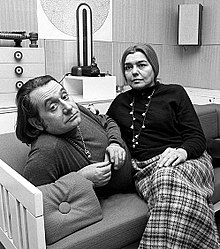
Fernanda Pivano, born on July 18, 1917, in Genoa, Italy, is a name synonymous with the cultural bridge between Italy and American literature. As a journalist, literary critic, translator, and author, Pivano’s contributions to the dissemination of American literature in Italy are invaluable. Her work spans decades, and her influence has left an indelible mark on both the literary and cultural landscapes. This article delves into her life, exploring her age, fame, and the key highlights that defined her illustrious career.
Early Life and Education
Fernanda Pivano was born into a well-to-do family in Genoa but moved to Turin during her adolescence. Her educational journey began at the prestigious Massimo d’Azeglio High School, where she studied classical subjects. It was during her time at this school that she encountered one of the most significant influences in her life: Cesare Pavese, who would become her teacher and mentor.
Pivano’s academic pursuits led her to the University of Turin, where she graduated in 1941 with a degree in Literature. Her thesis focused on “Moby Dick,” the magnum opus of Herman Melville, and was recognized by the Centro di Studi Americani in Rome. This early academic achievement foreshadowed her lifelong passion for American literature.
In the same year, Pivano also obtained a degree in Philosophy under the guidance of Nicola Abbagnano, a renowned philosopher, and remained his assistant for several years. Her dual degrees in Literature and Philosophy equipped her with a unique perspective, allowing her to approach literary works with both analytical depth and philosophical insight.
The Beginnings of a Literary Career: Translation and American Literature
Fernanda Pivano’s literary career began in 1943, under the mentorship of Cesare Pavese, with her partial translation of Edgar Lee Masters’ “Spoon River Anthology.” This work, published by Einaudi, marked the start of Pivano’s long and illustrious career as a translator and literary critic.
The translation of “Spoon River Anthology” was groundbreaking, as it introduced Italian readers to a new form of American poetry, rich in themes of life, death, and the human condition. Pivano’s translation captured the essence of Masters’ work, making it accessible to a broader audience in Italy and setting the stage for her future endeavors in promoting American literature.
Pivano’s role as a translator extended to some of the most iconic American authors of the 20th century, including William Faulkner, Ernest Hemingway, F. Scott Fitzgerald, Sherwood Anderson, and Gertrude Stein. Her translations were not mere linguistic transpositions; they were accompanied by extensive critical essays that provided biographical and social context, enriching the reader’s understanding of the works.
Her relationship with Hemingway was particularly significant. In 1948, Pivano met Hemingway in Cortina, Italy, establishing a deep professional and personal connection. The following year, she translated Hemingway’s “A Farewell to Arms,” which was published by Mondadori. This translation further solidified her reputation as a leading authority on American literature in Italy.
The Role of a Cultural Ambassador: Bridging Italy and America
Fernanda Pivano’s influence extended beyond translation; she became a cultural ambassador, introducing Italian readers to the works of contemporary American authors. Her role as a literary scout for Italian publishers brought attention to writers such as Richard Wright, Allen Ginsberg, William Burroughs, Jack Kerouac, Gregory Corso, and Lawrence Ferlinghetti.
Pivano’s efforts were instrumental in bringing the voices of the American Beat Generation to Italy. She recognized the cultural and literary significance of these writers, whose works challenged conventional norms and explored themes of rebellion, existentialism, and the search for identity. Her translations and critical essays helped to contextualize these works within the broader social and cultural movements of the time.
Pivano’s deep connection to American literature also led her to explore the works of younger authors, such as David Foster Wallace, Jay McInerney, Chuck Palahniuk, Jonathan Safran Foer, and Bret Easton Ellis. Her essay on Ellis, in particular, offered a historical overview of American literary minimalism, highlighting the evolution of narrative styles and thematic concerns in contemporary literature.
Through her translations, essays, and editorial work, Pivano played a pivotal role in shaping the Italian literary landscape. She brought a fresh perspective to Italian readers, challenging them to engage with new ideas and literary forms from across the Atlantic.
Personal Connections and Literary Influences
Pivano’s personal and professional relationships with some of the most prominent figures in American literature enriched her work and provided her with unique insights into their lives and creative processes. Her close friendship with Ernest Hemingway, for example, was characterized by mutual respect and admiration. Hemingway’s influence on Pivano’s work was profound, and their correspondence revealed a deep intellectual and emotional connection.
Pivano’s interactions with other literary giants, such as Allen Ginsberg and William Burroughs, further expanded her understanding of the American literary scene. She was not merely a translator but a participant in the cultural and literary movements of her time. Her first trip to the United States in 1956 marked the beginning of numerous journeys that took her across America, as well as to India, New Guinea, the South Seas, and various countries in Asia and Africa.
These travels were more than just physical journeys; they were intellectual and spiritual explorations that influenced Pivano’s writing and worldview. Her encounters with different cultures and literary traditions enriched her work and allowed her to bring a global perspective to her translations and essays.
A Literary Critic and Music Enthusiast
In addition to her work as a translator and cultural ambassador, Fernanda Pivano was also a respected literary critic and music enthusiast. Her critical essays were known for their thoroughness and depth, often exploring the historical, social, and cultural contexts of the works she translated. Pivano’s approach to literary criticism was informed by her own experiences and her direct interactions with the authors she wrote about.
Pivano’s love for music, particularly Italian and international popular music, was another aspect of her multifaceted career. She was an ardent admirer of Fabrizio De André, one of Italy’s most beloved singer-songwriters. Pivano famously remarked in an interview that “I believe Bob Dylan is the American Fabrizio De André,” highlighting her deep appreciation for De André’s lyrical prowess and his influence on Italian music.
Pivano’s engagement with music was not limited to De André; she also explored the works of other musicians and their impact on popular culture. Her writings on music reflected her broader interest in the ways in which different art forms intersect and influence one another.
The Later Years and Legacy
Fernanda Pivano’s contributions to literature, translation, and cultural exchange continued well into her later years. She remained active as a writer, translator, and critic, producing essays, memoirs, and critical studies that offered new insights into the works of American and Italian authors.
Pivano’s legacy is not only defined by her translations and essays but also by her role as a mentor and inspiration to younger generations of writers and translators. Her dedication to promoting American literature in Italy opened doors for countless other works to be translated and appreciated by Italian readers.
In 2009, at the age of 92, Fernanda Pivano passed away in Milan, leaving behind a rich legacy of literary achievements. Her influence on Italian culture is immeasurable, and her work continues to be studied and celebrated by scholars, writers, and readers alike.
Historical Context and Nuances
To fully appreciate Fernanda Pivano’s impact on Italian literature, it is important to understand the historical and cultural context in which she operated. Pivano’s career began during a period of significant political and social change in Italy. The aftermath of World War II and the rise of fascism had left a profound impact on Italian society, and Pivano’s work as a translator and critic was shaped by these events.
Pivano’s introduction of American literature to Italian readers came at a time when Italy was grappling with its own identity and place in the world. The works she translated often dealt with themes of alienation, rebellion, and the search for meaning, resonating with Italian readers who were navigating their own post-war challenges.
Pivano’s translations also contributed to a broader cultural exchange between Italy and the United States. Her work helped to bridge the gap between two very different literary traditions, bringing new voices and perspectives to Italian readers. This exchange was not only literary but also cultural, as Pivano’s translations introduced Italian readers to the social and political issues that were shaping America at the time.
Moreover, Pivano’s role as a cultural ambassador extended beyond literature. Her work in music criticism and her deep connections with American authors made her a key figure in the transatlantic cultural dialogue. Pivano’s life and career are a testament to the power of literature to transcend borders and bring people together.
Conclusion
Fernanda Pivano’s life and career are a testament to the enduring power of literature to shape cultures and bridge divides. From her early translations of American classics to her deep connections with some of the most influential authors of the 20th century, Pivano’s work has left an indelible mark on Italian literature and culture.
Her legacy as a translator, critic, and cultural ambassador continues to inspire new generations of readers and writers. Pivano’s dedication to her craft, her passion for American literature, and her commitment to cultural exchange have ensured that her work will be remembered and celebrated for years to come.
For anyone interested in the history of literature, Fernanda Pivano’s life offers valuable insights into the ways in which literature can transcend national boundaries and foster a deeper understanding of the human experience. Her story is a reminder of the power of words to connect us all.


