
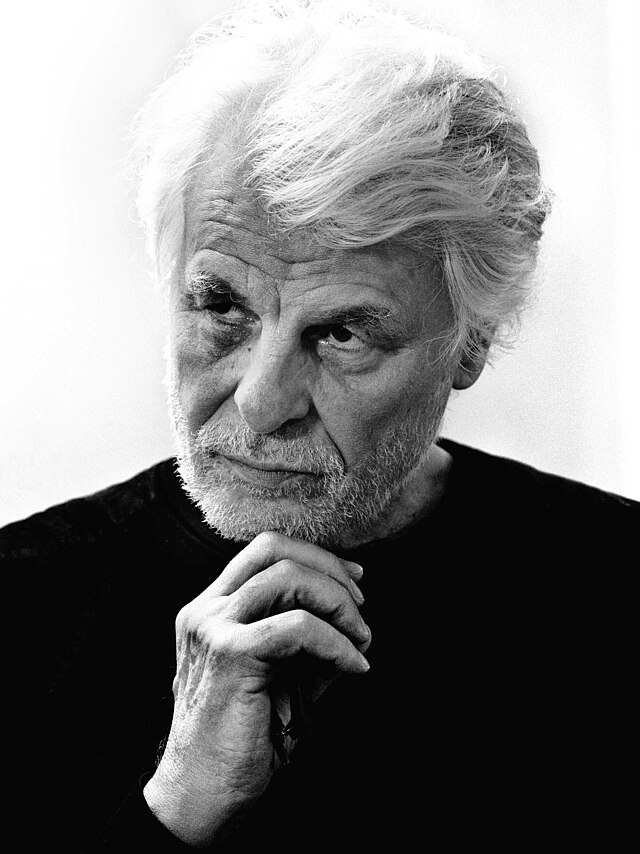
Michele Placido is an Italian actor, director, and screenwriter whose career spans over five decades, making him one of the most respected figures in Italian cinema and television. Born on May 19, 1946, in Ascoli Satriano, a small town in the Apulia region of Italy, Placido has become a household name, both in Italy and internationally. Best known for his role as Commissario Cattani in the TV series La Piovra (“The Octopus”), Placido’s work has earned him critical acclaim, numerous awards, and a lasting legacy in the world of film and theater. This article delves into the life and career of Michele Placido, exploring his early life, rise to fame, and the significant milestones that have defined his journey.
Early Life and Passion for Acting
Michele Placido was born into a modest family in post-war Italy, a time of significant social and economic challenges. Despite these hardships, Placido discovered a passion for acting at a young age. His interest in drama was sparked at the age of 14 when he performed dialogues from Plato in the town square of his native Ascoli Satriano. This early experience ignited a lifelong dedication to the arts, setting him on a path that would eventually lead to a successful career in acting and directing.
To pursue his passion, Placido enrolled in the prestigious Accademia Nazionale d’Arte Drammatica Silvio D’Amico in Rome, one of Italy’s leading drama schools. Here, he honed his craft and developed the skills that would later define his performances on both stage and screen. His formal training at the academy provided him with a strong foundation in classical theater, which would influence his approach to acting throughout his career.
Early Career in Theater and Film
Michele Placido’s professional career began in the theater, where he made his debut in 1970 in a production of Orlando Furioso, directed by Luca Ronconi. This performance marked the beginning of a long and fruitful association with the theater, where Placido would continue to perform throughout his career. His stage work was characterized by a deep commitment to the characters he portrayed and a passion for bringing complex human emotions to life.
Placido transitioned to the screen with his first television appearance in Il Picciotto (1973), followed by his film debut in Romanzo Popolare (1974), directed by Mario Monicelli. In this film, Placido starred alongside Ugo Tognazzi and Ornella Muti, two of Italy’s most beloved actors. His performance in Romanzo Popolare was well-received, showcasing his ability to handle both dramatic and comedic roles with equal skill.
Throughout the 1970s, Placido continued to build his filmography with roles in notable films such as Mio Dio, Come Sono Caduta in Basso! (1974) by Luigi Comencini and Marcia Trionfale (1976) by Marco Bellocchio. These roles helped establish Placido as a versatile actor capable of portraying a wide range of characters, from the introspective to the intensely emotional.
The Role of Commissario Cattani: A Defining Moment
Michele Placido’s career reached new heights in 1984 when he was cast as Commissario Corrado Cattani in La Piovra, an Italian crime drama series that would become one of the most iconic television shows in Italian history. La Piovra explored the dark world of the Mafia and its infiltration into Italian society, and Placido’s portrayal of Cattani—a determined and morally upright police commissioner—resonated deeply with audiences.
The role of Cattani became synonymous with Placido, earning him widespread recognition and acclaim. His performance was characterized by a blend of stoicism and vulnerability, as Cattani battled not only the Mafia but also the internal corruption within the police force. Placido’s portrayal brought a sense of realism and gravity to the series, making La Piovra a critical and commercial success both in Italy and abroad.
Placido’s work on La Piovra spanned the first four seasons (1984-1989), during which the show gained international fame and was broadcast in numerous countries. The series not only solidified Placido’s status as a leading actor but also highlighted the power of television to address serious social issues, such as organized crime and corruption.
Success in Film and Awards
Beyond La Piovra, Michele Placido continued to excel in both film and television. In the 1980s and 1990s, he starred in several important Italian films that showcased his range as an actor. In Mery per Sempre (1989), directed by Marco Risi, Placido played an idealistic teacher who works in a juvenile detention center in Palermo. The film, which dealt with themes of redemption and social justice, was another success for Placido and further demonstrated his ability to take on complex, socially relevant roles.
Placido also portrayed real-life figures with great sensitivity and depth. Notably, he played the role of Giovanni Falcone, the anti-Mafia judge who was assassinated in 1992, in the film Giovanni Falcone (1993) directed by Giuseppe Ferrara. This performance was a powerful tribute to one of Italy’s most respected and courageous public figures, and it underscored Placido’s commitment to roles that reflected the social and political realities of his country.
In addition to his acting, Placido’s directorial efforts began to gain recognition. He made his directorial debut with Pummarò (1990), a film that dealt with the struggles of African immigrants in Italy. The film was well-received and was even presented at the Cannes Film Festival, marking a successful transition from actor to director. Placido’s direction was praised for its sensitivity and courage in tackling difficult social issues.
Placido continued to direct and act in a variety of films throughout the 1990s and 2000s, including Un Eroe Borghese (1995), Del Perduto Amore (1998), and Romanzo Criminale (2005), the latter of which was based on the true story of the Banda della Magliana, a criminal organization in Rome. Romanzo Criminale was a critical success and solidified Placido’s reputation as a filmmaker with a keen eye for both drama and social commentary.
A Multifaceted Career and Continuing Influence
Michele Placido’s career has been marked by a willingness to explore a wide range of genres and themes, from crime dramas to historical biopics to social issue films. His ability to move seamlessly between acting and directing has made him a unique figure in Italian cinema, respected not only for his performances but also for his contributions behind the camera.
Placido’s work often reflects a deep concern with the social and political issues facing Italy, particularly the influence of organized crime and the struggles of marginalized communities. This focus has earned him a reputation as a socially conscious artist who is not afraid to use his platform to address challenging topics.
His versatility as an actor is matched by his ability to create compelling and thought-provoking films as a director. Whether playing a heroic figure like Giovanni Falcone or a complex character in a crime drama, Placido brings a depth of emotion and authenticity to his roles that resonates with audiences.
Awards and Recognition
Michele Placido’s contributions to film and television have been recognized with numerous awards and honors. He has won several prestigious accolades, including the Nastro d’Argento, Italy’s oldest film award, and the Ennio Flaiano Prize for his work on La Piovra. His directorial efforts have also been celebrated, with films like Un Eroe Borghese winning the Efebo d’Oro and other honors.
Placido’s work continues to be influential in both Italian and international cinema. His films are often studied for their portrayal of Italian society and their engagement with social issues, making him an important figure in the world of film both as an actor and a director.
Personal Life and Legacy
Michele Placido’s personal life has been as multifaceted as his career. He has been married twice and is the father of five children, some of whom have followed in his footsteps in the entertainment industry. His daughter, Violante Placido, is a well-known actress and singer in Italy.
Placido’s legacy in Italian cinema is secure, with a body of work that spans decades and includes some of the most important films and television series in the country’s history. His commitment to telling stories that matter, whether through his acting or his directing, has made him a respected and beloved figure in the world of Italian arts and culture.
As he continues to work in the industry, Placido remains a vital presence in Italian cinema, always seeking to challenge himself and his audience with new and engaging projects. His work, both past and present, continues to inspire new generations of filmmakers and actors, ensuring that his influence will be felt for years to come.
Conclusion
Michele Placido is more than just an actor; he is a storyteller, a director, and a social commentator. His work reflects a deep understanding of the human condition and a commitment to exploring the complexities of life through the medium of film and television. From his iconic role in La Piovra to his acclaimed directorial efforts, Placido has left an indelible mark on Italian cinema and continues to be a powerful voice in the industry.
His career is a testament to the power of film to reflect and influence society, and his contributions will continue to be celebrated for generations to come. Michele Placido’s journey from a small town in Apulia to the heights of international fame is a story of talent, determination, and a deep love for the art of storytelling.


