
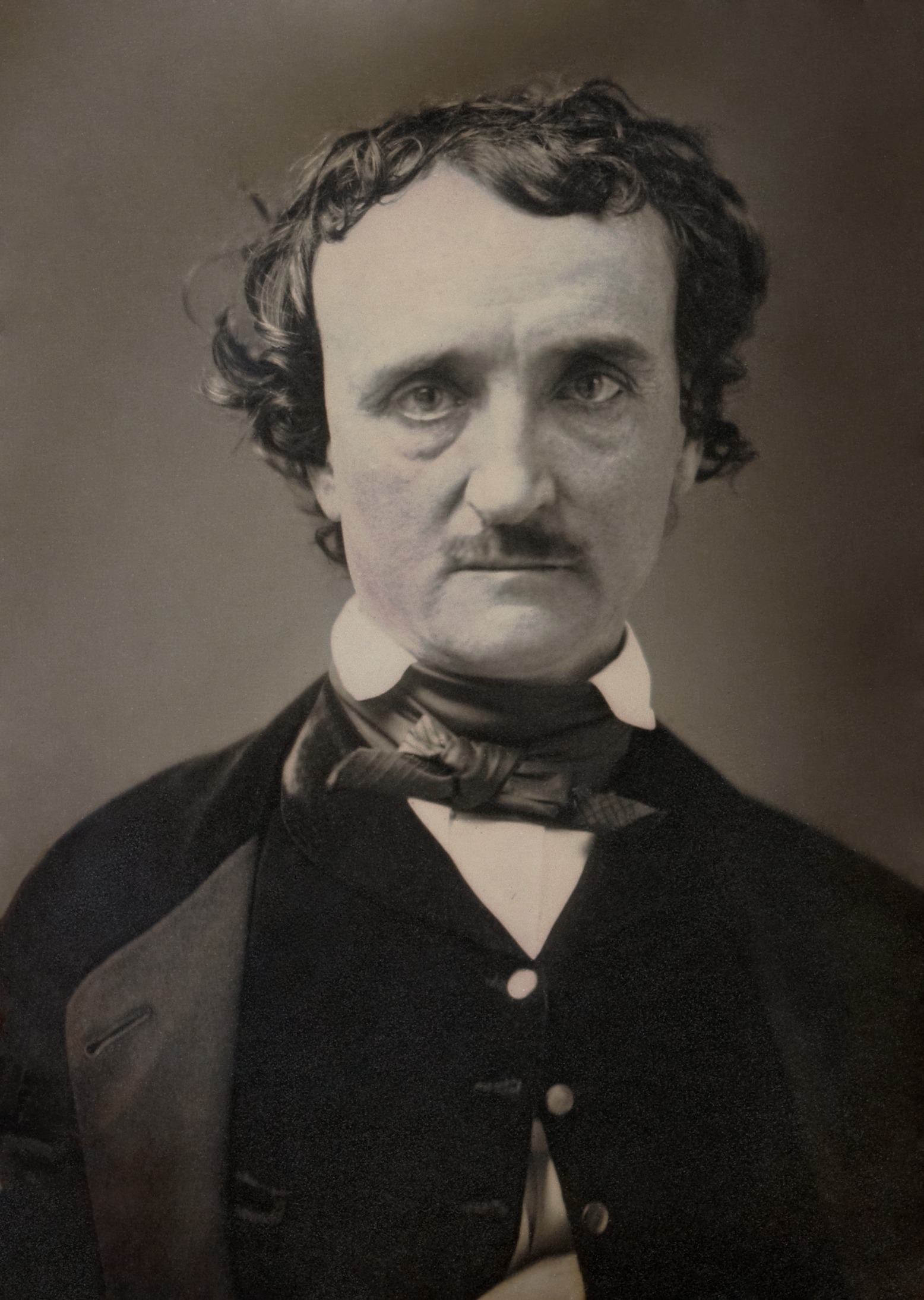
Edgar Allan Poe is a name synonymous with gothic literature, mystery, and the macabre. Born on January 19, 1809, in Boston, Massachusetts, Poe’s life was as tumultuous and tragic as the stories he penned. His legacy as a writer, poet, and literary critic remains influential, with his works continuing to captivate readers around the world. In this article, we delve deep into the life of Edgar Allan Poe, exploring his journey to fame, the highlights of his literary career, and the historical context that shaped his works. Through detailed insights and explanations, we aim to provide a comprehensive understanding of who Edgar Allan Poe was and why his contributions to literature remain significant.
Early Life and Tragic Beginnings
Edgar Allan Poe’s early life was marked by loss and hardship, experiences that would profoundly influence his writing. He was the second child of actors David Poe Jr. and Elizabeth Arnold Poe, both of whom were part of the struggling theater scene in the early 19th century. Poe’s father abandoned the family when Edgar was just an infant, and his mother passed away shortly thereafter, in 1811, when Poe was only two years old. Orphaned and destitute, Poe was taken in by John and Frances Allan, a wealthy couple from Richmond, Virginia.
While the Allans provided Poe with a comfortable upbringing, his relationship with his foster father, John Allan, was strained. Allan was a successful merchant, but he and Poe clashed over financial matters and Poe’s ambitions. Allan’s reluctance to fully support Poe financially led to significant tensions, particularly when Poe was attending the University of Virginia. Unable to pay his debts, Poe was forced to leave the university and subsequently enlisted in the United States Army in 1827 under the pseudonym “Edgar A. Perry.”
The Struggles of a Young Writer
Poe’s early attempts to establish himself as a writer were met with limited success. In 1827, he published his first collection of poems, Tamerlane and Other Poems, which went largely unnoticed. His subsequent enrollment at the United States Military Academy at West Point was short-lived; he deliberately sought expulsion by neglecting his duties and disobeying orders. After leaving West Point, Poe focused on writing full-time.
In 1831, Poe moved to Baltimore to live with his aunt, Maria Clemm, and her daughter, Virginia Clemm, who would later become his wife. It was during this time that Poe began to gain recognition as a writer, although his financial situation remained precarious. His short story “MS. Found in a Bottle” won a literary contest in 1833, marking the beginning of his professional career as a writer. However, despite this early success, Poe struggled to find stable employment and continued to live in poverty.
The Southern Literary Messenger and Literary Fame
Poe’s fortunes began to change in 1835 when he became the editor of the Southern Literary Messenger in Richmond, Virginia. His work as an editor and critic quickly garnered attention, particularly for his scathing reviews and his advocacy for higher literary standards. Poe’s reputation as a harsh but insightful critic earned him both admiration and enmity within the literary community.
During his tenure at the Southern Literary Messenger, Poe published several of his most famous works, including “Berenice” and “Morella.” However, his time at the magazine was cut short due to disagreements with the magazine’s owner, leading Poe to move to New York City in search of better opportunities.
Marriage to Virginia Clemm and Continued Struggles
In 1836, Poe married his cousin Virginia Clemm, who was only 13 years old at the time. The marriage, though controversial, was reportedly a loving one, and Virginia became a central figure in Poe’s life. However, their life together was plagued by financial difficulties and Virginia’s deteriorating health, which deeply affected Poe and inspired some of his most haunting works.
Poe continued to write and publish during this period, but his financial situation remained dire. In 1839, he published Tales of the Grotesque and Arabesque, a collection that included some of his most famous stories, such as “The Fall of the House of Usher” and “William Wilson.” Despite the critical acclaim the collection received, it did little to improve Poe’s financial situation.
“The Raven” and Literary Immortality
The year 1845 marked a turning point in Poe’s career with the publication of his most famous poem, “The Raven.” The poem was an immediate success, and its dark, melancholic tone resonated with readers, cementing Poe’s place in American literary history. “The Raven” became one of the most recognizable poems in American literature and established Poe as a master of the macabre.
Following the success of “The Raven,” Poe became the editor of the Broadway Journal, where he published many of his works, including “The Purloined Letter” and “The Cask of Amontillado.” However, despite his growing fame, Poe’s financial troubles persisted, and his health began to deteriorate due to his struggles with alcoholism.
Later Life and Tragic Death
The later years of Poe’s life were marked by personal tragedy and declining health. In 1847, his beloved wife Virginia succumbed to tuberculosis, a loss that devastated Poe and plunged him into deep depression. His writing during this period reflected his grief, with works like “Annabel Lee” and “Ulalume” capturing the profound sense of loss he felt.
Poe’s final years were a mixture of continued literary output and increasing instability. He attempted to court several women in hopes of remarrying, but his erratic behavior and worsening health made these efforts unsuccessful. In 1849, while on a trip to Baltimore, Poe was found delirious on the streets and was taken to a hospital, where he died on October 7, 1849, under mysterious circumstances. The exact cause of his death remains a subject of speculation, with theories ranging from alcoholism to rabies.
Historical Context and Literary Influence
Edgar Allan Poe’s life and works were shaped by the historical context of early 19th-century America, a period characterized by rapid social and cultural changes. The rise of Romanticism, with its emphasis on emotion, individualism, and the supernatural, heavily influenced Poe’s writing. His works often explored themes of death, madness, and the macabre, reflecting both the Romantic fascination with the darker aspects of human experience and Poe’s personal struggles.
Poe’s contributions to literature extend beyond his mastery of gothic fiction. He is often credited with inventing the modern detective story, with his character C. Auguste Dupin serving as the prototype for later fictional detectives like Sherlock Holmes. Poe’s influence is also evident in the development of the short story as a distinct literary form, with his emphasis on unity of effect and economy of language becoming key principles in the genre.
In addition to his fiction, Poe was a prolific literary critic and essayist, whose works on literary theory and poetics have had a lasting impact. His essay “The Philosophy of Composition” offers insights into his approach to writing, particularly in relation to “The Raven,” and remains an important text for understanding his creative process.
The Legacy of Edgar Allan Poe
Edgar Allan Poe’s legacy as a writer and literary innovator is profound. His works continue to be studied and admired for their psychological depth, stylistic innovation, and ability to evoke intense emotional responses. Poe’s influence can be seen in the works of countless writers, including Charles Baudelaire, H.P. Lovecraft, and Arthur Conan Doyle, among others.
Poe’s legacy extends beyond literature; his life and works have inspired numerous adaptations in film, music, and popular culture. The themes and motifs he explored—obsession, madness, the supernatural—continue to resonate with audiences today, making Poe a timeless figure in the world of art and literature.
Moreover, Poe’s life story, marked by personal tragedy and professional struggles, has added to the mystique surrounding him, further cementing his status as an iconic figure in American culture. His ability to channel his own experiences of loss and despair into his writing has made his works deeply relatable, even across the centuries.
Conclusion: Edgar Allan Poe’s Enduring Influence
Edgar Allan Poe’s contributions to literature are immeasurable. Despite his short and troubled life, he produced a body of work that has had a lasting impact on both American and global literature. Poe’s exploration of the human psyche, his innovations in the short story and detective fiction, and his ability to evoke the eerie and unsettling have made him one of the most influential writers in the history of literature.
As we reflect on Poe’s life and work, it becomes clear that his influence extends far beyond his own time. His stories and poems continue to captivate readers, and his legacy as a pioneer of gothic fiction and a master of psychological horror remains unchallenged. Edgar Allan Poe is not just a figure of the past; his work continues to live on, inspiring new generations of writers and readers to explore the darkest corners of the human soul.


