
Introduction
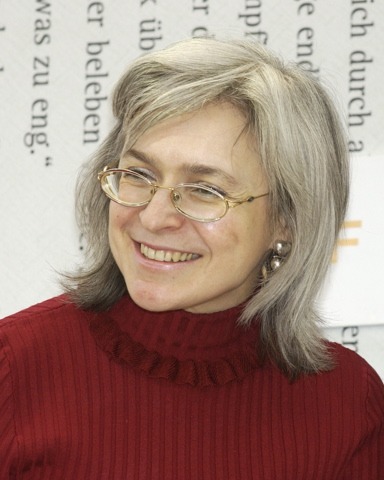
Anna Politkovskaja, a name synonymous with fearless journalism, was a Russian journalist known for her courageous reporting on the Chechen conflict and her outspoken criticism of Vladimir Putin’s government. Born on August 30, 1958, in New York City, Politkovskaja’s life was marked by her relentless pursuit of truth and justice in the face of immense danger. Her work brought global attention to the human rights abuses in Chechnya, and her untimely death on October 7, 2006, shocked the world, symbolizing the perils faced by journalists in authoritarian regimes. This article delves into the life, career, and legacy of Anna Politkovskaja, exploring her impact on journalism and the historical context of her work.
Early Life and Education
Anna Stepanovna Politkovskaja was born in New York City to Soviet diplomats assigned to the United Nations. Despite being born in the United States, she was raised in Moscow, where her family returned shortly after her birth. Growing up in the Soviet Union, Politkovskaja was exposed to the rigid controls on information and the state’s influence over media, which would later shape her career as a journalist.
She pursued her education at Moscow State University, one of the premier institutions in the Soviet Union, where she studied journalism. In 1980, she graduated and began her career as a journalist, a path that would lead her to become one of the most prominent and controversial figures in Russian media.
Early Career and Rise to Prominence
Anna Politkovskaja’s journalism career began in the early 1980s, during a time when the Soviet Union was still a formidable superpower. Her first significant role was with Izvestiya, a well-established newspaper in Moscow. At Izvestiya, Politkovskaja honed her skills as a journalist, but it wasn’t until the fall of the Soviet Union in 1991 that she began to truly make her mark.
The collapse of the Soviet Union ushered in a period of significant change in Russia, characterized by political instability, economic turmoil, and social upheaval. This period also saw the rise of a more open press, and Politkovskaja became one of the voices pushing the boundaries of journalistic freedom. In 1994, she joined Obshchaya Gazeta, where she worked under the editor-in-chief Yegor Yakovlev, a well-known figure who had been an ally of Mikhail Gorbachev. It was here that Politkovskaja began to develop her critical voice, writing about the challenges facing post-Soviet Russia.
The Chechen Wars: A Turning Point
The turning point in Anna Politkovskaja’s career came in 1999 when she began covering the Second Chechen War. The conflict, which pitted Russian federal forces against Chechen separatists, was marked by widespread human rights abuses, including the targeting of civilians, kidnappings, and extrajudicial killings. Politkovskaja was one of the few journalists who dared to report on these atrocities, bringing the horrors of the war to the attention of the Russian public and the international community.
In 1999, she left Obshchaya Gazeta to join Novaya Gazeta, a small but fiercely independent newspaper known for its investigative journalism. At Novaya Gazeta, Politkovskaja found the editorial freedom she needed to pursue her investigations into the Chechen conflict. She traveled extensively in the North Caucasus region, interviewing victims of the war, visiting hospitals and refugee camps, and speaking with both Russian soldiers and Chechen civilians.
Her reporting from Chechnya was unflinching and often graphic, detailing the suffering of the civilian population and the brutal tactics employed by Russian forces. Politkovskaja’s articles in Novaya Gazeta exposed the harsh realities of the war, earning her both national and international acclaim. However, her work also made her a target for those who wanted to silence her.
Confronting Power: Criticism of Putin and the Kadyrovs
Anna Politkovskaja’s reporting was not limited to the Chechen conflict; she also became one of the most vocal critics of Vladimir Putin’s government. She was particularly critical of Putin’s policies in Chechnya, which she saw as exacerbating the conflict and perpetuating a cycle of violence. Politkovskaja accused the Russian government of using the war as a means to consolidate power, crush dissent, and suppress the freedoms that had begun to emerge in the post-Soviet era.
Her criticisms extended to the leaders installed by Moscow in Chechnya, particularly Akhmad Kadyrov and later his son, Ramzan Kadyrov. The Kadyrovs, who were backed by the Kremlin, were accused of numerous human rights violations, including torture, forced disappearances, and extrajudicial killings. Politkovskaja’s fearless reporting on the Kadyrov regime highlighted the brutal reality of life in Chechnya under their rule.
Her book, “Putin’s Russia,” published in 2004, was a scathing indictment of the Russian president and his administration. The book detailed the erosion of democratic freedoms in Russia under Putin’s leadership, the corruption endemic in the government, and the human cost of the Chechen conflict. “Putin’s Russia” cemented Politkovskaja’s reputation as a courageous journalist unafraid to speak truth to power, but it also further increased the risks she faced.
Threats and Intimidation
Throughout her career, Anna Politkovskaja faced numerous threats and acts of intimidation, both from state actors and individuals connected to the conflict in Chechnya. In 2001, she was forced to flee to Vienna after receiving death threats from Sergei Lapin, an officer in the OMON (the Russian special police force). Lapin was implicated in atrocities against Chechen civilians, and Politkovskaja’s reporting had brought his actions to light. Although Lapin was arrested, he was later released, and the case against him dragged on for years.
The threats against Politkovskaja were not limited to anonymous emails or phone calls; there were also more direct attempts to silence her. In October 2002, during the Moscow theater hostage crisis, Politkovskaja was called upon to help negotiate with the Chechen terrorists who had taken over 800 people hostage. Her involvement in the negotiations highlighted her deep commitment to finding a peaceful resolution to the conflict, but it also placed her in an incredibly dangerous situation.
In September 2004, on her way to cover the Beslan school siege, where Chechen militants had taken over 1,100 people hostage, Politkovskaja fell gravely ill on the flight to the North Caucasus. Many believed that she had been poisoned to prevent her from reaching Beslan, although this was never conclusively proven. The incident underscored the constant danger she faced in her work.
Assassination and Aftermath
On October 7, 2006, Anna Politkovskaja was assassinated in the elevator of her apartment building in Moscow. She had just returned from grocery shopping and was ambushed as she attempted to retrieve more bags from her car. The killer shot her four times, including a final shot to the head, execution-style. Her murder sent shockwaves through Russia and the international community, and it was widely believed that her assassination was directly linked to her journalism.
The investigation into Politkovskaja’s murder was fraught with complications. Several individuals, including former police officers and Chechen nationals, were arrested in connection with the killing. However, the masterminds behind the assassination were never definitively identified or brought to justice. The case remains a symbol of the dangers faced by journalists in Russia and the impunity enjoyed by those who target them.
Legacy and Impact
Anna Politkovskaja’s legacy is one of unparalleled bravery and dedication to the principles of truth and justice. Her reporting on the Chechen wars and her criticism of the Russian government brought attention to issues that many in power would have preferred to keep hidden. Despite the immense personal risks, Politkovskaja continued to pursue her work, driven by a deep sense of duty to the victims of the conflicts she covered.
Her work has been recognized with numerous international awards, including the UNESCO/Guillermo Cano World Press Freedom Prize and the Tiziano Terzani International Journalism Award. These accolades, while significant, pale in comparison to the impact her reporting had on the global understanding of the Chechen conflict and the state of human rights in Russia.
Politkovskaja’s books, including “A Small Corner of Hell: Dispatches from Chechnya” and “Putin’s Russia,” remain essential reading for anyone seeking to understand the complexities of post-Soviet Russia and the brutal realities of the Chechen wars. Her writing continues to inspire journalists around the world who face similar dangers in their pursuit of truth.
Historical Context: Journalism in Putin’s Russia
Anna Politkovskaja’s career must be understood within the broader context of journalism in Russia under Vladimir Putin. When Putin came to power in 1999, he quickly moved to consolidate control over the country’s media. Independent television stations were brought under state control, and journalists who criticized the government faced harassment, intimidation, and, in some cases, violence.
The murder of Politkovskaja was not an isolated incident. Several other journalists who had reported on corruption, human rights abuses, or the Chechen conflict were also killed or attacked during this period. The environment of fear created by these incidents has had a chilling effect on Russian journalism, with many journalists either censoring themselves or fleeing the country to escape persecution.
Despite these challenges, Politkovskaja remained committed to her work. She believed that the role of a journalist was to report the truth, regardless of the consequences. Her determination to continue writing, even in the face of constant threats, serves as a powerful reminder of the importance of press freedom and the role of journalists in holding power to account.
Conclusion
Anna Politkovskaja’s life and work stand as a testament to the courage and determination required to confront injustice and speak truth to power. Her fearless reporting on the Chechen wars and her unwavering criticism of Vladimir Putin’s government exposed the harsh realities of life in post-Soviet Russia and the lengths to which those in power would go to silence dissent.
Politkovskaja’s assassination was a tragic reminder of the dangers faced by journalists around the world, particularly those who challenge authoritarian regimes. Yet, her legacy lives on through her writings, her impact on journalism, and the continued efforts of those who seek to uphold the principles of truth and justice. Anna Politkovskaja will be remembered not only as a journalist but as a symbol of the enduring struggle for press freedom and human rights in Russia and beyond.


