
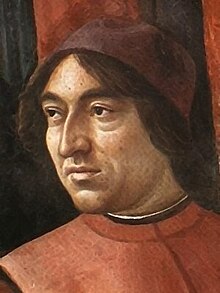
Angelo Poliziano, born Agnolo Ambrogini on July 14, 1454, in Montepulciano, Italy, is a central figure of the Italian Renaissance. As a poet, scholar, and humanist, Poliziano’s influence on literature and the humanities during the 15th century was profound. His works contributed significantly to the development of Renaissance culture, making him one of the most important intellectuals of his time. This article explores his life, achievements, and the historical context that shaped his career, providing a comprehensive overview of his contributions to the Renaissance and his enduring legacy.
Early Life and Education
Born into a family of modest means, Poliziano’s early life was marked by tragedy. His father, Benedetto di Nanni, a notary, was murdered when Poliziano was only ten years old. This loss forced the young Angelo to rely on his intellect and ambition to carve out a place for himself in society. At fourteen, he moved to Florence, the cultural heart of Italy during the Renaissance, where he adopted the name “Poliziano,” derived from “Mons Politianus,” the Latin name for his hometown.
Florence in the mid-15th century was a vibrant hub of artistic and intellectual activity, largely due to the patronage of the Medici family. It was here that Poliziano was exposed to the finest classical education available. He studied under some of the most renowned scholars of the time, including Cristoforo Landino and Marsilio Ficino, who were instrumental in shaping his intellectual development. These early studies laid the foundation for Poliziano’s deep engagement with the classical texts of ancient Greece and Rome, which would later become the cornerstone of his scholarly work.
Rise to Prominence
Poliziano’s scholarly talents quickly caught the attention of the Medici family, particularly Lorenzo de’ Medici, also known as Lorenzo the Magnificent. Lorenzo recognized Poliziano’s potential and took him under his wing, offering him a place in the Medici household. By 1473, Poliziano had become Lorenzo’s personal secretary and tutor to his children, including Piero de’ Medici.
The relationship between Poliziano and the Medici family was mutually beneficial. Poliziano provided intellectual companionship and educational services, while the Medici offered him the financial support and social connections necessary to pursue his scholarly interests. This patronage allowed Poliziano to access the vast Medici library, where he immersed himself in the study of classical literature and began producing his own works.
Literary and Scholarly Achievements
Poliziano’s early literary works were predominantly written in Latin and Greek, reflecting his deep engagement with the classical world. One of his first major accomplishments was the completion of the Latin translation of Homer’s Iliad, a project that had been started by the scholar Carlo Marsuppini. This translation established Poliziano as one of the leading classical scholars of his time.
Among Poliziano’s most celebrated works are the Stanze per la giostra, an unfinished poetic composition written in Italian. The Stanze were intended to celebrate the jousting victory of Giuliano de’ Medici, Lorenzo’s brother, in 1475. Although the poem was never completed due to Giuliano’s assassination during the Pazzi Conspiracy in 1478, it remains a masterpiece of Italian Renaissance literature. The work is noted for its rich imagery, elegant language, and the way it seamlessly integrates classical mythology with contemporary events.
Another significant contribution of Poliziano is his Miscellanea, a collection of critical essays on classical texts. The Miscellanea is a testament to Poliziano’s expertise in philology, the study of language in historical texts, and his ability to engage deeply with the works of ancient authors. These essays not only demonstrated his scholarly rigor but also set new standards for classical scholarship in the Renaissance.
The Pazzi Conspiracy and Its Aftermath
The Pazzi Conspiracy of 1478 was a turning point in Poliziano’s life. This event saw the attempted coup by the Pazzi family to overthrow the Medici, resulting in the assassination of Giuliano de’ Medici and the near-fatal wounding of Lorenzo. Poliziano, who was close to the Medici family, wrote a detailed account of the conspiracy, Conjurationis Pactianae Commentarium, which provided a vivid and politically charged narrative of the events.
The aftermath of the conspiracy and the ensuing conflict placed significant strain on Poliziano’s relationship with the Medici, particularly with Lorenzo’s wife, Clarice Orsini. Disagreements over the education of Lorenzo’s children led to Poliziano’s temporary departure from Florence. During this period, he sought refuge in Mantua under the patronage of the Gonzaga family, where he composed the Fabula di Orfeo, a poetic drama that is considered one of the earliest examples of secular opera.
Return to Florence and Academic Career
In 1480, Lorenzo de’ Medici persuaded Poliziano to return to Florence, recognizing the scholar’s value to the intellectual life of the city. Upon his return, Poliziano was appointed to a prestigious academic position as the chair of Greek and Latin eloquence at the Florentine Studio (the University of Florence). This role allowed him to continue his scholarly work while also teaching the next generation of humanists.
During this period, Poliziano produced some of his most important works, including the Sylvae, a series of Latin poems that explore various aspects of classical literature and philosophy. The Sylvae are notable for their intricate structure and the way they reflect Poliziano’s deep understanding of the classical tradition. Each poem serves as a preface to a different field of study, such as philosophy, natural history, and poetry, demonstrating Poliziano’s wide-ranging intellectual interests.
Poliziano’s work during this time also included the Prolusiones, introductory lectures that he delivered at the beginning of his courses. These lectures, later published, provide insight into his methods of teaching and his views on classical literature. They reveal Poliziano as not only a scholar but also an educator who sought to pass on his knowledge and passion for the classics to his students.
Influence on Renaissance Humanism
Angelo Poliziano is often regarded as one of the leading figures of Renaissance humanism, a cultural and intellectual movement that emphasized the study of classical antiquity as a means to understand and improve contemporary society. His works exemplify the humanist ideals of returning to the sources of classical literature, engaging in rigorous textual analysis, and promoting the values of eloquence and virtù.
Poliziano’s influence extended far beyond Florence. His reputation as a scholar attracted students and intellectuals from across Europe, making Florence a center of humanist learning. His contributions to the field of philology, particularly his critical methods for editing and interpreting classical texts, set new standards for scholarly work that would influence future generations of humanists.
Moreover, Poliziano’s writings in the vernacular, particularly his Italian poetry, played a crucial role in the development of Italian literature. His use of the Italian language in his poetic works helped to elevate it to a level of literary prestige comparable to Latin and Greek, contributing to the formation of a distinct Italian literary tradition.
Final Years and Legacy
Poliziano’s final years were marked by continued scholarly activity, but also by increasing health problems. Despite his declining health, he remained committed to his academic duties and continued to produce literary and scholarly works. Unfortunately, his life was cut short at the age of 40 when he died in Florence on September 29, 1494.
The exact cause of Poliziano’s death remains a subject of speculation, with theories ranging from natural illness to poisoning. Regardless of the circumstances of his death, Poliziano left behind a rich legacy that would influence not only the Renaissance but also the broader course of Western intellectual history.
Historical Context and Impact
To fully appreciate Angelo Poliziano’s achievements, it is essential to understand the historical context in which he lived and worked. The 15th century was a period of profound change in Italy, characterized by the rise of powerful city-states like Florence, the patronage of the arts and sciences by wealthy families like the Medici, and the rediscovery of classical antiquity that fueled the Renaissance.
Poliziano’s work is a reflection of these broader cultural currents. His deep engagement with classical texts was part of a larger movement to revive the knowledge and values of ancient Greece and Rome. This revival was not merely an academic exercise but was seen as a means to bring about cultural renewal and moral improvement in society.
Moreover, Poliziano’s role as a court scholar and his close relationship with the Medici illustrate the importance of patronage in the Renaissance. Intellectuals like Poliziano relied on the support of powerful patrons to pursue their scholarly activities, and in return, they provided their patrons with cultural capital that enhanced their prestige and influence.
Conclusion
Angelo Poliziano was a towering figure in the Italian Renaissance, whose contributions to literature, scholarship, and humanism have left an indelible mark on Western culture. His works, ranging from elegant poetry to rigorous philological studies, exemplify the intellectual vigor and creativity of the Renaissance. Through his writings and teachings, Poliziano helped to shape the course of Renaissance humanism, making Florence a beacon of learning and culture that attracted scholars from across Europe.
Today, Poliziano is remembered not only for his scholarly achievements but also for his role in the broader cultural transformation of the Renaissance. His life and work serve as a testament to the enduring power of classical learning and the importance of intellectual curiosity in advancing human knowledge and understanding.


