
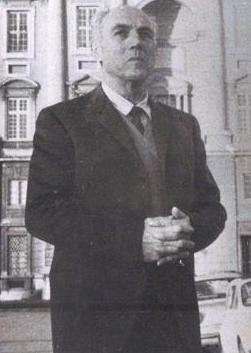
Sante Pollastri, born on August 14, 1899, in Novi Ligure, a small town in the Piedmont region of Italy, is a name that reverberates through the annals of Italian criminal history. Pollastri’s life was a complex tapestry of crime, rebellion, and myth, with his notoriety cementing him as one of the most infamous figures of early 20th-century Italy. Despite being a criminal, his story is interwoven with themes of resistance against authority, making him a symbol of defiance in the face of an increasingly authoritarian regime. This article delves into the life of Sante Pollastri, exploring his age, rise to infamy, and the key highlights that shaped his life, all while considering the historical context and the enduring legacy of his name.
Early Life and Beginnings
Sante Pollastri was born into a working-class family in Novi Ligure, a town known for its industrial activities and close-knit communities. His early life was marked by the struggles typical of many Italian families at the time—hard work, modest means, and a strong sense of community. However, Pollastri’s path would soon diverge dramatically from that of his peers.
The reasons behind Pollastri’s turn to a life of crime are shrouded in mystery, with various theories circulating but none definitively proven. Some accounts suggest that Pollastri’s deep-seated animosity toward the authorities stemmed from personal tragedy. One theory posits that a relative of his was killed by the Carabinieri (Italy’s national gendarmerie) during a botched robbery attempt, while another suggests that his brother, who was forcibly conscripted despite being gravely ill, died during his military service. Yet another theory speculates that Pollastri’s sister was violated by a member of the Carabinieri, prompting Pollastri to take matters into his own hands by killing the perpetrator.
These accounts, however, are largely speculative and have taken on a legendary quality over the years. What is certain is that by his late teens, Pollastri had established himself as a hardened criminal, notorious for his boldness and ruthlessness. His criminal activities would soon escalate, propelling him into the national spotlight as one of Italy’s most wanted men.
Rise to Infamy
Pollastri’s criminal career took off in the 1920s, a tumultuous period in Italian history marked by political instability and the rise of fascism. His exploits quickly earned him the nickname “Pollastro” and he became a thorn in the side of the Italian law enforcement. Known for his hatred of the Carabinieri, Pollastri was responsible for the deaths of several officers, though the exact number remains unclear. Some sources suggest he personally claimed responsibility for at least seven killings, while others believe the true number could be higher.
One of the most notorious incidents attributed to Pollastri occurred in June 1926, when he killed two Carabinieri officers near the town of Mede. This brutal act sent shockwaves through the country and further cemented Pollastri’s reputation as a dangerous and elusive outlaw. Later that same year, in November, he gunned down two policemen in a tavern in Milan’s Via Govone, an event that only added to his growing legend.
During this period, Italy was undergoing significant political transformation, with Benito Mussolini’s fascist regime tightening its grip on power. The fascist government, keen to maintain order and suppress dissent, sought to portray Pollastri as a public enemy. However, due to the regime’s strict control over the media, much of Pollastri’s notoriety was confined to the northern regions of Italy, where his exploits were more widely known and discussed.
The Making of a Legend
Despite the government’s attempts to downplay his significance, Pollastri’s legend began to grow, particularly among those who opposed the fascist regime. For many, especially within the anarchist and anti-fascist movements, Pollastri came to symbolize resistance against an oppressive state. His reputation as a rebel who stood up to authority resonated with those who saw in him a figure of defiance during a time when the democratic foundations of Italy were being eroded.
Pollastri’s exploits also found fertile ground in popular culture. Stories about his daring escapades spread through word of mouth, often embellished and mythologized. One popular tale involved a confrontation between Pollastri and a Carabinieri marshal who supposedly lost his mind out of fear when faced with the notorious bandit. Such stories contributed to the romanticized image of Pollastri as a modern-day Robin Hood, though there is little evidence to suggest he ever acted out of altruism or a desire to help the poor.
One of the most famous incidents in Pollastri’s criminal career was his robbery of the prestigious Rubel jewelry store in Paris. This heist, which took place at the height of his infamy, only added to his legend. By this time, Pollastri had become known as “Italy’s Public Enemy Number One,” a title that reflected both his notoriety and the Italian state’s frustration at its inability to capture him.
Capture and Trial
Pollastri’s reign of terror came to an end in 1927 when he was finally apprehended in Paris by French police under the command of Commissioner Guillaume. The arrest was a significant victory for law enforcement and marked the end of Pollastri’s criminal career. It is widely believed that Pollastri was betrayed by someone close to him, possibly an informant who had learned of his whereabouts. Among the names speculated to have played a role in his capture is Costante Girardengo, Italy’s celebrated cyclist, who shared a hometown with Pollastri.
Girardengo and Pollastri’s connection added another layer of intrigue to the bandit’s story. The two men had known each other since childhood, both hailing from Novi Ligure. Their paths crossed again in Paris, where Girardengo was participating in a cycling event. According to some accounts, Girardengo testified during Pollastri’s trial, further fueling speculation about the nature of their relationship and whether the cyclist had any role in Pollastri’s downfall.
At his trial, Pollastri was asked whether he subscribed to anarchist beliefs, a question that reflected the authorities’ concern about the potential political implications of his actions. Pollastri’s enigmatic response, “I have my own ideas,” only added to the mystique surrounding him and reinforced the perception of him as a man who operated by his own code.
Pollastri was convicted and sentenced to life imprisonment, a punishment that reflected both the severity of his crimes and the desire of the Italian state to make an example of him. He was sent to serve his sentence on the island of Santo Stefano, a remote and harsh penal colony in the Tyrrhenian Sea.
Later Life and Legacy
Sante Pollastri spent over three decades in prison, much of it in the isolated and unforgiving environment of Santo Stefano. Despite the harsh conditions, Pollastri’s story did not end in complete despair. In 1959, he was granted a pardon by the then-President of Italy, Giovanni Gronchi, who commuted his life sentence, allowing Pollastri to return to his hometown of Novi Ligure.
The final years of Pollastri’s life were spent in relative obscurity. He lived as a peddler, selling goods in his hometown and living a quiet life far removed from the violence and notoriety of his earlier years. On April 30, 1979, Sante Pollastri passed away at the age of 80, bringing to an end the life of one of Italy’s most infamous criminals.
While Pollastri may have faded from public view in his later years, his legend continued to live on. His story has been immortalized in various cultural forms, most notably in the song “Il bandito e il campione” by Francesco De Gregori, which explores the relationship between Pollastri and Costante Girardengo. The tale of “the bandit and the champion” captures the dichotomy between Pollastri’s criminal life and Girardengo’s sporting heroism, highlighting the complex interplay of fame, infamy, and the human condition.
In addition to De Gregori’s song, Pollastri’s life has inspired books and a television drama, further cementing his place in Italian cultural history. His story is a reminder of how crime, rebellion, and legend can intertwine to create a figure who transcends the boundaries of history and enters the realm of myth.
The Enduring Legacy of Sante Pollastri
Sante Pollastri’s life and legacy offer a fascinating glimpse into a turbulent period of Italian history. His transformation from a small-town boy to one of Italy’s most wanted men reflects the broader social and political upheavals of the time. In a nation grappling with the rise of fascism and the loss of democratic freedoms, Pollastri emerged as a symbol of defiance, albeit one rooted in violence and lawlessness.
Pollastri’s story is a complex one, filled with contradictions and unanswered questions. Was he a cold-blooded killer driven by a thirst for revenge, or a rebellious spirit fighting against an oppressive regime? The truth likely lies somewhere in between, but what is clear is that Pollastri’s life continues to captivate the imagination, serving as a testament to the enduring power of myth and the human fascination with figures who dare to challenge the established order.
As we reflect on the life of Sante Pollastri, we are reminded of the thin line that separates heroism from villainy, and how history often blurs the distinctions between the two. In the end, Pollastri remains a figure who defies easy categorization—a bandit, a rebel, and a legend whose story will continue to be told for generations to come.


