
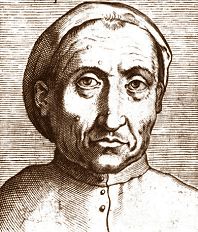
Pietro Pomponazzi, born on September 16, 1462, in Mantua, Italy, stands as a towering figure in the history of Renaissance philosophy. Known for his provocative and controversial views, Pomponazzi’s life and work offer a window into the intellectual currents of the Renaissance, a period marked by a profound questioning of established doctrines and a re-engagement with the classical heritage of ancient Greece and Rome. This article explores the age, fame, and life highlights of Pietro Pomponazzi, delving into his contributions to philosophy, the controversies he sparked, and the enduring legacy of his thought.
Early Life and Education
Pietro Pomponazzi was born into a noble family in Mantua, a city that was a vibrant center of Renaissance culture and learning. His early life in Mantua likely exposed him to the rich intellectual and cultural traditions of the time, setting the stage for his later contributions to philosophy. At the age of 22, Pomponazzi enrolled at the University of Padua, one of the most prestigious centers of learning in Europe during the Renaissance. The University of Padua was renowned for its emphasis on Aristotelian philosophy and its role as a hub for the study of the natural sciences, medicine, and metaphysics.
At Padua, Pomponazzi studied under some of the leading scholars of the day. He was particularly influenced by Francesco Securo da Nardò, a Dominican scholar who taught metaphysics, as well as Pietro Riccobonella, a prominent physician, and Pietro Trapolino, who taught natural philosophy. Pomponazzi’s education at Padua provided him with a deep understanding of Aristotelian philosophy, which would become the foundation of his later work. In 1487, he graduated with a degree in the Arts, marking the beginning of a lifelong engagement with the intellectual challenges of his time.
Academic Career and Early Writings
Following his graduation, Pomponazzi embarked on an academic career that would see him hold positions at several of Italy’s most important universities. From 1488 to 1496, he served as a professor of philosophy at the University of Padua, where he continued to deepen his understanding of Aristotle and began to develop his own philosophical ideas. During this period, he also earned a degree in medicine in 1495, reflecting his broad intellectual interests and the interdisciplinary nature of Renaissance learning.
Pomponazzi’s early writings, such as the treatise De maximo et minimo (On the Maximum and the Minimum), were heavily influenced by his Aristotelian training. In this work, he critiqued the theories of Guglielmo Heytesbury, a prominent medieval logician, signaling his willingness to engage critically with the intellectual traditions he had inherited. Pomponazzi’s critique of Heytesbury was an early indication of the bold and independent approach to philosophy that would characterize his later work.
The Move to Ferrara and Mantua
In 1496, Pomponazzi left Padua to take up a position at the court of Alberto Pio, the Prince of Carpi, where he taught logic. This move marked the beginning of a period of significant intellectual and personal growth. When Alberto Pio was exiled to Ferrara in 1499, Pomponazzi followed him, remaining in Ferrara until 1499. During this time, Pomponazzi married Cornelia Dondi, with whom he had two daughters. However, tragedy struck when Cornelia passed away in 1507, leaving Pomponazzi a widower.
In 1499, Pomponazzi returned to the University of Padua, where he took over the philosophy chair previously held by Nicoletto Vernia, a leading Aristotelian scholar. This position allowed Pomponazzi to further refine his philosophical ideas and engage with the latest developments in Renaissance thought. However, the political and military upheavals of the time, including the War of the League of Cambrai, led to significant disruptions at the University of Padua. In 1510, after the Venetian Republic regained control of Padua, Pomponazzi left the city and moved to Ferrara, where he continued his teaching and writing.
Controversies and the Tractatus de immortalitate animae
The most significant and controversial period of Pomponazzi’s life began when he moved to Bologna in 1511 to teach at the University of Bologna. It was here that he wrote his most famous and contentious work, the Tractatus de immortalitate animae (Treatise on the Immortality of the Soul), published in 1516. This work sparked a major scandal, as it challenged the prevailing Christian doctrine of the immortality of the soul, a belief that was central to the teachings of the Catholic Church.
In the Tractatus, Pomponazzi argued that the immortality of the soul could not be proven through reason and that it was instead a matter of faith. He based his argument on a rigorous interpretation of Aristotle, who, according to Pomponazzi, did not provide any rational basis for the belief in an immortal soul. Pomponazzi’s position was seen as deeply heretical, and his work was condemned by many of his contemporaries. The book was publicly burned in Venice, and Pomponazzi was accused of heresy by Ambrogio Fiandino, an Augustinian philosopher.
The controversy surrounding the Tractatus led to intense scrutiny of Pomponazzi’s work. In 1518, Pope Leo X issued a condemnation of the treatise and demanded that Pomponazzi recant his views. However, Pomponazzi refused to retract his statements. Instead, he defended his position in two subsequent works, the Apologia (1518) and the Defensorium adversus Augustinum Niphum (1519). In these works, Pomponazzi argued for a distinction between the truths of reason and the truths of faith, asserting that while reason might not be able to prove the immortality of the soul, this did not negate the validity of religious belief in the soul’s immortality.
Later Works and Legacy
Despite the controversy, Pomponazzi continued to write and teach, producing some of his most important works during his time in Bologna. Among these were the De fato (On Fate) and De incantationibus (On Incantations), both of which were completed by 1520 but only published posthumously between 1556 and 1557. These works further explored the relationship between reason, nature, and the supernatural, continuing Pomponazzi’s engagement with the philosophical challenges posed by the Renaissance revival of Aristotelian thought.
In the De fato, Pomponazzi examined the concept of fate and its implications for human free will, arguing that while the natural world might be governed by deterministic laws, human beings still possess the capacity for moral choice. The De incantationibus delved into the nature of miracles and supernatural phenomena, offering a naturalistic explanation for events that were traditionally understood as evidence of divine intervention. These works exemplified Pomponazzi’s commitment to a rational and empirical approach to understanding the world, even as they pushed the boundaries of accepted theological doctrine.
Pomponazzi’s later years were marked by declining health, particularly due to severe kidney stones, a condition that plagued him in his final years. Despite his illness, he remained intellectually active, continuing to write and revise his works. In 1524, sensing that his end was near, Pomponazzi composed his will. He passed away in Bologna on May 18, 1525, leaving behind a complex and controversial legacy.
The Legacy of Pietro Pomponazzi
Pietro Pomponazzi’s life and work represent a critical moment in the history of Western philosophy. His willingness to challenge established doctrines and explore the limits of human reason positioned him as a pivotal figure in the intellectual debates of the Renaissance. Pomponazzi’s emphasis on the distinction between faith and reason anticipated later developments in philosophy, particularly the Enlightenment’s focus on the autonomy of reason and the questioning of religious authority.
Pomponazzi’s influence extended beyond his immediate circle of students and contemporaries. His works were studied and debated by philosophers and theologians throughout the Renaissance and into the early modern period. The controversy surrounding his Tractatus de immortalitate animae highlighted the tensions between emerging humanist scholarship and the established religious institutions of the time, serving as a catalyst for ongoing debates about the role of reason in religious belief.
In the centuries since his death, Pomponazzi has been remembered as a philosopher who dared to ask difficult questions and challenge the intellectual status quo. His commitment to rigorous scholarship and his willingness to engage with the most contentious issues of his day have earned him a place in the pantheon of Renaissance thinkers whose work continues to be studied and admired.
Today, Pietro Pomponazzi’s legacy is one of intellectual courage and a relentless pursuit of truth. His life serves as a reminder of the power of reason and the importance of questioning even the most deeply held beliefs. As a philosopher, teacher, and writer, Pomponazzi’s contributions to the history of thought remain as relevant and inspiring as ever.


