
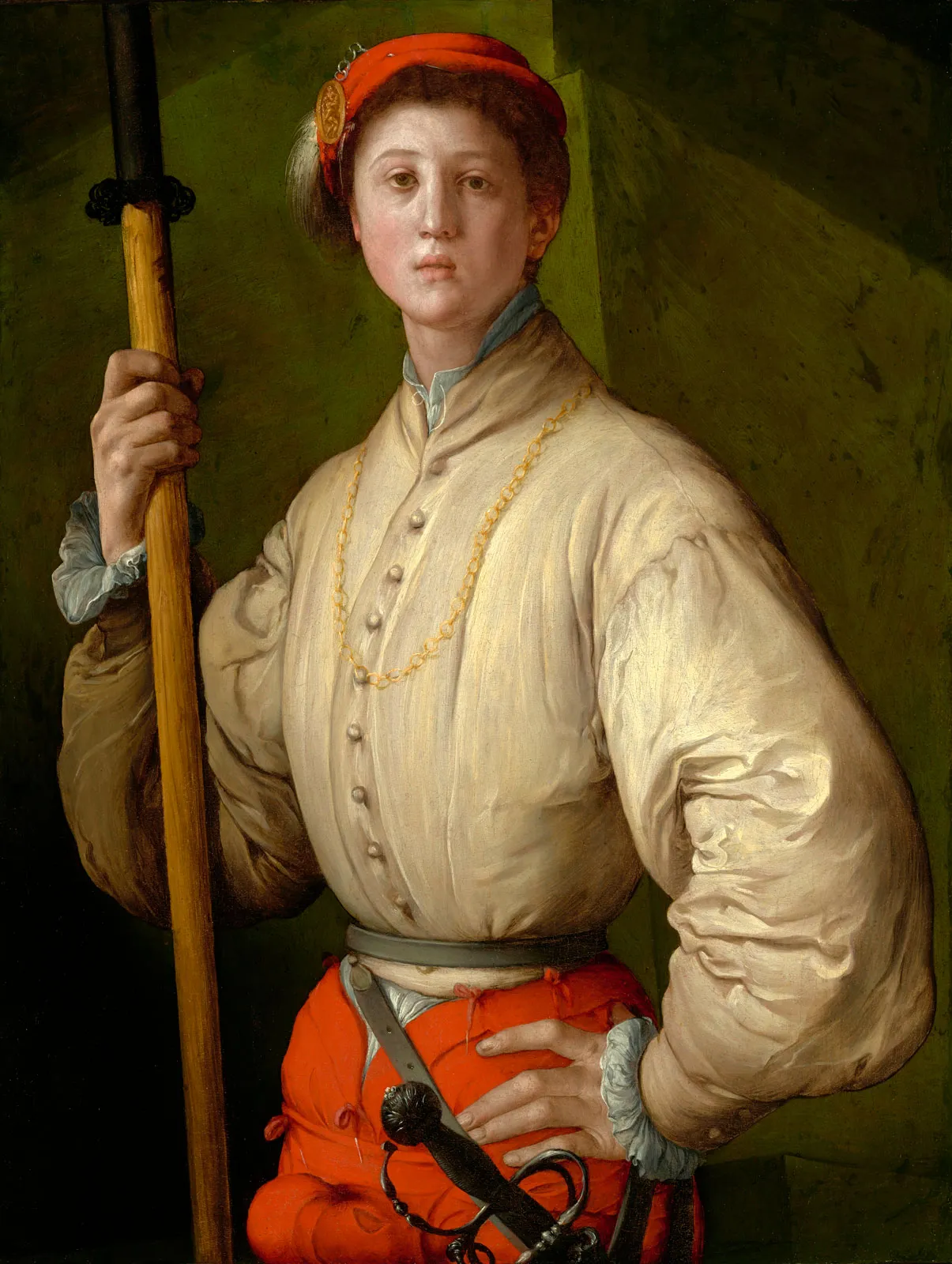
Jacopo da Pontormo, a prominent figure of the Italian Renaissance, is an artist whose name might not be as universally recognized as Leonardo da Vinci or Michelangelo, but his impact on the art world is undeniable. Known for his distinctive style and contribution to the development of Mannerism, Pontormo’s work is celebrated for its emotional depth, vibrant colors, and complex compositions. This article explores the life, age, fame, and significant highlights of Jacopo da Pontormo, providing a comprehensive overview of his journey as an artist and the lasting legacy he left behind.
Early Life and Background
Born on May 24, 1494, in Pontorme, a small town near Florence, Italy, Jacopo da Pontormo, originally named Jacopo Carrucci, came from a family with artistic inclinations. His father, Bartolomeo di Jacopo di Martino Carrucci, was a member of the Florentine artists’ community during the late 15th century. However, little of Bartolomeo’s work remains today, leaving his legacy overshadowed by that of his son. Tragically, Pontormo was orphaned at a young age; his father died when he was just five years old, and his mother, Alessandra di Pasquale di Zanobi, passed away when he was ten. The young Jacopo and his sister Maddalena were subsequently placed under the care of their grandmother, Brigida Zanobi.
Jacopo’s early life was marked by solitude and a deep sense of isolation, which perhaps contributed to the introspective and often melancholic nature of his later works. His talent for drawing was evident from a young age, and he was encouraged to pursue a career in the arts. His journey into the world of art began in Florence, where he trained under some of the most influential artists of the time.
Artistic Training and Influences
Pontormo’s artistic education was shaped by several renowned masters. He first apprenticed with Leonardo da Vinci, whose influence can be seen in the young artist’s early works. Following this, Pontormo studied under Piero di Cosimo, Mariotto Albertinelli, and most significantly, Andrea del Sarto. Del Sarto, a leading Florentine painter, played a crucial role in Pontormo’s development, instilling in him the techniques and principles that would define his artistic style.
During his formative years, Pontormo was deeply influenced by the works of these masters, yet he was also determined to carve out his own unique style. This drive for individuality led him to develop a highly personal and expressive approach to painting, characterized by a departure from the harmonious and balanced compositions typical of the High Renaissance. Instead, Pontormo’s work embraced a more dynamic and emotionally charged aesthetic, laying the groundwork for the Mannerist movement.
Rise to Fame
Pontormo’s rise to fame was gradual but steady. His first major commission came in 1510 when he was just sixteen years old. He painted a small “Annunciation” for a friend, a work that caught the attention of none other than Raphael, who was visiting Florence at the time. Raphael’s praise for the young artist’s work significantly boosted Pontormo’s reputation, and he soon began receiving more prestigious commissions.
One of Pontormo’s earliest and most significant contributions to the art world was his work on the frescoes of the Chiostrino dei Voti at the Church of the Santissima Annunziata in Florence. Completed between 1514 and 1516, these frescoes depict various religious scenes, including the “Visitation,” which showcases Pontormo’s evolving style. The figures in this work are notable for their elongated forms and the intense emotional expressions, hallmarks of the Mannerist style that Pontormo would come to be associated with.
The Evolution of His Style
As Pontormo’s career progressed, his style continued to evolve, reflecting his desire to push the boundaries of traditional Renaissance art. By the late 1510s, he had fully embraced the principles of Mannerism, a style characterized by exaggerated proportions, twisted poses, and unnaturalistic use of color. This departure from the classical ideals of balance and harmony marked a significant shift in the art world and established Pontormo as one of the pioneers of this new movement.
One of the key works from this period is the “Madonna in Glory,” painted around 1518 for the Church of San Michele Visdomini in Florence. In this piece, Pontormo abandons the symmetrical compositions of his predecessors in favor of a more dynamic and emotionally charged arrangement. The figures are animated by a sense of movement and expression, conveying a depth of feeling that was unusual for religious art of the time.
Another masterpiece that exemplifies Pontormo’s mature style is the “Vertumnus and Pomona,” a fresco he painted between 1519 and 1521 at the Medici Villa in Poggio a Caiano. This work, which depicts the Roman gods of seasons and fertility, is celebrated for its vibrant colors, intricate detailing, and the artist’s ability to convey a sense of movement and drama.
Major Works and Life Highlights
Pontormo’s career reached its zenith in the 1520s and 1530s, a period during which he produced some of his most famous and influential works. Among these is the “Deposition from the Cross,” painted between 1525 and 1528 for the Capponi Chapel in the Church of Santa Felicita in Florence. This painting is widely regarded as Pontormo’s masterpiece and a defining example of Mannerist art. The composition is both dramatic and complex, with figures that seem to float in an ethereal space, their expressions conveying a deep sense of sorrow and despair.
Another significant work from this period is the “Visitation” (1528-1529), now housed in the Church of San Michele in Carmignano. This painting, like the “Deposition,” features elongated figures and a heightened sense of emotion, further solidifying Pontormo’s reputation as a master of Mannerism.
In the later years of his career, Pontormo’s style became increasingly idiosyncratic. He began to explore more abstract compositions and unconventional uses of color, as seen in his work on the frescoes of the Certosa del Galluzzo, near Florence. These frescoes, painted between 1523 and 1525, depict scenes from the Passion of Christ and are notable for their stark, almost surreal atmosphere.
Final Years and Legacy
Pontormo’s final years were marked by a major commission that would become his last great project: the decoration of the Cappella Maggiore in the Basilica of San Lorenzo in Florence. This commission, given to him by Cosimo I de’ Medici in 1545, was intended to be the crowning achievement of his career. The frescoes, which depicted scenes from the Old and New Testaments, were a monumental undertaking that occupied Pontormo for over a decade.
Unfortunately, Pontormo died before he could complete the project. He passed away on either December 31, 1556, or January 1, 1557, with the exact date remaining uncertain. His death was recorded on January 2, 1557, the day of his funeral. The unfinished frescoes were completed by his pupil and close friend, Agnolo Bronzino, but they were met with mixed reviews. Some critics, including Giorgio Vasari, were harsh in their assessment, noting that the figures appeared melancholic and lacked vitality.
Despite these criticisms, Pontormo’s legacy as a pioneering artist of the Mannerist movement remains secure. His works continue to be studied and admired for their emotional intensity, innovative compositions, and bold use of color. Pontormo’s influence can be seen in the works of later artists, including El Greco and Caravaggio, who also sought to push the boundaries of traditional art.
In addition to his paintings, Pontormo left behind a valuable written record in the form of his diary, which he kept during the last three years of his life. This diary, discovered relatively recently, provides rare insights into the artist’s thoughts, struggles, and creative process. It is a unique document that offers a glimpse into the mind of one of the Renaissance’s most enigmatic figures.
Historical Context and Nuances
To fully appreciate Pontormo’s contributions to the art world, it is important to understand the historical context in which he worked. The early 16th century was a time of significant social, political, and religious upheaval in Europe. The Protestant Reformation, which began in 1517, challenged the authority of the Catholic Church and led to widespread changes in religious practices and beliefs. These changes had a profound impact on artists like Pontormo, who were often commissioned to create works for religious institutions.
Pontormo’s work reflects the tension and uncertainty of this period. His departure from the balanced compositions and idealized forms of the High Renaissance can be seen as a response to the changing cultural landscape. By embracing a more expressive and emotional style, Pontormo was able to convey the complex and often contradictory emotions of his time.
Moreover, Pontormo’s influence extended beyond his immediate circle of fellow artists. His work helped to pave the way for the development of the Baroque style in the 17th century, with its emphasis on drama, movement, and emotional intensity. In this way, Pontormo can be seen as a bridge between the Renaissance and the Baroque, a key figure in the evolution of Western art.
Conclusion
Jacopo da Pontormo was a master of his craft, a visionary artist who dared to challenge the conventions of his time. His work, characterized by its emotional depth, innovative compositions, and vibrant use of color, continues to captivate audiences and inspire artists today. Although he may not have achieved the same level of fame as some of his contemporaries, Pontormo’s contributions to the art world are no less significant. His legacy as a pioneer of the Mannerist movement and a key figure in the history of Western art is secure, and his works remain a testament to his extraordinary talent and artistic vision.


