
Introduction
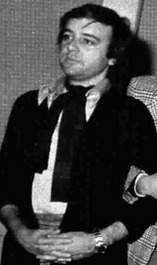
Cochi Ponzoni, born Aurelio Ponzoni on March 11, 1941, in Milan, Italy, is a prominent figure in the world of Italian entertainment. Best known for his work as part of the comedy duo “Cochi e Renato,” alongside Renato Pozzetto, Ponzoni has had a profound impact on Italian television, theater, and cinema. His career, which spans over six decades, is a testament to his talent, versatility, and enduring appeal. This article delves into the life, career, and legacy of Cochi Ponzoni, exploring his rise to fame, key milestones, and contributions to the arts.
Early Life and Background
Cochi Ponzoni was born in the vibrant city of Milan, specifically in Via Foppa, 41. He was the youngest of three children in a family marked by early hardship, as his father passed away when Cochi was still a child. Raised by his mother, Adele, Cochi’s early life was shaped by the challenges of growing up in a single-parent household. Despite these difficulties, Ponzoni found solace and inspiration in the world around him, which would later influence his comedic style.
Ponzoni attended the Istituto Tecnico Cattaneo for his secondary education, where he formed a pivotal friendship with Renato Pozzetto. This relationship would prove to be the foundation of his future career. At the age of eighteen, Cochi moved to London, a decision that exposed him to new cultural experiences and broadened his worldview. However, his love for Italy brought him back, where he would soon embark on a journey that would change the landscape of Italian comedy.
The Rise of Cochi e Renato
The early 1960s marked the beginning of Cochi Ponzoni’s professional career. In 1964, Ponzoni and Pozzetto secured a stable gig at the Cab64 club, where they began to refine their comedic style. Their unique brand of humor quickly caught the attention of Enzo Jannacci, a renowned musician and comedian, who became a close friend and collaborator. Jannacci’s influence was instrumental in shaping the duo’s career, particularly in their foray into music. Jannacci helped write and produce many of their songs, adding a musical dimension to their performances that resonated with audiences.
The duo’s big break came in 1967 when they were brought to RAI, Italy’s national public broadcasting company, by Enrico Vaime. RAI was on the lookout for fresh talent for its new Sunday variety show, “Quelli della domenica.” The program was written by some of Italy’s most talented writers, including Maurizio Costanzo and Marcello Marchesi, and featured established performers like Ric and Gian, as well as Paolo Villaggio. Although their surreal and eccentric humor initially puzzled RAI executives and studio audiences, it quickly gained a following among the general public, especially the youth.
One of their most iconic sketches, “A me mi piace il mare,” became a cultural phenomenon, solidifying their place in Italian pop culture. The sketch, along with other catchphrases and comedic bits, became part of everyday conversation, particularly among young people. By 1969, RAI had offered Cochi and Renato their own show, “È domenica, ma senza impegno,” further cementing their status as leading figures in Italian comedy.
Consolidation of Fame in the 1970s
The 1970s were a period of significant growth and consolidation for Cochi Ponzoni and Renato Pozzetto. The duo expanded their presence on both radio and television, appearing in a variety of programs that showcased their versatility. They worked with well-known personalities such as Gino Bramieri, Rita Pavone, Iva Zanicchi, and Caterina Caselli, further enhancing their reputation.
One of their most notable achievements during this period was the cabaret show “Saltimbanchi si muore,” which featured a stellar cast of comedians and performers from Milan’s famous Derby Club. The show was a hit, and it helped to establish Cochi e Renato as household names across Italy.
In 1971, Cochi and Renato returned to radio with “Cose così,” and later that year, they appeared in the television program “Riuscirà il Cav. Papà Ubu?” Their popularity continued to soar, culminating in their participation in “Canzonissima,” one of Italy’s most-watched TV shows at the time. The show, which aired between October 1974 and January 1975, attracted an average of 22 million viewers per episode, highlighting the duo’s massive appeal. The show’s theme song, “E la vita, la vita,” became a hit, further embedding them in the cultural consciousness of the nation.
Transition to Film and the Duo’s Separation
By the mid-1970s, Cochi Ponzoni and Renato Pozzetto had become icons of Italian comedy. However, as their careers progressed, the two began to explore individual projects. In 1976, Cochi made his film debut in “Cuore di cane,” directed by Alberto Lattuada. He also appeared in films like “Sturmtruppen” and “Tre tigri contro tre tigri.” While Pozzetto delved into solo projects, such as “Per amare Ofelia” and “La poliziotta,” the duo continued to work together sporadically.
Their final major project together in the 1970s was the film “Io tigro, tu tigri, egli tigra,” released in 1978. Following this, the duo amicably parted ways to pursue their individual interests—Renato focusing on cinema, while Cochi leaned towards theater. Ponzoni moved from Milan to Rome, where he continued to act in both films and stage productions. He collaborated with notable directors like Alberto Sordi and Max von Sydow, demonstrating his range as an actor. Despite taking on roles in some lesser-known films to make ends meet, Ponzoni’s love for the theater remained his primary focus.
Reunions and Later Career
The early 1990s saw rumors of a possible reunion between Cochi Ponzoni and Renato Pozzetto. In 1991, the duo made brief appearances on television in shows like “E compagnia bella” and “Serata d’onore.” These appearances rekindled public interest in their partnership. In 1992, Ponzoni joined the cast of “Su la testa!,” a comedy show hosted by Paolo Rossi, further showcasing his enduring talent.
Although efforts to bring the duo back together were made by various figures in the entertainment industry, including Piero Chiambretti, it wasn’t until 1996 that they officially reunited to film a miniseries for Raiuno. Originally titled “Detective per caso,” the project was delayed and eventually aired in 2000 under the title “Nebbia in Val Padana.” The show was well-received, marking a successful comeback for the pair.
Throughout the 2000s, Cochi and Renato made several appearances together, including on shows like “Uno di noi” with Gianni Morandi and “Novecento” with Pippo Baudo. They also performed in theater productions and released a new album, “Finché c’è la salute.” Despite their advancing years, the duo continued to entertain audiences, demonstrating the timeless appeal of their comedy.
Legacy and Influence
Cochi Ponzoni’s contribution to Italian entertainment is immense. As one half of Cochi e Renato, he helped to redefine Italian comedy, introducing a style that was both surreal and accessible. Their work has influenced generations of comedians and continues to be celebrated for its originality and wit. Ponzoni’s ability to transition from comedy to drama, and from television to theater and film, highlights his versatility as a performer.
Beyond his professional achievements, Cochi Ponzoni is also admired for his resilience and adaptability. Despite facing personal and professional challenges, he has remained a beloved figure in Italian culture. His enduring partnership with Renato Pozzetto, even after years of separation, speaks to the deep bond between the two artists and their shared commitment to their craft.
Conclusion
Cochi Ponzoni’s life and career are a testament to the power of creativity, collaboration, and perseverance. From his humble beginnings in Milan to his rise as a national icon, Ponzoni has left an indelible mark on the world of entertainment. His work, both as part of Cochi e Renato and as a solo artist, continues to resonate with audiences, proving that true talent knows no bounds. As we reflect on his legacy, it is clear that Cochi Ponzoni’s influence will be felt for generations to come.


