
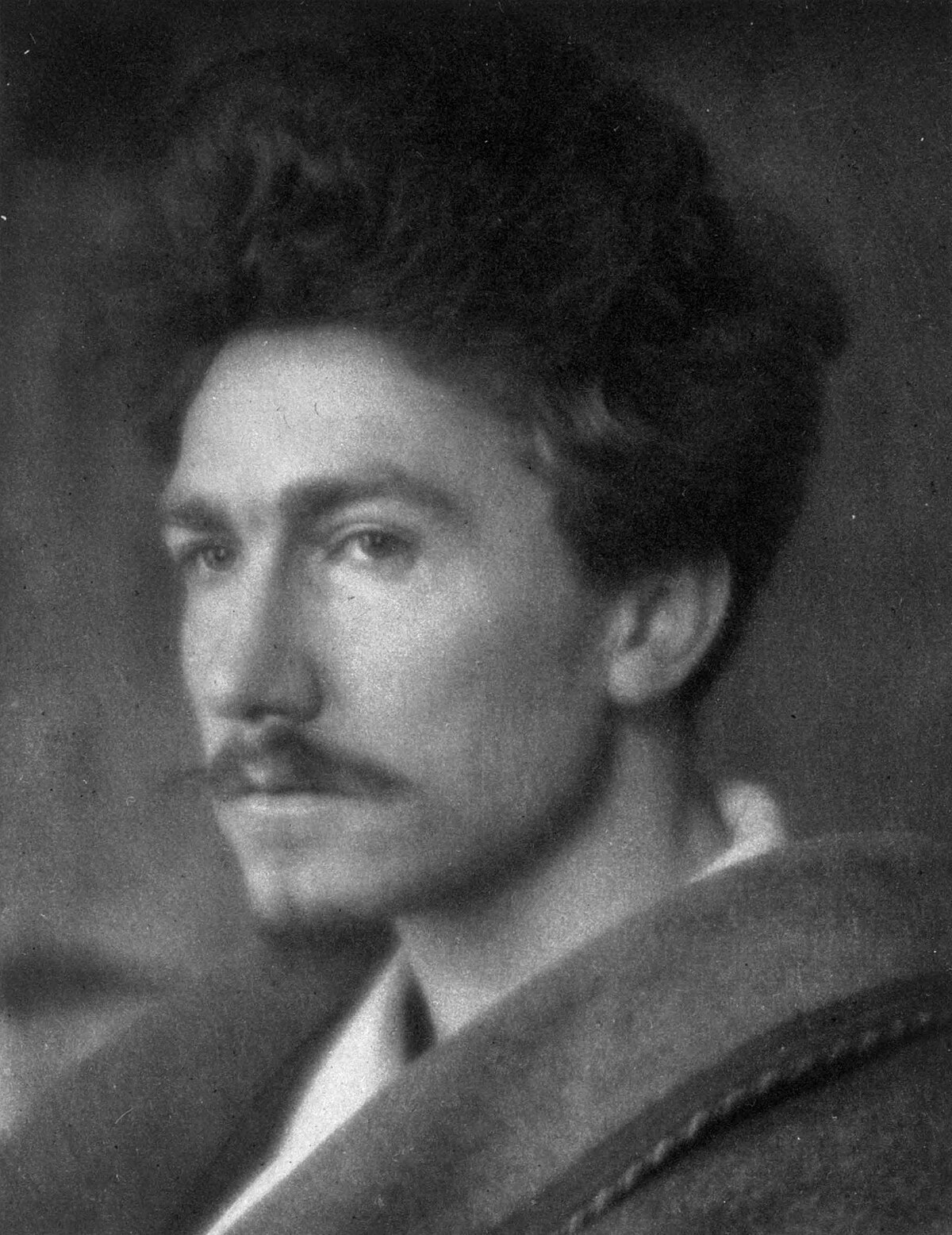
Ezra Pound, born Ezra Weston Loomis Pound on October 30, 1885, in Hailey, Idaho, was one of the most influential and enigmatic poets of the 20th century. His contributions to modernist literature, his role in shaping the careers of other prominent writers, and his controversial political views have cemented his place in literary history. This article delves into the life of Ezra Pound, exploring his age, rise to fame, and the significant highlights of his life, while also providing nuanced insights into the historical context that shaped his work and legacy.
Early Life and Education: The Roots of a Literary Giant
Ezra Pound was born into a family with strong religious roots in the small town of Hailey, Idaho. His father, Homer Loomis Pound, worked as an assistant assayer at the U.S. Mint, and his mother, Isabel Weston, came from a prominent Puritan family. Pound’s early life was marked by his family’s move to the suburbs of Philadelphia, where he was raised in a comfortable, albeit strict, environment. From a young age, Pound exhibited an intense curiosity and passion for literature, which would define his future career.
In 1901, Pound enrolled at the University of Pennsylvania, where he studied Romance languages and met Hilda Doolittle (H.D.), who would later become a significant figure in his life and in the world of poetry. After two years at Penn, Pound transferred to Hamilton College, where he earned a bachelor’s degree in philosophy. He then returned to Penn to complete a master’s degree in Romance languages. This academic foundation in European literature and languages would profoundly influence Pound’s later work, particularly his engagement with the poets of Provence and his translations of ancient Chinese texts.
The European Sojourn: Discovering a New World of Possibilities
In 1908, Pound made a life-changing decision to leave the United States and move to Europe. With little more than a few dollars in his pocket and a deep-seated determination to immerse himself in the cultural and literary traditions of the Old World, Pound embarked on a journey that would take him to London, Paris, and eventually Italy. His early years in Europe were marked by intense study, experimentation with poetic forms, and the publication of his first collections of poetry.
London, in particular, became a crucial hub for Pound’s literary activities. It was here that he published A Lume Spento (1908), Personae (1909), and Exultations (1909), works that established him as a significant new voice in English poetry. However, Pound was not content with merely writing; he was deeply committed to the idea of literary innovation. He sought to break away from the conventions of Victorian poetry and championed the modernist movement, which emphasized clarity, precision, and the importance of the image in poetry.
Pound’s most famous contribution to modernist literature was the development of Imagism, a literary movement that he founded in 1912 with fellow poets H.D. and Richard Aldington. Imagism sought to strip away the excesses of 19th-century verse and focus on direct, unadorned expression. Pound’s work during this period, particularly his editing of T.S. Eliot’s The Waste Land (1922), played a pivotal role in shaping the modernist canon.
Mentorship and Influence: A Literary Kingmaker
Ezra Pound was not only a prolific poet but also a tireless advocate for other writers. His role as a mentor and editor significantly impacted the careers of several key figures in modernist literature, including T.S. Eliot, James Joyce, and Robert Frost. Pound’s belief in the importance of fostering new talent led him to work tirelessly to promote these writers, often providing financial support and helping them navigate the complexities of the publishing world.
Pound’s relationship with T.S. Eliot is particularly noteworthy. When Eliot sent Pound the manuscript of The Waste Land, it was a sprawling and chaotic work. Pound meticulously edited the poem, cutting significant portions and reshaping it into the concise, powerful work that became one of the defining texts of modernist literature. Eliot famously dedicated the poem to Pound, referring to him as “il miglior fabbro” (the better craftsman), acknowledging his crucial role in its creation.
Similarly, Pound’s support for James Joyce was instrumental in the publication of Ulysses (1922). Pound recognized Joyce’s genius early on and used his influence to secure financial backing for Joyce, ensuring that Ulysses could be published despite its controversial content. Pound’s advocacy for Joyce extended beyond financial support; he also helped promote the novel, which faced censorship and legal challenges due to its explicit content.
The Cantos: A Lifelong Epic
One of Ezra Pound’s most ambitious projects was The Cantos, a long, fragmented, and complex poem that he began in 1915 and continued to work on for the rest of his life. The Cantos is often considered Pound’s magnum opus, though it is also one of the most challenging works in the modernist literary canon. The poem is composed of over 120 sections (or “cantos”) and incorporates a vast range of historical, literary, and cultural references, including Confucian philosophy, American history, and economic theory.
The Cantos reflects Pound’s eclectic intellectual interests and his belief in the poet’s role as a cultural historian. However, the poem’s complexity and its inclusion of controversial political ideas have made it a subject of both admiration and criticism. Pound’s fascination with economic theory, particularly his opposition to usury, is a recurring theme in The Cantos, and this interest would later inform his controversial political views.
Controversy and Political Views: A Stain on His Legacy
Ezra Pound’s later years were marred by his involvement in fascist politics and his support for Benito Mussolini. During the 1930s and 1940s, Pound became increasingly disillusioned with the state of the world, particularly with what he saw as the destructive influence of international finance and capitalism. He believed that Mussolini’s fascist regime in Italy offered a solution to these problems, and he became an outspoken advocate for fascism.
During World War II, Pound made a series of radio broadcasts from Italy in which he expressed support for Mussolini and criticized the Allied war effort. These broadcasts were filled with anti-Semitic rhetoric and conspiracy theories about Jewish control of international finance. Pound’s alignment with fascism and his anti-Semitic views have cast a long shadow over his literary achievements.
In 1945, after the fall of Mussolini’s regime, Pound was arrested by American forces in Italy and charged with treason. He was held in a U.S. military detention center in Pisa, where he was confined in an open-air cage for several weeks. During this time, Pound continued to write, producing what would become known as the Pisan Cantos, a section of The Cantos that reflects his experiences during his imprisonment.
After being transferred to the United States, Pound was declared mentally unfit to stand trial and was committed to St. Elizabeths Hospital, a psychiatric institution in Washington, D.C., where he remained for over a decade. During his incarceration, many of Pound’s supporters, including fellow writers and intellectuals, campaigned for his release, arguing that his contributions to literature outweighed his political transgressions.
Release and Later Years: A Return to Italy
In 1958, after twelve years of confinement, Ezra Pound was released from St. Elizabeths Hospital, largely due to the efforts of his literary peers who petitioned for his freedom. Upon his release, Pound returned to Italy, where he spent the remainder of his life. He lived in seclusion in Rapallo and Venice, shunning public life and rarely commenting on his past political views.
Despite his controversial past, Pound continued to be a significant figure in the literary world. He was invited to participate in various artistic and literary events, and his work continued to be studied and celebrated. However, Pound’s later years were marked by a sense of disillusionment and regret. He reportedly expressed remorse for his anti-Semitic statements and his support for fascism, though these sentiments were often ambiguous and inconsistent.
Pound’s health declined in his later years, and he became increasingly reclusive. He spent his final years in Venice, where he died on November 1, 1972. He was buried in the cemetery on the island of San Michele, a fitting resting place for a poet who had spent much of his life in Italy.
Legacy: A Controversial Genius
Ezra Pound’s legacy is one of both extraordinary literary achievement and profound controversy. He is widely regarded as one of the most important poets of the 20th century, and his work has had a lasting impact on modernist literature. Pound’s contributions to the careers of other writers, his development of Imagism, and his epic poem The Cantos are all testaments to his genius.
However, Pound’s political views and his support for fascism cannot be ignored. His anti-Semitic rhetoric and his alignment with Mussolini’s regime have left a permanent stain on his legacy, and they complicate the way in which his work is studied and appreciated. Pound’s life and career serve as a reminder of the complex interplay between art and politics, and the ways in which a great artist’s personal beliefs can influence, and sometimes tarnish, their work.
Conclusion: The Enigma of Ezra Pound
Ezra Pound remains one of the most enigmatic and controversial figures in literary history. His life was marked by extraordinary intellectual ambition, artistic innovation, and a willingness to challenge the status quo. Yet, it was also marred by his political extremism and the moral failings that accompanied it. Pound’s work continues to be studied, debated, and revered, but his legacy is a complicated one, reflecting both the heights of literary genius and the depths of ideological error.
As we reflect on Ezra Pound’s life and work, we are reminded of the power of poetry to transcend time and place, but also of the responsibility that comes with that power. Pound’s life is a testament to the enduring impact of literature, both for better and for worse.


