
Introduction
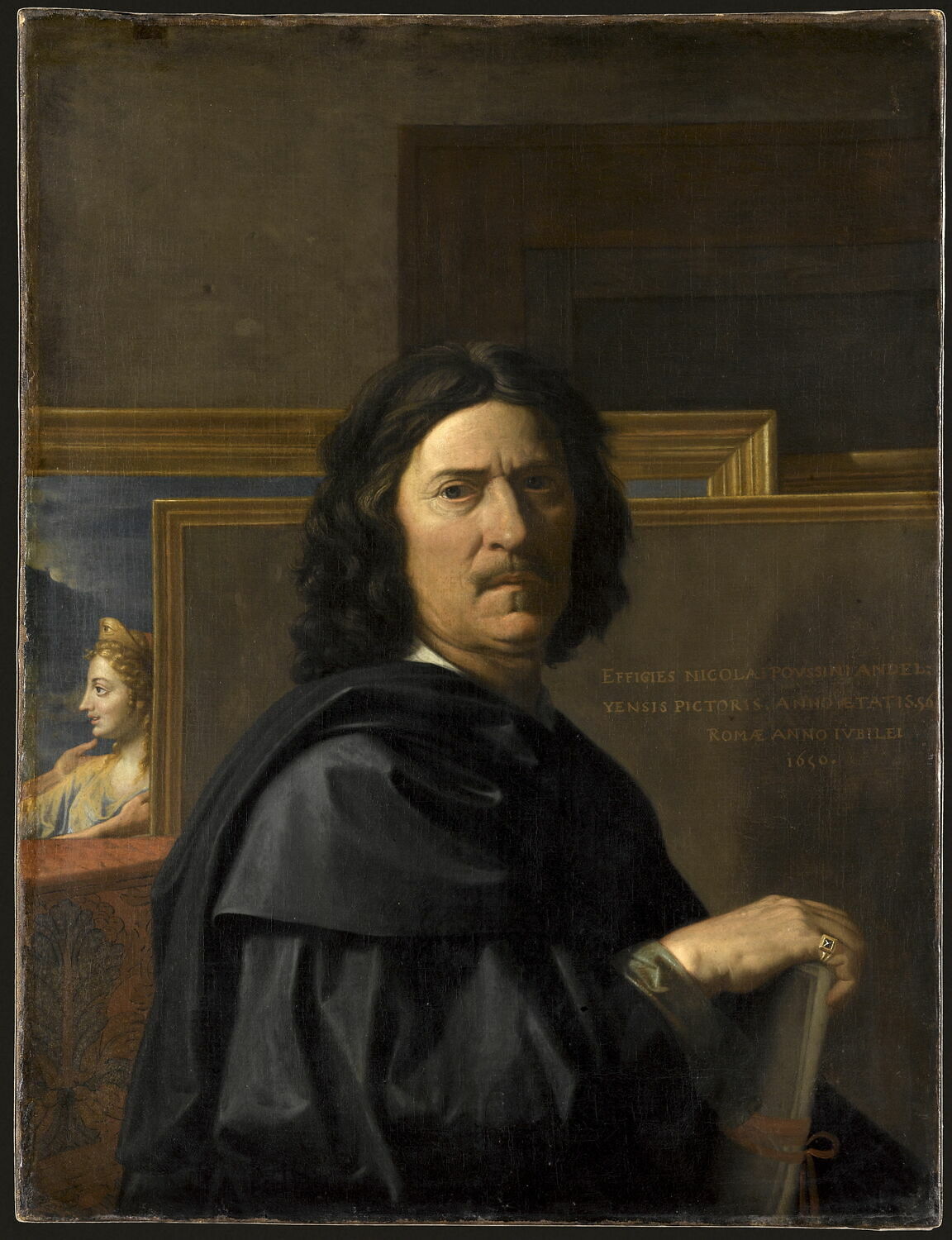
Nicolas Poussin, born on June 15, 1594, in Les Andelys, Normandy, France, is widely regarded as one of the greatest French painters of the 17th century. His work is synonymous with classical French Baroque art, and he is often credited with bringing a refined, intellectual approach to painting that emphasized order, clarity, and harmony. Throughout his life, Poussin navigated the complexities of both the French and Italian art worlds, leaving behind a legacy that continues to influence artists and art historians to this day.
Early Life and Artistic Beginnings
Nicolas Poussin grew up in a time when France was experiencing significant cultural shifts. As a young boy, he received a classical education, studying Latin, which would later influence his intellectual approach to art. His passion for painting emerged early, and he soon found an opportunity to work as an apprentice for Quentin Varin, a local painter. This apprenticeship marked the beginning of his journey into the world of art.
At the age of eighteen, Poussin left his hometown for Paris, seeking to refine his skills and broaden his artistic horizons. In Paris, he entered the studios of Ferdinand Elle and Georges Lallemand, two established artists of the time. The French art scene during this period was in a state of transition, with traditional apprenticeship systems giving way to the emerging influence of art academies. Although the academies were not yet fully established, they would soon become the primary institutions for artistic education in France.
It was in Paris that Poussin first encountered the works of Italian Renaissance masters, particularly Raphael and Giulio Romano. These artists’ emphasis on balance, proportion, and classical themes deeply influenced Poussin and sparked his desire to visit Italy, the cradle of Renaissance art.
The Italian Influence and Journey to Rome
In 1622, Poussin’s artistic aspirations led him to Lyon, where he met Giambattista Marino, a prominent Italian poet serving at the court of Maria de’ Medici. Marino recognized Poussin’s talent and invited him to illustrate an edition of Ovid’s “Metamorphoses.” This collaboration marked a turning point in Poussin’s career, as it allowed him to immerse himself in classical mythology, a theme that would become central to his work.
Finally, in 1624, Poussin fulfilled his long-held dream of traveling to Rome, the heart of the art world. In Rome, he was introduced to Marcello Sacchetti, who in turn presented him to Cardinal Francesco Barberini. This connection proved invaluable, as Barberini became one of Poussin’s most important patrons, helping him establish himself in the competitive Roman art scene.
During his early years in Rome, Poussin faced financial difficulties, particularly after Barberini left for Spain. However, his fortunes improved upon the cardinal’s return to Italy. In 1626, Poussin completed “Venus and Adonis,” a painting that showcased his mastery of classical themes and his growing reputation as a leading painter. Over the next few years, he produced several significant works, including “The Death of Germanicus” and “Midas and Bacchus,” which solidified his status as a prominent artist in Rome.
Development of Style and Masterpieces
The late 1620s and early 1630s were a period of intense artistic development for Poussin. It was during this time that he began to define his unique style, characterized by a deep commitment to classical principles. Poussin’s work was heavily influenced by his study of ancient Roman art and the Renaissance masters, particularly Raphael. His paintings from this period, such as “The Inspiration of the Poet,” demonstrate his ability to convey complex narratives with clarity and precision.
Poussin’s health, however, was a constant challenge. He suffered from various ailments throughout his life, which at times hindered his ability to work. Despite these challenges, he continued to produce remarkable works, including “The Rape of the Sabine Women” and “The Plague of Azoth.” These paintings reflect his fascination with history and mythology, themes that allowed him to explore the human condition in profound ways.
In 1630, Poussin married Anna Maria Dughet, the daughter of his close friend and fellow artist Jacques Dughet. This union provided him with emotional stability and support, allowing him to continue his work despite his ongoing health issues. One of the most famous works from this period is “Et in Arcadia Ego,” also known as “The Arcadian Shepherds.” This painting, with its serene depiction of shepherds contemplating a tomb, encapsulates Poussin’s meditative approach to art and his exploration of themes of mortality and the passage of time.
Return to France and the Challenges of Court Life
In the 1640s, after several invitations from his French patrons, Poussin was finally persuaded to return to France. His close friend, Paul Fréart de Chantelou, played a crucial role in convincing him to leave Rome and take up a position at the French court. Upon his return, Poussin was greeted with great honor and was appointed as the director of the royal art projects by Cardinal Richelieu and King Louis XIII. His responsibilities included overseeing the decoration of the Louvre, a task that placed him at the center of the French art establishment.
However, life at court was not without its difficulties. Poussin found himself in conflict with Simon Vouet, the court painter, whose flamboyant Baroque style was in stark contrast to Poussin’s more restrained and classical approach. This rivalry, coupled with the intrigues of court life, made Poussin’s position increasingly untenable. He faced significant opposition from Vouet’s supporters, which limited his ability to execute his artistic vision.
Disillusioned with the political machinations of the French court, Poussin completed only a portion of the commissions he had received. In 1642, he returned to Rome, taking with him Gaspard Dughet, his brother-in-law, who would later become a successful landscape painter in his own right. Poussin’s departure from France marked the end of his direct involvement with the French court, although his influence on French art continued to grow.
Final Years in Rome and Lasting Legacy
Back in Rome, Poussin resumed his work with renewed vigor. His later works are characterized by a deep sense of introspection and a continued exploration of classical themes. Among his most notable late works are “The Four Seasons,” a series of paintings that allegorize the passage of time through the changing seasons, and “Orpheus and Eurydice,” which revisits the tragic myth with a poignant sensitivity.
Poussin’s reputation continued to rise throughout Europe, and he became known as the preeminent painter of his generation. His ability to combine narrative complexity with formal clarity made his work highly sought after by collectors and patrons. Even as his health declined in the 1650s, Poussin continued to paint, producing masterpieces such as “The Sacraments” series, which depict the seven sacraments of the Catholic Church in a manner that balances spiritual significance with artistic rigor.
In 1665, Nicolas Poussin passed away in Rome at the age of 71. He was buried in the church of San Lorenzo in Lucina, a fitting resting place for an artist who had dedicated his life to the pursuit of classical beauty and intellectual rigor. Although Poussin did not leave behind any children, his legacy was carried on by his adopted brother-in-law, Gaspard Dughet, who took on the Poussin name and continued to work in the classical tradition.
Conclusion: The Enduring Influence of Nicolas Poussin
Nicolas Poussin’s contribution to the art world cannot be overstated. He is often hailed as the father of French classicism, and his influence extends far beyond his lifetime. His works are celebrated for their intellectual depth, compositional harmony, and mastery of narrative. Poussin’s commitment to classical ideals and his ability to convey profound philosophical ideas through his art set him apart from his contemporaries and established him as a pivotal figure in the history of Western art.
Today, Poussin’s paintings are housed in some of the world’s most prestigious museums, including the Louvre in Paris, the National Gallery in London, and the Prado in Madrid. His work continues to be studied and admired by art historians, students, and lovers of art alike. Poussin’s legacy is not just one of artistic achievement, but also one of intellectual inquiry and a relentless pursuit of truth and beauty.
As we look back on the life and work of Nicolas Poussin, it is clear that his impact on the art world is as profound today as it was in the 17th century. His paintings remain a testament to the power of art to transcend time and place, offering viewers a glimpse into the mind of an artist who sought to understand the world through the lens of classical antiquity. Poussin’s dedication to his craft and his unwavering commitment to his artistic principles ensure that his work will continue to inspire and influence generations to come.


