
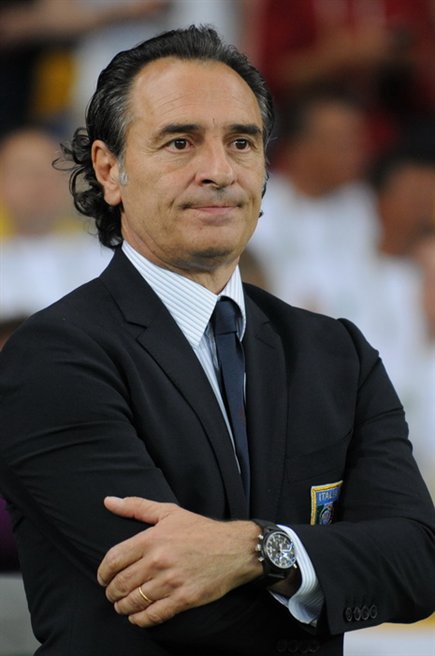
Cesare Prandelli, born on August 19, 1957, in Orzinuovi, Brescia, Italy, is a well-respected figure in the world of football, both as a player and as a coach. His career has been marked by significant achievements, from his early days on the field to his role as a coach for some of the most prominent football clubs in Italy and, notably, as the head coach of the Italian national team. This article explores the life, career, and contributions of Cesare Prandelli, providing detailed insights into his journey, the challenges he faced, and the legacy he has left in the world of football.
Early Life and Playing Career
Cesare Prandelli’s passion for football was evident from a young age. Growing up in a small town in the province of Brescia, he quickly developed his skills and joined the youth ranks of Cremonese, a club that played in the lower divisions of Italian football. Prandelli was known for his tenacity and technical ability, which soon caught the attention of larger clubs.
Prandelli’s professional playing career began in earnest with Cremonese, where he played in Serie C1 and Serie B, showcasing his potential as a gritty midfielder with a solid understanding of the game. His performances did not go unnoticed, and in 1978, he made a significant move to Atalanta, a Serie A club based in Bergamo. During the 1978/79 season, Prandelli played 27 matches for Atalanta, scoring one goal and making a name for himself as a reliable and hardworking player.
Success with Juventus
Prandelli’s consistent performances at Atalanta earned him a transfer to one of Italy’s most prestigious football clubs, Juventus, in 1979. This move marked a significant step in his career, as Juventus was a dominant force in Italian football. During his time with the club, Prandelli was part of a team that achieved remarkable success, both domestically and internationally.
While at Juventus, Prandelli won numerous titles, including three Serie A championships, a Coppa Italia, a European Cup Winners’ Cup, a UEFA Super Cup, and the coveted European Cup (now known as the UEFA Champions League). Despite being a valuable squad member, Prandelli struggled to secure a regular starting position, given the fierce competition within the team. After several successful seasons with Juventus, Prandelli decided to return to Atalanta in 1985, where he played until his retirement in 1990.
Transition to Coaching
After hanging up his boots, Cesare Prandelli did not stray far from the game he loved. He immediately transitioned into coaching, starting with the youth teams at Atalanta. His deep understanding of the game, combined with his calm and thoughtful demeanor, made him an ideal mentor for young players. Prandelli quickly found success, leading Atalanta’s Primavera (youth) team to victories in the prestigious Torneo di Viareggio and the youth league championship.
In 1994, Prandelli was given the opportunity to manage Atalanta’s senior team after the sacking of coach Francesco Guidolin. Although he did not have a formal coaching license at the time, Prandelli stepped in and guided the team through the remainder of the season. Unfortunately, despite his best efforts, Atalanta was relegated to Serie B at the end of the season. Prandelli returned to coaching the youth teams, where he continued to hone his skills and build his reputation.
Rise to Prominence: Coaching Career Highlights
Prandelli’s first major breakthrough as a head coach came in 1997 when he was appointed manager of Lecce, a Serie A club. However, his tenure there was short-lived, as the team struggled, and Prandelli resigned in February 1998. His fortunes changed the following season when he took over as head coach of Hellas Verona. Under Prandelli’s guidance, Verona won the Serie B championship and earned promotion to Serie A. In the subsequent season, Prandelli led Verona to an impressive ninth-place finish in Serie A, an exceptional achievement for a newly promoted team.
Prandelli’s success at Verona caught the attention of other clubs, and he was soon appointed as the manager of Venezia, another Serie B team. He led Venezia to a fourth-place finish, securing promotion to Serie A once again. However, despite this achievement, Prandelli was sacked after just five games into the new Serie A season, highlighting the often volatile nature of football management.
Achievements with Parma
The early 2000s saw Prandelli reach new heights in his coaching career when he took charge of Parma in 2002. Parma, a club with a strong tradition of nurturing young talent, was the perfect fit for Prandelli, who had a keen eye for developing players. During his time at Parma, Prandelli led the team to consecutive fifth-place finishes in Serie A, securing qualification for the UEFA Cup (now the UEFA Europa League) in both seasons.
Prandelli’s tenure at Parma was marked by his ability to get the best out of young talents like Alberto Gilardino, Adriano, and Adrian Mutu, who all flourished under his guidance. His success at Parma solidified his reputation as one of Italy’s most promising coaches, known for his tactical acumen and ability to nurture young players.
Challenges and Triumphs at Fiorentina
In 2004, Prandelli was appointed as the head coach of AS Roma, one of Italy’s most storied football clubs. However, before the season began, Prandelli made the difficult decision to resign due to personal reasons related to his wife’s illness. This decision, while heartbreaking, highlighted Prandelli’s commitment to his family, a value that has always been central to his life.
Prandelli returned to football in 2005 when he was appointed as the head coach of Fiorentina, a club based in Florence with a passionate fan base. Fiorentina was undergoing a period of rebuilding, and Prandelli was tasked with restoring the club’s fortunes. Under his leadership, Fiorentina quickly rose through the ranks of Italian football.
In his first season, Prandelli led Fiorentina to a fourth-place finish in Serie A, earning a spot in the Champions League qualifiers. However, the club was hit with a significant points deduction due to their involvement in the Calciopoli scandal, a match-fixing investigation that rocked Italian football. Despite the setback, Prandelli remained focused and guided Fiorentina through the challenges.
The 2006/07 season saw Fiorentina begin with a 15-point deduction, but Prandelli’s leadership helped the team overcome this adversity. The club finished the season in sixth place, securing a spot in the UEFA Cup. Prandelli’s efforts were recognized when he was awarded the Panchina d’Oro (Golden Bench) in 2006, an award given to the best coach in Serie A as voted by his peers.
Fiorentina continued to improve under Prandelli, and during the 2007/08 season, they finished fourth in Serie A, once again qualifying for the Champions League. The team also made a deep run in the UEFA Cup, reaching the semifinals before being eliminated by Rangers in a dramatic penalty shootout. Prandelli’s tenure at Fiorentina was characterized by his ability to blend young talent with experienced players, creating a cohesive and competitive team.
Leading the Italian National Team
Cesare Prandelli’s success at Fiorentina did not go unnoticed, and in 2010, he was appointed as the head coach of the Italian national team, succeeding Marcello Lippi. Prandelli inherited a team in transition, with many of the players who had won the 2006 World Cup reaching the twilight of their careers. His task was to rebuild the squad and prepare them for the upcoming UEFA Euro 2012 tournament.
Prandelli’s tenure as Italy’s head coach began with a challenging friendly match against the Ivory Coast, which ended in a 1-0 defeat. However, he quickly turned things around, and Italy’s performance in the UEFA Euro 2012 qualifiers was impressive, securing their place in the tournament with two games to spare.
At Euro 2012, Prandelli’s Italy exceeded expectations, reaching the final after defeating England and Germany in the knockout stages. The team’s performances were characterized by a blend of tactical discipline and attacking flair, with players like Andrea Pirlo and Mario Balotelli playing crucial roles. Although Italy lost 4-0 to Spain in the final, Prandelli’s reputation as a top coach was firmly established.
Prandelli continued to lead Italy through the 2014 FIFA World Cup qualifying campaign, but the tournament itself proved to be a disappointment. Italy was eliminated in the group stage after a series of underwhelming performances. Following the team’s exit, Prandelli announced his resignation as head coach, bringing an end to his tenure with the national team.
Life Beyond the National Team
After stepping down from the Italian national team, Prandelli took on coaching roles with clubs outside of Italy, including stints in Turkey with Galatasaray and in Spain with Valencia. However, these ventures were short-lived, and Prandelli struggled to replicate the success he had enjoyed in Italy.
Despite the challenges, Prandelli’s contributions to Italian football remain significant. His ability to develop young talent, his tactical expertise, and his calm, composed demeanor have left a lasting impact on the clubs he managed and the players he coached.
Legacy and Impact
Cesare Prandelli’s legacy in football is defined by his commitment to the game, his ability to overcome adversity, and his dedication to nurturing young talent. Throughout his career, Prandelli has been praised for his tactical intelligence, his calm and composed approach, and his ability to inspire and lead his teams, even in the face of significant challenges.
His time with the Italian national team, particularly the journey to the Euro 2012 final, remains one of the highlights of his career. Prandelli’s influence extends beyond the trophies and accolades; it lies in the respect and admiration he earned from players, colleagues, and fans alike.
As a coach, Prandelli has always placed a strong emphasis on character and values, something that is evident in the way he handled the personal challenges he faced, particularly during his time at AS Roma and Fiorentina. His story is one of resilience, dedication, and an unwavering love for the game of football.
Conclusion
Cesare Prandelli’s journey from a young player in Orzinuovi to a respected coach at the highest levels of football is a testament to his talent, hard work, and determination. His contributions to the clubs he managed and to the Italian national team have left an indelible mark on the sport. Prandelli’s legacy is not just about the titles and victories; it is about the way he approached the game, the values he upheld, and the positive influence he had on the players and teams he worked with.
Prandelli’s story is one of passion, perseverance, and a deep understanding of the beautiful game. As a player, a coach, and a mentor, Cesare Prandelli has earned his place in the annals of football history, and his influence will be felt for years to come.


