
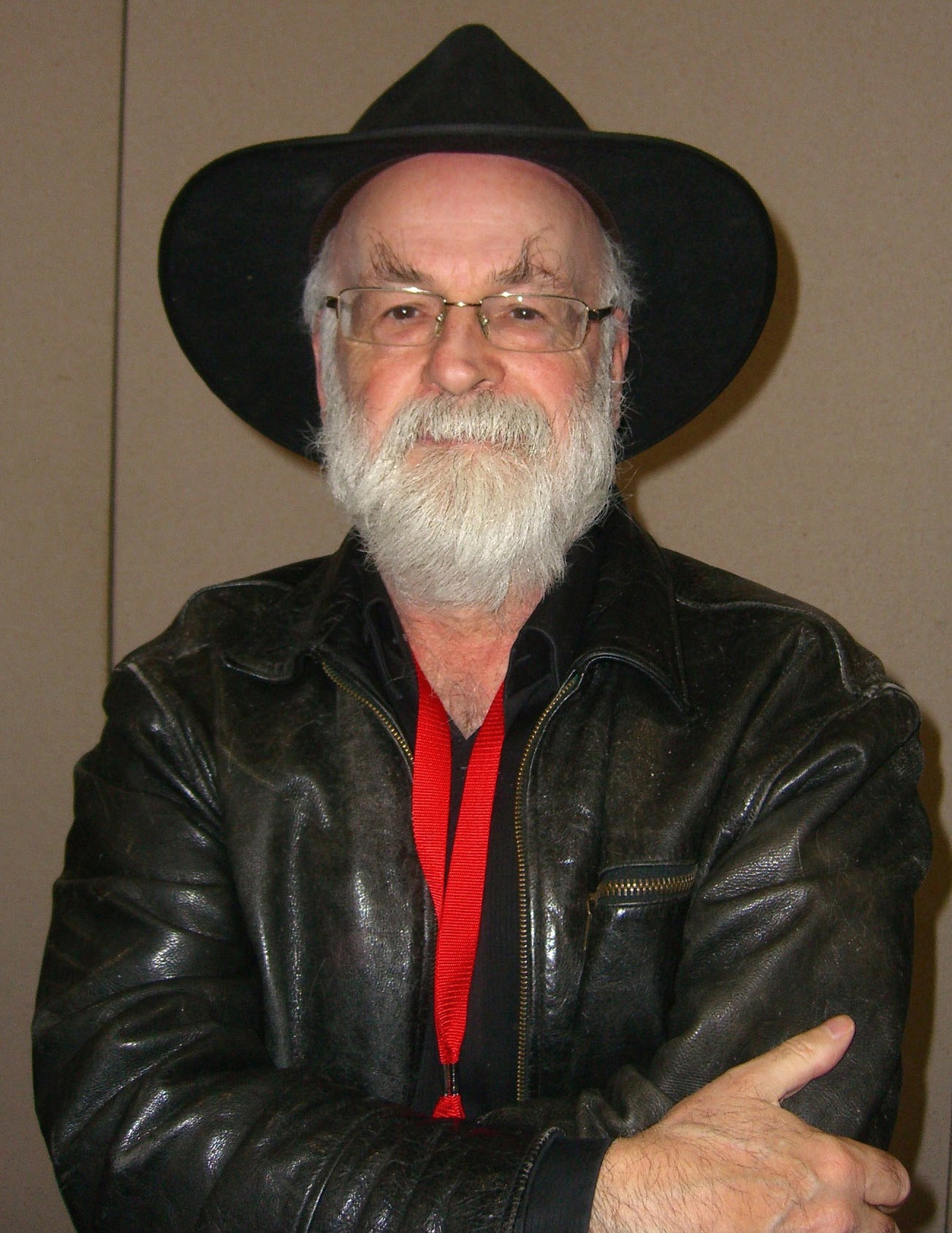
Early Life and Passion for Writing
Terence David John Pratchett, known to millions as Terry Pratchett, was born on April 28, 1948, in Beaconsfield, Buckinghamshire, England. Raised in a modest household as the only child of Eileen and David Pratchett, Terry’s early years were marked by a deep fascination with literature, especially science fiction. His move to Somerset at the age of nine exposed him to a different environment that nurtured his growing love for reading and astronomy. By the age of 11, he had already shown academic promise by passing the Eleven Plus exam, a significant achievement in the British education system at the time.
However, instead of attending the John Hampden Grammar School, Pratchett chose to enroll at High Wycombe Technical High School. This decision was perhaps the first indication of his non-conformist approach to life—a trait that would later define both his career and his literary style. It was during his school years that Pratchett began to explore his passion for writing, influenced by the science fiction novels he devoured. At just 13 years old, he published his first short story, “The Hades Business,” in the school magazine, marking the beginning of his lifelong journey as a writer.
The Early Career: Journalism and First Publications
Pratchett’s early foray into the world of writing was further solidified when, at 17, he decided to leave school and pursue a career in journalism. He began working for the Bucks Free Press, a local newspaper where he honed his skills as a writer and storyteller. Here, Pratchett wrote under the pseudonym “Uncle Jim,” contributing to the “Children’s Circle” section, where he published short stories that captured the imaginations of young readers.
In 1968, Pratchett married Lyn, a union that would prove to be a stable and supportive partnership throughout his life. By 1971, Pratchett published his first novel, The Carpet People, a whimsical fantasy that introduced readers to his distinctive narrative voice—one that blended humor, wit, and a keen observation of human nature. The book was well-received, earning positive reviews and setting the stage for what would become a prolific writing career.
Pratchett continued to work in journalism while simultaneously pursuing his writing. He published The Dark Side of the Sun in 1976, followed by Strata in 1981. These early works, while not as widely known as his later Discworld series, showcased his ability to create intricate worlds and explore complex themes through the lens of fantasy. During this time, Pratchett also became a father, welcoming his daughter Rhianna in 1976, who would later follow in his footsteps as a writer.
The Discworld Phenomenon: A Literary Revolution
The year 1983 marked a turning point in Terry Pratchett’s career with the publication of The Colour of Magic, the first novel in what would become his most famous work—the Discworld series. Set in a flat world balanced on the backs of four elephants, which in turn stand on the shell of a giant turtle, Discworld was a satirical take on the fantasy genre, filled with eccentric characters, sharp wit, and profound social commentary.
The Colour of Magic was an instant success, resonating with readers who were drawn to its humorous yet insightful portrayal of a fantasy world that mirrored the absurdities of real life. The novel’s success led to a serialization on the BBC’s Woman’s Hour, further increasing its popularity.
Encouraged by the response, Pratchett wrote The Light Fantastic in 1986, continuing the adventures of Rincewind, a hapless wizard, and setting the stage for a series that would span over four decades and include 41 novels. Each book in the Discworld series, while often standalone, contributed to the development of a richly detailed universe that tackled various aspects of human existence, from politics and religion to technology and culture.
By 1987, Pratchett’s writing career had gained so much momentum that he decided to leave his job as a press officer for the Central Electricity Generating Board, a position he had held since 1980, to focus solely on writing. His decision proved to be a wise one, as Discworld’s popularity soared, making him one of the best-selling authors of the 1990s.
The 1990s: Global Fame and Recognition
The 1990s were a decade of unparalleled success for Terry Pratchett. His books consistently topped the best-seller lists, and his unique blend of humor and fantasy earned him a devoted following worldwide. In 1993, Pratchett and his family moved to Wiltshire, where he continued to write at an astonishing pace, often publishing two books a year.
Pratchett’s contributions to literature were officially recognized in 1998 when he was appointed Officer of the Order of the British Empire (OBE) for his services to literature. The honor was a significant acknowledgment of his impact on British culture, particularly in popularizing fantasy as a genre that could both entertain and provoke thought.
The success of the Discworld series also led to adaptations in various media, including television, radio, and theater. Pratchett’s works were praised not only for their creativity and humor but also for their incisive critique of societal norms. His ability to address complex issues such as morality, justice, and the human condition through the lens of fantasy made him a literary figure who transcended the genre’s traditional boundaries.
Terry Pratchett’s Battle with Alzheimer’s Disease
In 2007, Terry Pratchett’s life took a dramatic turn when he was diagnosed with posterior cortical atrophy, a rare form of early-onset Alzheimer’s disease. The diagnosis came after an initial misdiagnosis of a minor stroke, which Pratchett later discovered had actually been the result of the disease. The news of his condition was met with widespread concern and sympathy from his fans and the literary community.
True to his nature, Pratchett approached his diagnosis with a combination of pragmatism and dark humor. He publicly announced his condition in 2007 and used his platform to raise awareness about Alzheimer’s disease. In 2008, Pratchett donated $1 million to the Alzheimer’s Research Trust, emphasizing the need for more research and better understanding of the disease. His donation sparked the “Match it for Pratchett” campaign, which successfully raised additional funds for Alzheimer’s research.
Despite his diagnosis, Pratchett continued to write, determined to complete as many books as possible while he still could. His determination and resilience were inspiring, and his battle with Alzheimer’s became the subject of a BBC documentary, Terry Pratchett: Living with Alzheimer’s, which provided an intimate look at his life and struggles with the disease.
In 2009, Pratchett was knighted by Queen Elizabeth II, becoming Sir Terry Pratchett in recognition of his contributions to literature. The knighthood was a fitting tribute to a man whose work had brought joy, laughter, and reflection to millions of readers around the world.
Advocacy for Assisted Dying
Terry Pratchett’s battle with Alzheimer’s disease also led him to become an outspoken advocate for assisted dying. In 2011, he presented the BBC documentary Terry Pratchett: Choosing to Die, which explored the issue of assisted suicide and followed the journey of a man with motor neurone disease who chose to end his life at a clinic in Switzerland.
The documentary was both poignant and controversial, sparking debate about the ethics of assisted dying. Pratchett’s involvement in the documentary was driven by his own fears about the progression of his disease and his desire to have control over the manner and timing of his death. The program won a BAFTA award and further cemented Pratchett’s legacy as not just a writer, but a thoughtful and compassionate human being who used his influence to tackle difficult subjects.
Final Years and Legacy
Terry Pratchett continued to write and publish books until his health made it impossible. His final Discworld novel, The Shepherd’s Crown, was published posthumously in 2015, just months after his death. The novel was a fitting conclusion to the Discworld series, bringing closure to a literary journey that had spanned more than three decades.
Pratchett passed away on March 12, 2015, at the age of 66, in his home in Broad Chalke, Wiltshire. His death was announced by his daughter Rhianna Pratchett, a writer and video game designer, who posted a message that reflected her father’s unique style: “AT LAST, SIR TERRY, WE MUST WALK TOGETHER.” In Discworld, Death speaks in all caps, and this final message was a touching tribute to the world he had created.
Pratchett’s legacy is vast and enduring. He is remembered not only for his prolific output and the joy his books brought to readers, but also for his wit, wisdom, and humanity. His works continue to be read and loved by new generations of readers, and his influence on the fantasy genre and popular culture remains profound.
Conclusion
Terry Pratchett’s life and work represent a remarkable journey of creativity, humor, and resilience. From his early days as a young writer with a passion for science fiction to his rise as one of the most beloved authors of the 20th century, Pratchett’s contributions to literature are immeasurable. His Discworld series redefined the fantasy genre, making it accessible and relevant to a wide audience while tackling important themes with humor and insight.
Pratchett’s battle with Alzheimer’s disease and his advocacy for assisted dying showed a different side of the man behind the books—a side that was courageous, compassionate, and determined to make a difference in the world. His legacy is not only in the stories he told but in the way he lived his life, with integrity, humor, and a deep understanding of the human condition.
Sir Terry Pratchett will be remembered as a literary giant, a knight of the imagination, and a man who, through his words, brought light to the darkest corners of life.


