
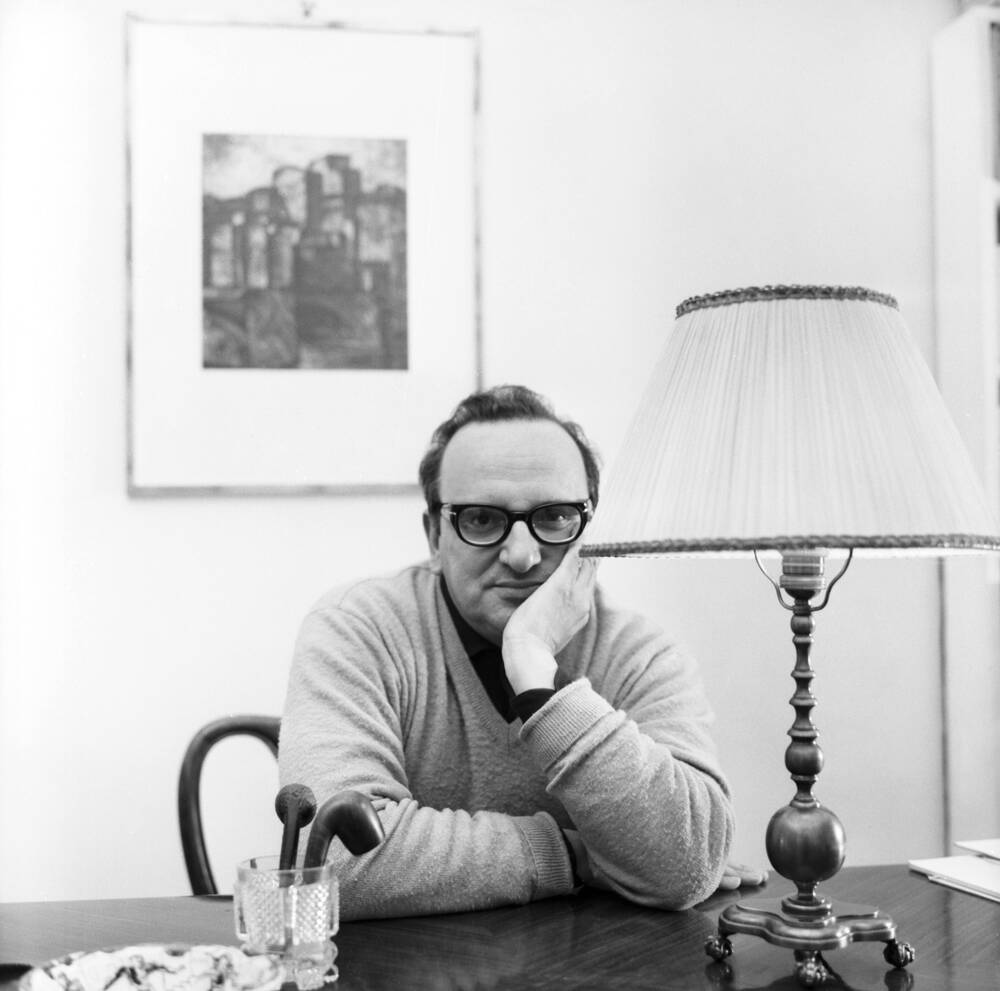
Vasco Pratolini was a prominent Italian writer whose works played a significant role in the Neorealism movement in literature. Born on October 19, 1913, in Florence, Italy, Pratolini’s life was marked by early personal tragedies, which would profoundly influence his literary career. His journey from a humble beginning to becoming one of the most important figures in Italian literature is a story of resilience, creativity, and a deep understanding of the human condition.
Early Life and Background
Vasco Pratolini was born into a working-class family in Florence. The early death of his mother when he was just five years old left a void in his life, leading him to be raised by his maternal grandparents. This period of his life was formative, as it exposed him to the struggles and daily lives of ordinary people, themes that would later become central in his literary works. His father, who returned from the front after World War I, remarried, but Pratolini found it difficult to integrate into this new family dynamic.
Pratolini’s education was irregular, and he had to start working at a young age to support himself. He took on various jobs, including working as a typographer, waiter, street vendor, and sales representative. Despite the hardships, these experiences provided him with a rich tapestry of life that would become the foundation of his literary work.
Literary Beginnings and Influence of Neorealism
Vasco Pratolini’s entry into the world of literature was not straightforward. He was largely self-taught, dedicating himself to an intense period of self-education after leaving his job at the age of eighteen. His early years were marked by a struggle with tuberculosis, which led to his hospitalization in a sanatorium between 1935 and 1937. Upon his return to Florence, he became involved with the artistic and literary circles, particularly through his friendship with the painter Ottone Rosai, who encouraged him to write about politics and literature.
Pratolini’s first major foray into literature came with the founding of the literary magazine “Campo di Marte” in collaboration with the poet Alfonso Gatto. This platform allowed him to connect with other influential figures, such as Elio Vittorini, who steered him towards focusing more on literature than politics.
Major Works and Themes
Pratolini moved to Rome in the early 1940s, where he published his first novel, Il tappeto verde (The Green Carpet) in 1941. However, it was his novel Cronache di poveri amanti (Chronicles of Poor Lovers) published in 1947 that truly established him as a significant voice in Italian literature. The novel is set in Florence during the 1920s and provides a vivid portrayal of the lives of ordinary people living in Via del Corno, a small street in Florence where Pratolini himself had lived with his grandparents. The novel was later adapted into a film by Carlo Lizzani in 1954, further cementing Pratolini’s fame.
The period following the publication of Cronache di poveri amanti was particularly productive for Pratolini. He wrote several other novels, including Un eroe del nostro tempo (A Hero of Our Time) and Le ragazze di San Frediano (The Girls of San Frediano), both published in 1949. These works were characterized by their detailed and realistic depiction of the daily lives of ordinary people, a hallmark of the Neorealism movement. The Neorealism movement in literature aimed to depict the realities of life for the working class and the poor, often focusing on the harshness of life but also on the solidarity and human connections that made such lives bearable.
Pratolini’s style was simple yet powerful, capturing the essence of the environments he described, whether it was the streets of Florence or the broader social landscape of Italy. His works often featured characters who, despite their poverty and suffering, remained hopeful and believed in the power of collective solidarity.
Later Life and the Trilogy
In 1951, Pratolini returned to Rome, where he continued his literary career. He embarked on what would become one of his most ambitious projects—a trilogy titled Una storia Italiana (An Italian Story), which sought to depict different aspects of Italian society. The first novel in the trilogy, Metello (1955), focused on the life of a construction worker and aimed to transcend the narrow confines of the neighborhood-focused stories that had characterized his earlier works. Metello was followed by Lo scialo (The Waste, 1960), which explored the bourgeoisie, and Allegoria e derisione (Allegory and Derision, 1966), which delved into the world of intellectuals.
The trilogy was not as warmly received as his earlier works, with some critics arguing that Pratolini had not fully succeeded in capturing a broader Italian identity, instead remaining too tied to his Florentine roots. Nonetheless, the trilogy represents an important part of Pratolini’s literary output, as it reflects his desire to expand his narrative scope and tackle larger societal issues.
Contributions to Cinema
In addition to his novels, Vasco Pratolini also made significant contributions to Italian cinema as a screenwriter. He collaborated on the screenplay for several important films, including Roberto Rossellini’s Paisà (1946), Luchino Visconti’s Rocco e i suoi fratelli (Rocco and His Brothers, 1960), and Nanni Loy’s Le quattro giornate di Napoli (The Four Days of Naples, 1962). These films are considered classics of Italian cinema and further demonstrate Pratolini’s versatility as a storyteller.
Legacy and Death
After the publication of his trilogy, Pratolini entered a period of relative silence, with his next significant work, Il mannello di Natascia (Natascia’s Bundle), not appearing until 1981. This book was a collection of memories and testimonies from the 1930s, providing a nostalgic look back at a formative period in his life.
Vasco Pratolini passed away in Rome on January 12, 1991, at the age of 77. His legacy as one of the foremost chroniclers of Italian life in the 20th century remains secure. His works continue to be studied and admired for their authentic portrayal of the human experience, particularly within the context of Italian society during some of its most turbulent times.
Conclusion
Vasco Pratolini’s life and work are a testament to the power of literature to capture the essence of a society and its people. From his early struggles to his rise as a leading figure in Italian literature, Pratolini’s journey is one of resilience, creativity, and a deep understanding of the human condition. His contributions to the Neorealism movement in literature and cinema have left an indelible mark, ensuring that his stories of ordinary lives in extraordinary times will continue to resonate with readers and viewers for generations to come.
Pratolini’s works are essential for anyone interested in understanding the complexities of Italian society in the 20th century, and his legacy as a writer who gave voice to the voiceless remains as relevant today as it was during his lifetime.


