
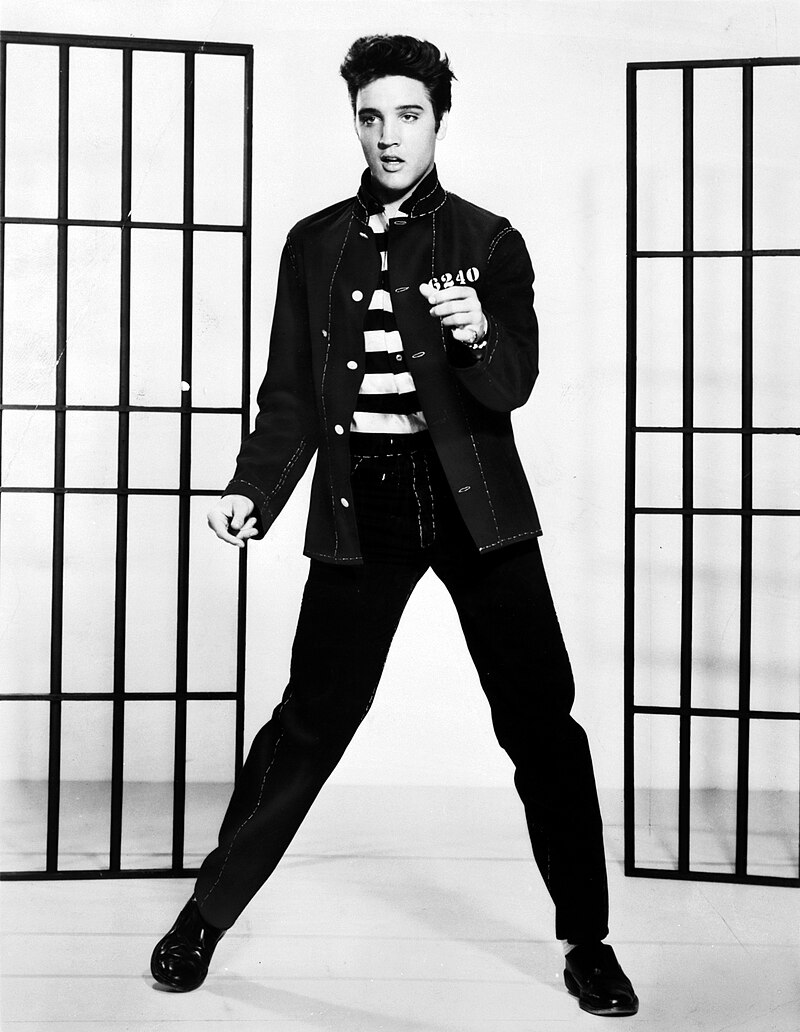
Elvis Presley, often referred to as “The King of Rock and Roll,” was born on January 8, 1935, in a modest home in Tupelo, Mississippi. From these humble beginnings, Elvis would rise to become one of the most influential cultural icons of the 20th century. His music, style, and charisma not only revolutionized the music industry but also left an indelible mark on American pop culture. This article explores the life, career, and enduring legacy of Elvis Presley, delving into the nuances of his rise to fame, his impact on music and society, and the personal challenges he faced along the way.
Early Life and the Birth of a Legend
Elvis Aaron Presley was born into a poor family, the son of Vernon and Gladys Presley. From an early age, Elvis was exposed to a variety of musical influences, including gospel music, which he heard regularly at church, and the blues, which were a staple in the predominantly African-American neighborhood where he grew up. These early experiences with music laid the foundation for the unique sound that would later define his career.
At the age of 13, Elvis and his family moved to Memphis, Tennessee, a city that was a hotbed for musical innovation. It was here that Elvis began to develop his own musical style, blending elements of country, blues, and gospel into a sound that was distinctly his own. However, before music became his full-time occupation, Elvis worked a series of odd jobs, including as a truck driver. Despite his modest beginnings, Elvis harbored dreams of making it big in the music industry.
The turning point came in 1953 when Elvis walked into Sun Records, a small recording studio in Memphis, and paid $4 to record a song as a gift for his mother. Sam Phillips, the owner of Sun Records, was immediately struck by Elvis’s unique voice and style. Recognizing his potential, Phillips signed Elvis to a contract, and soon after, Elvis recorded his first hit, “That’s All Right (Mama).” This song, with its fusion of rhythm and blues and country, is often credited with launching the rock and roll revolution.
The Rise to Fame: The 1950s
The mid-1950s marked the beginning of Elvis Presley’s meteoric rise to fame. His first single, “Heartbreak Hotel,” released in 1956, became a massive hit, reaching the top of the Billboard charts and establishing Elvis as a household name. His unique blend of rockabilly, country, and blues, combined with his electrifying stage presence and good looks, made him a sensation among young audiences across the United States.
Elvis’s television appearances in the 1950s played a crucial role in his rise to fame. His performances on shows like “The Milton Berle Show” and “The Ed Sullivan Show” were watched by millions and were often the subject of controversy due to his provocative dance moves, particularly his gyrating hips, which earned him the nickname “Elvis the Pelvis.” These performances not only solidified his status as a pop culture icon but also helped to popularize rock and roll music among mainstream audiences.
In addition to his music career, Elvis also ventured into acting during this period. His first film, “Love Me Tender,” was released in 1956 and was a box office success. Over the next few years, Elvis starred in a series of films, many of which were musical comedies that capitalized on his popularity as a singer. While his acting career was often criticized for the formulaic nature of his films, they were commercially successful and contributed to his growing fame.
The 1960s: Military Service and a Comeback
In 1958, at the height of his popularity, Elvis was drafted into the United States Army. His military service, which lasted for two years, took him to Germany, where he served as a regular soldier, despite his celebrity status. During this time, Elvis’s mother, Gladys, passed away, a loss that deeply affected him. Her death marked a turning point in his life, and many believe it was the beginning of his struggles with depression and substance abuse.
Despite his time away from the spotlight, Elvis’s popularity did not wane. Upon his return to the United States in 1960, he was honorably discharged from the army and immediately resumed his music and acting careers. His first post-army recording, “It’s Now or Never,” became one of his most successful singles, topping the charts in multiple countries.
The early 1960s saw Elvis focusing more on his film career, with a series of successful movies and soundtracks. However, by the mid-1960s, the quality of his films began to decline, and so did their box office appeal. Elvis’s music career also faced challenges during this period, as the British Invasion, led by bands like The Beatles, began to dominate the music charts.
Realizing that his career was in need of a revival, Elvis made a triumphant return to live performances in 1968 with the “Elvis Comeback Special.” Broadcast on NBC, this television special featured Elvis performing live in front of an audience for the first time in years. Dressed in a black leather suit, Elvis delivered a powerful performance that reminded audiences of his charisma and talent. The success of the Comeback Special marked a new phase in his career, as he returned to live performances and recording.
The 1970s: Las Vegas and Decline
The 1970s were a decade of both triumph and tragedy for Elvis Presley. In 1969, he began performing regularly in Las Vegas, where he became a mainstay at the International Hotel (later known as the Las Vegas Hilton). These performances, known as the “Vegas Years,” were characterized by their elaborate stage shows, complete with a full orchestra and backup singers. Elvis’s Vegas shows were wildly popular, and he became one of the highest-paid performers in the city’s history.
Despite the success of his Vegas performances, the 1970s were also marked by personal struggles. Elvis’s marriage to Priscilla, whom he had married in 1967, began to deteriorate, and the couple eventually divorced in 1973. The divorce, combined with the pressures of his career and the physical toll of his demanding performance schedule, led Elvis to increasingly rely on prescription drugs. His health began to decline, and he struggled with weight gain and other health issues.
Elvis’s final years were a period of significant decline. His performances became less frequent, and his public appearances were often marred by his deteriorating health. Despite this, he continued to record music, and his albums from this period, such as “Elvis: Aloha from Hawaii,” were successful. His last concert took place in Indianapolis on June 26, 1977.
On August 16, 1977, Elvis Presley was found unresponsive at his home, Graceland, in Memphis, Tennessee. He was rushed to the hospital, where he was pronounced dead at the age of 42. The official cause of death was listed as heart failure, but it was later revealed that his death was likely the result of a drug overdose.
The Legacy of Elvis Presley
Elvis Presley’s impact on music and culture is immeasurable. He is often credited with popularizing rock and roll music and bringing it to a mainstream audience. His unique blend of musical genres, combined with his charismatic stage presence and good looks, made him a global superstar and a cultural icon.
Elvis’s influence extends beyond music. He helped to break down racial barriers in the music industry by bringing traditionally African-American musical styles to a wider audience. His performances were also groundbreaking in their own right, with his provocative dance moves challenging the conservative norms of the 1950s and 1960s.
In the years following his death, Elvis’s legend has only grown. Graceland, his former home, has become a pilgrimage site for fans, drawing hundreds of thousands of visitors each year. Elvis’s music continues to be celebrated, with his records still selling in large numbers. He remains one of the best-selling solo artists of all time, with over a billion records sold worldwide.
Elvis’s image and likeness have also become an enduring part of popular culture. From countless impersonators performing his hits to films, documentaries, and books chronicling his life, Elvis’s presence remains ubiquitous. The ongoing fascination with his life and music speaks to the enduring appeal of his talent and charisma.
Conclusion: Elvis Presley’s Enduring Influence
Elvis Presley’s life and career were marked by extraordinary highs and devastating lows. From his humble beginnings in Tupelo to his status as the King of Rock and Roll, Elvis’s journey is a testament to the power of talent, perseverance, and charisma. Despite the personal challenges he faced, his impact on music and popular culture is undeniable.
Elvis’s legacy lives on in the music he created, the performances he gave, and the countless artists he inspired. He was a pioneer who helped shape the sound of modern music, and his influence can still be felt today. As we continue to celebrate his life and achievements, Elvis Presley remains an enduring symbol of the transformative power of music and the indomitable spirit of rock and roll.


