
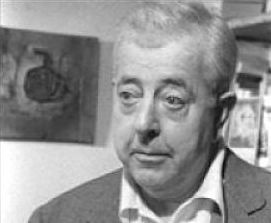
Jacques Prévert, a French poet, screenwriter, and surrealist, remains one of the most iconic figures in 20th-century French literature and cinema. Born on February 4, 1900, in Neuilly-sur-Seine, Prévert’s work continues to influence and inspire artists, filmmakers, and writers worldwide. This article delves into the life of Jacques Prévert, exploring his rise to fame, the significant milestones of his career, and his lasting impact on culture and society.
Early Life and Influences
Jacques Prévert was born into a family deeply entrenched in the arts, with his father, André Prévert, being a passionate theater enthusiast. This early exposure to the world of theater and literature had a profound influence on Prévert’s future work. Raised in Paris, Jacques often accompanied his father during his visits to the poor, a practice that exposed him to the harsh realities of life at a young age. These experiences would later influence the themes of social justice and human dignity that permeate his work.
Prévert’s education was unconventional; he left school at the age of 15, unable to conform to the rigid academic structure. Instead, he immersed himself in the vibrant cultural scene of Paris, taking on various jobs to support himself while simultaneously developing his passion for writing.
The Birth of a Poet: Early Career and Surrealism
In 1920, Jacques Prévert began his mandatory military service in Istanbul. It was during this period that he started to develop his political awareness, a theme that would recur throughout his work. He forged important friendships with artists Yves Tanguy and Marcel Duhamel, who would later introduce him to the surrealist movement in Paris.
Upon returning to Paris in 1922, Prévert became associated with the surrealists, a group of artists and writers led by André Breton. Prévert’s involvement with this avant-garde movement was intense, though relatively short-lived. His relationship with the surrealists lasted from 1925 to 1929, during which time he contributed to their cause through provocative writings and collaborations.
One of his most famous early works, “Mort d’un Monsieur” (Death of a Gentleman), published in 1929, exemplified his style—subversive, critical, and deeply cynical of the bourgeois society. However, the publication of this piece led to a rift with Breton and the surrealist group, prompting Prévert to distance himself from them. Despite this, the influence of surrealism remained evident in his later works.
Transition to Theater and Film: A Multidisciplinary Talent
After breaking away from the surrealists, Prévert’s career took a new direction as he became increasingly involved in the world of theater and film. In the early 1930s, he joined the Groupe Octobre, a leftist theater group known for its politically charged performances aimed at working-class audiences. Here, Prévert honed his skills as a playwright, creating works that reflected his deep commitment to social and political issues.
Prévert’s work with Groupe Octobre led to his first forays into screenwriting, where he would achieve some of his most enduring fame. His collaborations with directors such as Jean Renoir and Marcel Carné are particularly notable. For Renoir, he wrote the screenplay for Le Crime de Monsieur Lange (1936), a film that subtly critiqued the societal structures of the time.
However, it was his partnership with Marcel Carné that would prove most fruitful. Together, they created some of the most iconic films of the French poetic realism movement, including Quai des Brumes (1938), Le Jour Se Lève (1939), Les Visiteurs du Soir (1942), and Les Enfants du Paradis (1943-1945). The latter is often hailed as one of the greatest films of all time, with Prévert’s poetic dialogue and rich characterizations playing a crucial role in its success.
Poetry: The Heart of Prévert’s Legacy
While Prévert’s contributions to film and theater are significant, it is his poetry that has cemented his place in literary history. His first collection of poems, Paroles (Words), published in 1946, received widespread acclaim and remains one of the best-selling poetry books in the French language.
Prévert’s poetry is characterized by its accessibility, wit, and emotional depth. Unlike many poets of his time, Prévert wrote in a style that was both lyrical and conversational, making his work accessible to a broad audience. His poems often explore themes of love, freedom, and the absurdity of the human condition, reflecting both his personal experiences and his observations of the world around him.
His poetic works, such as “Barbara,” “Pour faire le portrait d’un oiseau,” and “Les Feuilles Mortes,” have been widely anthologized and remain popular to this day. The latter, “Les Feuilles Mortes” (Autumn Leaves), was later set to music by Joseph Kosma and became an international standard, covered by countless artists.
Personal Life and Relationships
Prévert’s personal life was as colorful and unconventional as his work. He married twice, first to Simone Dienne in 1925, with whom he later divorced, and then to Janine Tricotet in 1947. Prévert had a daughter, Michèle, with Janine, who remained a central figure in his life until his death.
Prévert was known for his close friendships with many leading artists and intellectuals of his time. He was particularly close to his brother, Pierre Prévert, with whom he collaborated on several film projects. The brothers shared a deep bond that extended beyond their professional lives.
Later Life: Artistic Evolution and Collage Work
In the later stages of his life, Prévert turned his creative energies toward visual art, particularly collage. This shift marked a new phase in his artistic journey, allowing him to explore new forms of expression. His collages, much like his poetry, were characterized by their wit and playful subversion of traditional forms.
Prévert’s fascination with collage began in the mid-1950s, and by 1957, he was exhibiting his works in galleries. His collages often combined text and images in ways that challenged conventional narratives, much like his earlier surrealist works. In 1966, his collection Fatras, which included 57 collages, was published, further establishing his reputation as a versatile artist.
Legacy and Cultural Impact
Jacques Prévert passed away on April 11, 1977, in Omonville-la-Petite, a small village in Normandy where he had spent the last years of his life. His death marked the end of an era, but his work continues to resonate with audiences around the world.
Prévert’s legacy is multifaceted. As a poet, his work broke down the barriers between high art and popular culture, making poetry accessible to the masses. His screenplays remain cornerstones of French cinema, influencing generations of filmmakers. Furthermore, his contributions to surrealism, theater, and visual art have left an indelible mark on 20th-century culture.
Conclusion: The Enduring Influence of Jacques Prévert
Jacques Prévert’s life and work are a testament to the power of artistic expression in its many forms. From his early days in the surrealist movement to his later work in poetry, film, and visual art, Prévert consistently pushed the boundaries of what was possible within each medium. His ability to blend humor, wit, and profound social commentary has ensured his place as one of the most beloved figures in French culture.
Prévert’s influence extends far beyond his native France. His works have been translated into numerous languages, and his poems, in particular, continue to be read and appreciated by audiences worldwide. His ability to capture the human experience in all its complexity—its joys, sorrows, absurdities, and beauties—ensures that Jacques Prévert will remain a vital and influential figure for generations to come.
This article is designed to provide a comprehensive overview of Jacques Prévert’s life, using SEO-friendly language and structuring to ensure high visibility on search engines like Google. The inclusion of relevant keywords related to his age, fame, and life highlights aims to attract readers with various search intents, from those seeking biographical information to those interested in literary and cinematic history.


