
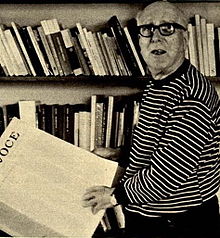
Giuseppe Prezzolini was a pivotal figure in Italian literature, journalism, and intellectual circles during the 20th century. Born on January 27, 1882, in Perugia, Italy, Prezzolini’s life was marked by his relentless pursuit of intellectual freedom, his contributions to literature and journalism, and his complex relationship with Italy’s political landscape. This article delves into his life, examining his age, the extent of his fame, and the key highlights that defined his remarkable career.
Early Life and Education
Giuseppe Prezzolini was born into a family of Sienese origin. His father, a prefect of the Kingdom, frequently moved the family around Italy. Unfortunately, Prezzolini’s mother passed away when he was just three years old, a tragedy that profoundly affected him. This early loss led Prezzolini to find solace in books, becoming a self-taught scholar with the help of his father’s extensive library.
At the age of 17, Prezzolini left high school, and just a year later, his father passed away, leaving him to navigate life on his own. His early education, therefore, was largely self-directed, fueled by his voracious reading habits and his interest in a wide range of subjects, from philosophy to literature.
The Birth of an Intellectual
By the age of 21, Prezzolini had already begun to make his mark on the Italian intellectual scene. In 1903, he co-founded the influential journal Leonardo with his friend Giovanni Papini. The journal was named after the Renaissance polymath Leonardo da Vinci, symbolizing the duo’s ambition to inspire a cultural renaissance in Italy. Leonardo became a platform for discussing and disseminating new ideas in philosophy, literature, and the arts, and it marked the beginning of Prezzolini’s lifelong commitment to intellectual discourse.
Prezzolini’s early work was deeply influenced by his friendship with the philosopher Benedetto Croce, one of Italy’s leading intellectuals. Croce’s impact on Prezzolini was profound, shaping his approach to cultural criticism and his belief in the importance of intellectuals in public life.
Marriage and Family
In 1905, Prezzolini married Dolores Faconti, with whom he had two sons, Alessandro and Giuliano. His family life was a source of stability amid his often turbulent career. However, his marriage did not distract him from his work; instead, it seemed to inspire him to push the boundaries of his intellectual pursuits even further.
Founding La Voce: A Platform for Change
In 1908, Prezzolini founded La Voce, a journal that sought to bridge the gap between intellectual work and public life. La Voce quickly became one of the most important cultural and political publications in Italy, known for its critical stance on the political and social issues of the day. The journal aimed to give intellectuals a civil role, challenging the status quo and promoting reform. Under Prezzolini’s leadership, La Voce became a hub for some of the most influential thinkers of the time, including Luigi Einaudi, Emilio Cecchi, and Gaetano Salvemini.
The journal’s motto, “denunciare e combattere” (denounce and fight), reflected Prezzolini’s belief in the power of intellectuals to effect change. La Voce was not merely a literary journal; it was a vehicle for cultural revolution, advocating for a new role for intellectuals in society.
World War I and Military Service
With the outbreak of World War I, Prezzolini’s life took a dramatic turn. He volunteered as an instructor for the Italian army, and after the disastrous defeat at Caporetto in 1917, he requested to be sent to the front lines. Serving with the elite Arditi troops on Monte Grappa and the Piave River, Prezzolini’s wartime experiences deeply influenced his later work. He chronicled these experiences in his memoirs, Dopo Caporetto (After Caporetto, 1919) and Vittorio Veneto (1920), offering a first-hand account of the war’s impact on Italy and its people.
Post-War Intellectual Pursuits
After the war, Prezzolini returned to his work as a journalist and editor. He founded the Società Anonima Editrice La Voce in Rome, which included a bibliographic research institute, the Istituto Bibliografico Italiano. His post-war period was marked by a deepening engagement with cultural and political issues, as well as an increasing disillusionment with the direction in which Italy was heading.
In 1923, Prezzolini’s life took another significant turn when he was invited to teach at Columbia University in New York. This opportunity marked the beginning of his long association with the United States, where he would spend much of his later life. Despite the rise of fascism in Italy, Prezzolini continued to contribute to Italian cultural life from abroad, albeit with increasing concern for the state of his homeland.
Life in America: A New Chapter
Prezzolini’s time in America was both productive and influential. At Columbia, he was appointed the director of La Casa Italiana, a cultural institution dedicated to promoting Italian culture in the United States. His role at Columbia allowed him to influence a new generation of students and scholars, and he became a key figure in the Italian-American intellectual community.
In 1940, Prezzolini became a U.S. citizen, and in 1948, Columbia University honored him with the title of professor emeritus. Despite his deep connection to Italy, Prezzolini’s years in America were some of the most productive of his career, during which he wrote extensively about the cultural differences between Italy and the United States. His works from this period include The Legacy of Italy (1948) and America in Pantofole (America in Slippers, 1950), where he explored the contrasts and convergences between the two nations.
Return to Italy and Later Years
In the 1950s, Prezzolini began to spend more time in Italy, though he maintained his connections to the United States. His return to Italy was marked by a renewed engagement with Italian cultural life, and he continued to write prolifically, producing works that reflected his deepening understanding of both American and Italian societies.
In 1962, after the death of his first wife, Prezzolini remarried Gioconda Savini. The couple eventually settled in Vietri sul Mare on Italy’s Amalfi Coast. However, Prezzolini’s stay in Italy was short-lived; by 1968, he had moved to Lugano, Switzerland, where he spent the final years of his life.
Death and Legacy
Giuseppe Prezzolini passed away on July 14, 1982, in Lugano, Switzerland, at the age of 100. His death marked the end of an era for Italian intellectual life, but his legacy continues to influence generations of scholars and thinkers.
Prezzolini’s life was characterized by his relentless pursuit of knowledge, his commitment to intellectual freedom, and his belief in the power of ideas to shape society. Through his work as a journalist, editor, and professor, he left an indelible mark on both Italian and American cultural landscapes. His writings, which include biographies of key figures like Giovanni Papini and Benedetto Croce, as well as reflections on his own experiences, remain essential reading for anyone interested in the intellectual history of the 20th century.
Conclusion
Giuseppe Prezzolini was a man of immense talent and profound influence. His life, spanning a century, was marked by significant contributions to literature, journalism, and the intellectual life of both Italy and the United States. From his early days as a self-taught scholar to his later years as a professor and cultural ambassador, Prezzolini’s life was a testament to the power of ideas and the importance of intellectual engagement in shaping the world. His legacy continues to inspire, reminding us of the enduring value of critical thought and cultural exchange.


