
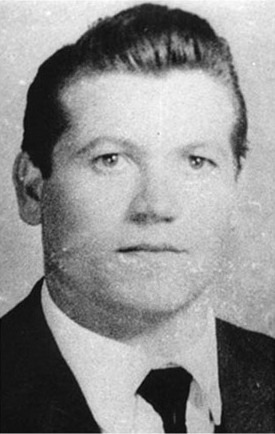
Bernardo Provenzano, a name that resonates with both fear and intrigue, is one of the most notorious figures in the history of organized crime. Known as the “Last Godfather,” Provenzano’s life is a saga of violence, power, and secrecy, emblematic of the dark underbelly of Sicilian Cosa Nostra. This article delves into his age, the life he led, his rise to power, and the ultimate fall of one of the most feared mafiosi in history.
Early Life and Background
Born on January 31, 1933, in Corleone, Sicily, Bernardo Provenzano grew up in a town that would later become synonymous with the mafia. The post-World War II period in Sicily was marked by poverty and the resurgence of organized crime, which provided fertile ground for young men like Provenzano to rise through the ranks of the mafia.
Corleone, a small town in the province of Palermo, became the epicenter of the mafia, thanks to figures like Luciano Liggio and Salvatore “Totò” Riina. Provenzano, from a young age, was drawn into this world. By the 1950s, he had already made a name for himself as a ruthless killer, earning the nickname “Binnu u tratturi” (Bernardo the Tractor) due to the sheer brutality with which he eliminated his enemies.
Rise to Power
Provenzano’s rise within Cosa Nostra was closely linked to the violent mafia wars that plagued Sicily during the 1960s. The First Mafia War, which saw intense rivalry between different mafia factions, culminated in the infamous Ciaculli massacre in 1963, an event that triggered a crackdown by Italian authorities. This period marked Provenzano’s transition from a feared enforcer to a strategic leader within the Corleonesi faction.
Under the leadership of Luciano Liggio, and later Salvatore Riina, the Corleonesi faction waged a brutal campaign against rival mafia clans, solidifying their control over Cosa Nostra. Provenzano, as one of Riina’s most trusted lieutenants, played a crucial role in this consolidation of power. His expertise in organizing hits and his discretion earned him the respect and fear of his peers.
By the 1980s, Provenzano was firmly entrenched in the upper echelons of Cosa Nostra. However, unlike Riina, who was known for his flamboyant displays of power and his ruthless public assassinations of high-profile figures like Judge Giovanni Falcone and Paolo Borsellino, Provenzano preferred to operate in the shadows. His ability to maintain a low profile while exerting influence made him a unique figure in the mafia hierarchy.
The “Invisible” Godfather
Provenzano’s preference for anonymity became even more pronounced after Riina’s arrest in 1993. Taking over as the de facto leader of Cosa Nostra, Provenzano implemented a strategy that starkly contrasted with Riina’s approach. He introduced a system of “pax mafiosa,” where violence was used sparingly, and the mafia’s operations were more focused on business and political infiltration rather than outright terror.
Provenzano’s communication methods were emblematic of his secretive nature. He avoided direct contact with his subordinates and instead used “pizzini”—small, handwritten notes—to relay his orders. These pizzini, which were meticulously written and carefully worded, allowed Provenzano to maintain control over the vast Cosa Nostra network while remaining virtually undetected by law enforcement.
For over four decades, Provenzano managed to evade capture, despite being one of the most wanted men in Italy. His ability to remain in hiding for so long earned him the moniker “The Phantom of Corleone.” It wasn’t until 2006, after a manhunt that spanned more than 40 years, that Provenzano was finally apprehended.
Arrest and Trial
The arrest of Bernardo Provenzano on April 11, 2006, marked the end of an era for Cosa Nostra. Provenzano was captured in a remote farmhouse near Corleone, where he had been living a reclusive life, surrounded by stacks of pizzini and religious icons. His arrest was a significant victory for Italian authorities, who had been relentlessly pursuing him for decades.
Provenzano’s capture was not just a blow to Cosa Nostra’s leadership but also a symbolic victory in the fight against organized crime. The arrest was the result of meticulous police work, which involved tracking the delivery of laundry packages to his hideout and decoding the messages in his pizzini.
Following his arrest, Provenzano was put on trial for numerous crimes, including murder, extortion, and mafia association. Despite his advanced age and deteriorating health, he was sentenced to multiple life terms in prison. His incarceration marked the end of the Corleonesi’s dominance over Cosa Nostra, as the mafia struggled to maintain its influence without its most powerful leader.
Life in Prison and Death
The final years of Bernardo Provenzano’s life were spent in isolation, under the strict 41-bis prison regime, a measure designed to prevent mafia bosses from continuing their criminal activities while incarcerated. Provenzano’s health steadily declined during his time in prison, and he made several attempts to secure a transfer to a less restrictive environment, citing his medical condition.
In December 2012, Provenzano attempted suicide in his prison cell, highlighting the psychological toll of his imprisonment. Despite his failing health, the Italian authorities refused to ease his conditions, fearing that any leniency could be exploited by Cosa Nostra to regain its footing.
On July 13, 2016, Bernardo Provenzano died at the age of 83 in the San Paolo Hospital in Milan. His death marked the end of a chapter in the history of Cosa Nostra, but his legacy continues to cast a long shadow over the Sicilian mafia.
Legacy and Historical Impact
Bernardo Provenzano’s life and career provide a unique lens through which to understand the evolution of the Sicilian mafia. Unlike his predecessors, who sought to assert their power through public acts of violence and intimidation, Provenzano’s approach was more subtle and insidious. His emphasis on maintaining a low profile, coupled with his strategic use of violence, allowed Cosa Nostra to survive in an era of increased law enforcement scrutiny.
Provenzano’s legacy is one of contradiction. On one hand, he is remembered as a brutal killer responsible for countless deaths. On the other, he is seen as a shrewd leader who understood the need for the mafia to adapt to changing circumstances. His ability to balance these two aspects of his personality made him one of the most successful and elusive mafia bosses in history.
In the broader context of organized crime, Provenzano’s life serves as a reminder of the challenges faced by law enforcement in combating deeply entrenched criminal organizations. His ability to evade capture for so long underscores the complexity of the mafia’s operations and the difficulties in dismantling such a powerful and secretive network.
Conclusion
Bernardo Provenzano’s story is one of power, secrecy, and ultimately, downfall. From his humble beginnings in Corleone to his rise as the leader of Cosa Nostra, Provenzano’s life encapsulates the dark allure of the mafia. His death may have closed a chapter in the history of organized crime, but the lessons from his life continue to resonate. As law enforcement agencies around the world continue to battle organized crime, the story of Bernardo Provenzano serves as both a cautionary tale and a source of insight into the enduring nature of criminal enterprises.


