
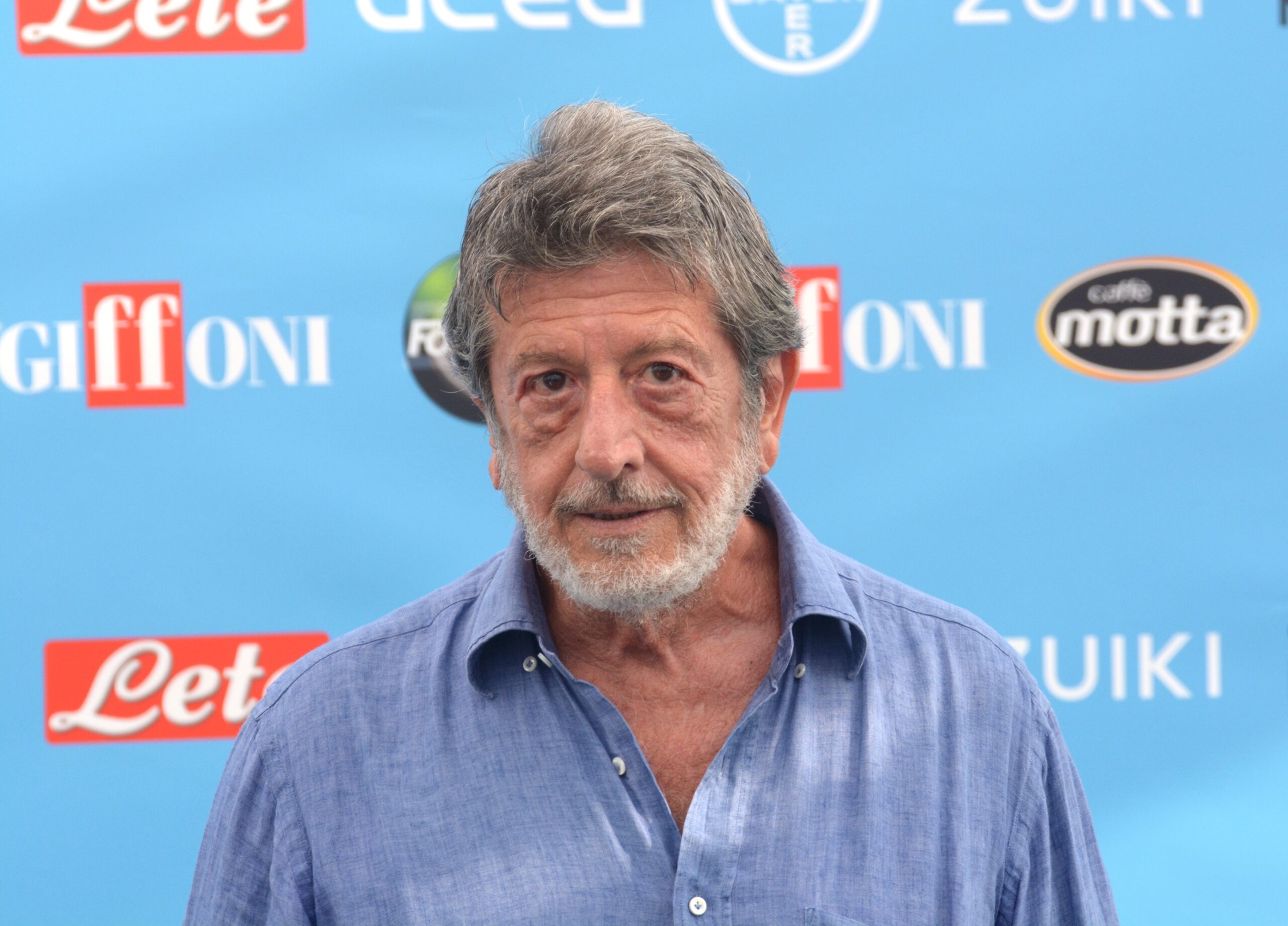
Andrea Purgatori was a renowned Italian journalist, screenwriter, and television presenter whose career spanned over four decades. Known for his incisive reporting, particularly on matters of national and international significance, Purgatori left an indelible mark on Italian journalism and popular culture. This comprehensive exploration of his life and work provides detailed insights into his journey from a young reporter to a respected media figure, emphasizing his influence on the industry and the legacy he left behind.
Early Life and Education
Born on February 1, 1953, in Rome, Italy, Andrea Purgatori was raised in a period marked by significant social and political changes. The Italy of his youth was one of post-war recovery, grappling with the complexities of modernization while retaining deep-rooted traditions. This environment undoubtedly shaped Purgatori’s worldview, instilling in him a keen awareness of the socio-political dynamics that would later inform his journalistic pursuits.
From a young age, Purgatori displayed a remarkable talent for oratory and writing, which guided him toward a career in journalism. His passion for storytelling and uncovering the truth led him to pursue formal education in journalism. By the age of 21, Purgatori had already earned the title of a professional journalist, a testament to his dedication and early entry into the field.
Purgatori’s quest for excellence drove him to further his education abroad. In 1980, he earned a Master of Science in Journalism from Columbia University in New York, one of the most prestigious journalism schools in the world. This experience not only honed his skills but also exposed him to international perspectives, which would later influence his approach to reporting on global issues.
Rise to Prominence: The In-Depth Investigations
Purgatori’s career began in earnest when he joined Corriere della Sera, Italy’s most prestigious newspaper, in 1976. Over the next 24 years, he would become one of the most respected investigative journalists in the country, known for his fearless pursuit of truth and justice.
One of the defining periods of Purgatori’s career was during the Anni di Piombo (Years of Lead), a time of widespread political terrorism in Italy during the 1970s and 1980s. Purgatori’s reporting during this period was instrumental in uncovering the hidden truths behind some of Italy’s most harrowing events. His coverage of the Ustica Massacre—a 1980 plane crash that remains shrouded in mystery and controversy—exemplifies his commitment to investigative journalism. Purgatori meticulously pieced together evidence that suggested the involvement of international military forces, a narrative that challenged the official explanations and brought him both acclaim and criticism.
In addition to his work on the Ustica case, Purgatori covered other major events of the era, including the kidnapping and assassination of former Prime Minister Aldo Moro by the Red Brigades. His deep dives into these cases showcased his ability to navigate complex, often dangerous, political landscapes, making him a trusted name in Italian journalism.
Purgatori’s investigative work was not limited to domestic issues. He also reported extensively on international conflicts, including the Iran-Iraq War in the 1980s and the Gulf War in 1991. His firsthand accounts from war zones provided Italian readers with in-depth analyses and a human perspective on the geopolitical struggles of the time.
Transition to Screenwriting and Television
While journalism was Purgatori’s primary vocation, his talents extended into the realms of screenwriting and television. The 1980s saw him begin to explore these new avenues, bringing his investigative eye and narrative skills to a wider audience.
In 1987, Purgatori co-wrote the horror film Spettri (Specters), marking his entry into the world of screenwriting. Though primarily known for his journalistic work, Purgatori’s ability to craft compelling narratives translated well to the screen. His writing was not limited to genre films; he also contributed to more serious and reflective projects.
Purgatori’s collaborations with Italian comedian Corrado Guzzanti in the early 2000s showcased his versatility. He worked on the satirical television program Il Caso Scafroglia (The Scafroglia Case) in 2002, where he lent his voice as the off-screen narrator. This program blended comedy with sharp social commentary, and Purgatori’s involvement added a layer of gravitas to the show’s critique of Italian society.
His foray into acting came with Guzzanti’s 2006 film Fascisti su Marte (Fascists on Mars), a satirical take on fascism. Purgatori’s role as Camerata Fecchia demonstrated his willingness to engage with Italy’s complex history through humor and satire, a stark contrast to his serious journalistic persona.
Purgatori continued to work in television, writing and appearing in various shows throughout the 2010s. His participation in programs like Boris, a meta-satirical series on the Italian television industry, further cemented his place in Italian popular culture. These projects showcased his ability to balance serious journalism with lighter, more entertaining endeavors.
2010s: A New Era in Broadcasting and Activism
The 2010s marked a significant period in Purgatori’s career as he transitioned from print journalism to television. In 2017, he became the author and presenter of Atlantide, a cultural program on La7 that explored historical, political, and social issues. The show quickly gained critical acclaim for its in-depth analysis and Purgatori’s engaging presentation style. Atlantide allowed Purgatori to reach a broader audience, bringing complex topics to viewers in a format that was both informative and accessible.
Purgatori’s work on Atlantide earned him the prestigious Premio Flaiano in 2019, recognizing his contributions to Italian culture and media. The program became a platform for Purgatori to continue his investigative work, this time through the medium of television, where he could delve into historical events, current affairs, and cultural phenomena with the depth and nuance that characterized his journalism.
Beyond his television work, Purgatori was deeply committed to environmental activism. From May 2014 to June 2020, he served as the president of Greenpeace Italia, using his platform to advocate for environmental protection and sustainability. His leadership in Greenpeace underscored his lifelong commitment to causes that aligned with his values of justice and truth.
In 2019, Purgatori ventured into literature with the publication of his first novel, Quattro Piccole Ostriche (Four Little Oysters), a thriller that drew on his extensive experience as a journalist. The novel was well-received and demonstrated Purgatori’s ability to translate his investigative skills into compelling fiction.
Later Years and Personal Life
Purgatori’s later years were marked by continued professional success and personal reflection. He remained a prominent figure in Italian media, respected for his integrity and intellectual rigor. Despite his public persona, Purgatori was known to be private about his personal life.
He was married twice, first to German art critic Nicola Schmitz, with whom he had three children, including Edoardo Purgatori, an actor known for his role in the popular Italian TV series Un Medico in Famiglia (A Doctor in the Family). His second marriage took place in 2018, and his new companion from 2021 was Errica Dall’Ara. Despite the demands of his career, Purgatori was a dedicated father, and his family life remained a priority.
In 2022, Purgatori appeared in the Netflix docuseries Vatican Girl: The Disappearance of Emanuela Orlandi, which revisited the mysterious case of a 15-year-old girl who vanished in Vatican City in 1983. Purgatori’s involvement in the series was a testament to his enduring commitment to uncovering the truth, even in the most challenging and enigmatic cases.
Legacy and Impact
Andrea Purgatori passed away on July 19, 2023, in Rome, at the age of 70, following a sudden illness. His death marked the end of a remarkable career that spanned over four decades, during which he left an indelible mark on Italian journalism, television, and culture.
Purgatori’s legacy is one of unwavering commitment to truth, justice, and the public good. His investigative work during the Years of Lead, his contributions to film and television, and his leadership in environmental activism all reflect a life dedicated to making the world a better, more informed place.
In the ever-evolving landscape of media and journalism, Andrea Purgatori’s work serves as a benchmark for excellence. His ability to navigate the complexities of Italian and global politics, his fearless pursuit of the truth, and his contributions to cultural discourse have left an enduring impact on Italian society. Future generations of journalists and media professionals will continue to draw inspiration from his work, ensuring that his legacy lives on.
Conclusion
Andrea Purgatori was more than just a journalist; he was a storyteller, an advocate, and a voice of reason in a world often clouded by misinformation and sensationalism. His life and career are a testament to the power of the written word and the importance of integrity in journalism. As we reflect on his contributions, we are reminded of the critical role that journalists play in society, not just as reporters of news, but as guardians of truth and justice.
Purgatori’s work remains relevant today, as the issues he covered—terrorism, political corruption, environmental degradation—continue to shape the world. His approach to these topics, marked by thorough research, nuanced analysis, and a deep commitment to the public good, sets a standard for all who follow in his footsteps.
In a career that spanned more than four decades, Andrea Purgatori not only witnessed history but helped to shape the way we understand it. His legacy as a journalist, screenwriter, and cultural commentator will continue to inspire and influence for years to come.


