
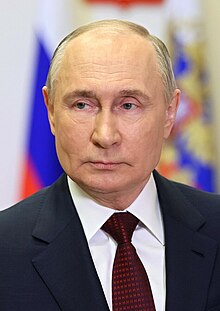
Introduction
Vladimir Putin, one of the most influential and controversial figures in modern history, has been a dominant force in Russian politics for over two decades. His rise from a low-ranking KGB officer to the presidency of the Russian Federation is a story filled with intrigue, power struggles, and significant geopolitical implications. This article delves into the life of Vladimir Putin, exploring his early years, his ascent to power, his impact on Russia and the world, and the controversies that have surrounded his leadership.
Early Life and Background
Born on October 7, 1952, in Leningrad (now St. Petersburg), Vladimir Vladimirovich Putin grew up in a working-class family. His father was a factory worker, and his mother was a homemaker. The post-World War II period in the Soviet Union was marked by poverty and hardship, and Putin’s childhood was no exception. Despite these challenges, he showed a strong sense of determination and a keen interest in martial arts, particularly judo, which he pursued with discipline and passion. This early interest in physical and mental discipline would later become a hallmark of his leadership style.
Education and KGB Career
In 1970, Putin enrolled at Leningrad State University, where he studied law. During his university years, he also learned German, a skill that would prove invaluable in his later career. After graduating in 1975, Putin joined the KGB, the Soviet Union’s secret police and intelligence agency. His career in the KGB was marked by a steady rise through the ranks, with a focus on counterintelligence. By 1985, he was stationed in Dresden, East Germany, where he served as a mid-level officer. This period abroad provided Putin with a broader perspective on international relations and the complexities of the Cold War.
Return to Russia and Entry into Politics
The fall of the Berlin Wall in 1989 and the subsequent collapse of the Soviet Union had a profound impact on Putin’s career. He returned to Leningrad, where he began working in the office of Anatoly Sobchak, the city’s mayor, who was a prominent reformist figure. This move marked Putin’s transition from intelligence work to politics. As Sobchak’s advisor on international affairs, Putin was instrumental in opening up the city to foreign investments and in managing its complex relations with Western countries.
The Path to Power
Putin’s political career took a significant leap forward in 1996 when he was called to Moscow by Anatoly Chubais, a key economic reformer, and became a member of President Boris Yeltsin’s administration. In 1998, Putin was appointed the head of the Federal Security Service (FSB), the successor to the KGB. This position placed him at the center of Russian power dynamics, giving him control over the country’s vast security apparatus.
In August 1999, Yeltsin appointed Putin as Prime Minister, a move that surprised many political observers. Yeltsin’s declining health and the chaotic state of Russian politics at the time created an opportunity for Putin, who was seen as a capable and loyal administrator. On December 31, 1999, Yeltsin unexpectedly resigned, and Putin became the acting President of Russia.
The Rise of a New Leader
Putin’s rise to power was meteoric. In March 2000, he was elected President of the Russian Federation with over 50% of the vote, marking the beginning of a new era in Russian politics. His presidency was characterized by efforts to centralize power, restore order, and strengthen the state after the turbulent 1990s, which had seen economic collapse, political instability, and widespread corruption.
One of Putin’s first major challenges as President was the Second Chechen War, a conflict that tested his resolve and defined his leadership style. His hardline approach to the conflict, which included brutal military tactics and a refusal to negotiate with separatists, was widely criticized by human rights organizations. However, it also won him significant support among the Russian population, who were weary of the instability and violence that had plagued the country.
Putin’s Russia: Centralization of Power
During his first two terms as President (2000-2008), Putin focused on consolidating power. He implemented a series of political reforms that strengthened the central government at the expense of regional authorities. He also moved to curtail the influence of the oligarchs, a group of powerful businessmen who had gained significant control over the Russian economy during the Yeltsin years. This included the arrest and imprisonment of Mikhail Khodorkovsky, one of Russia’s richest men, who had dared to challenge Putin’s authority.
Putin’s tenure also saw the resurgence of state control over key industries, particularly in the energy sector. Gazprom and Rosneft, two of Russia’s largest companies, became tools of state power, allowing Putin to exert influence both domestically and internationally. This period marked the beginning of Russia’s reassertion as a global power, particularly in energy markets.
The Medvedev Interlude and Return to Power
In 2008, Putin stepped down as President due to term limits, but he did not relinquish power. Dmitry Medvedev, a close ally, succeeded him as President, and Putin became Prime Minister. This arrangement, often referred to as a “tandemocracy,” allowed Putin to maintain control over the government while ostensibly adhering to the constitutional limits on presidential terms.
In 2012, Putin returned to the presidency in an election that was marred by allegations of fraud and widespread protests. Despite the controversy, Putin won with over 60% of the vote, underscoring his enduring popularity in Russia. His third term was marked by a more assertive foreign policy, increased repression of political dissent, and further consolidation of power.
Controversies and International Relations
Putin’s leadership has been fraught with controversy, particularly regarding his approach to democracy and human rights. Critics have accused him of turning Russia into an authoritarian state, where political opposition is stifled, media is controlled, and elections are manipulated. High-profile cases, such as the poisoning of opposition leader Alexei Navalny and the annexation of Crimea in 2014, have drawn international condemnation and led to sanctions against Russia.
On the international stage, Putin has sought to reassert Russia’s influence, often in opposition to Western interests. His support for the Assad regime in Syria, interference in the 2016 U.S. presidential election, and the ongoing conflict in Ukraine have all heightened tensions with the West. Despite these challenges, Putin has maintained a strong grip on power, bolstered by a nationalist rhetoric that resonates with many Russians.
The War in Ukraine
The most significant and controversial chapter of Putin’s presidency began on February 24, 2022, when Russia launched a full-scale invasion of Ukraine. This act of aggression shocked the world and led to widespread condemnation, with the United States and European Union imposing severe economic sanctions on Russia. The war, which Putin justified as a “special military operation” to protect Russian-speaking populations and denazify Ukraine, has resulted in thousands of deaths, widespread destruction, and a humanitarian crisis.
The conflict has also led to Russia’s increasing isolation on the world stage, with many countries condemning the invasion and providing military and humanitarian aid to Ukraine. The war has significantly altered the global geopolitical landscape, raising concerns about the potential for further escalation, including the use of nuclear weapons. Putin’s actions have been widely criticized as reckless and dangerous, leading to a significant deterioration in Russia’s relations with the West.
Legacy and Future Prospects
As of 2024, Vladimir Putin remains one of the most powerful and controversial leaders in the world. His legacy is complex and multifaceted, characterized by a combination of economic stability and authoritarianism at home, and assertiveness and aggression abroad. While he has been credited with restoring Russia’s status as a global power, his methods and policies have also led to significant criticism and isolation.
Looking to the future, Putin’s ability to maintain power will likely depend on a combination of internal control and external challenges. The outcome of the war in Ukraine, the state of the Russian economy, and the level of public support will all play crucial roles in determining his future. Despite the challenges, Putin has shown a remarkable ability to navigate crises and maintain his grip on power, making it difficult to predict how his story will end.
Conclusion
Vladimir Putin’s life and career are a testament to the complexities of power in the modern world. From his early days as a KGB officer to his role as the leader of Russia, Putin has consistently demonstrated a keen understanding of power dynamics and a willingness to use force to achieve his goals. His impact on Russia and the world is undeniable, and his legacy will continue to be debated for years to come.
As we look back on his life and career, it is clear that Vladimir Putin is a figure who has shaped the course of history in profound and often controversial ways. Whether seen as a strong leader who restored Russia’s greatness or a dictator who undermined democracy and human rights, Putin’s influence on global affairs is likely to endure long after his time in power comes to an end.


