
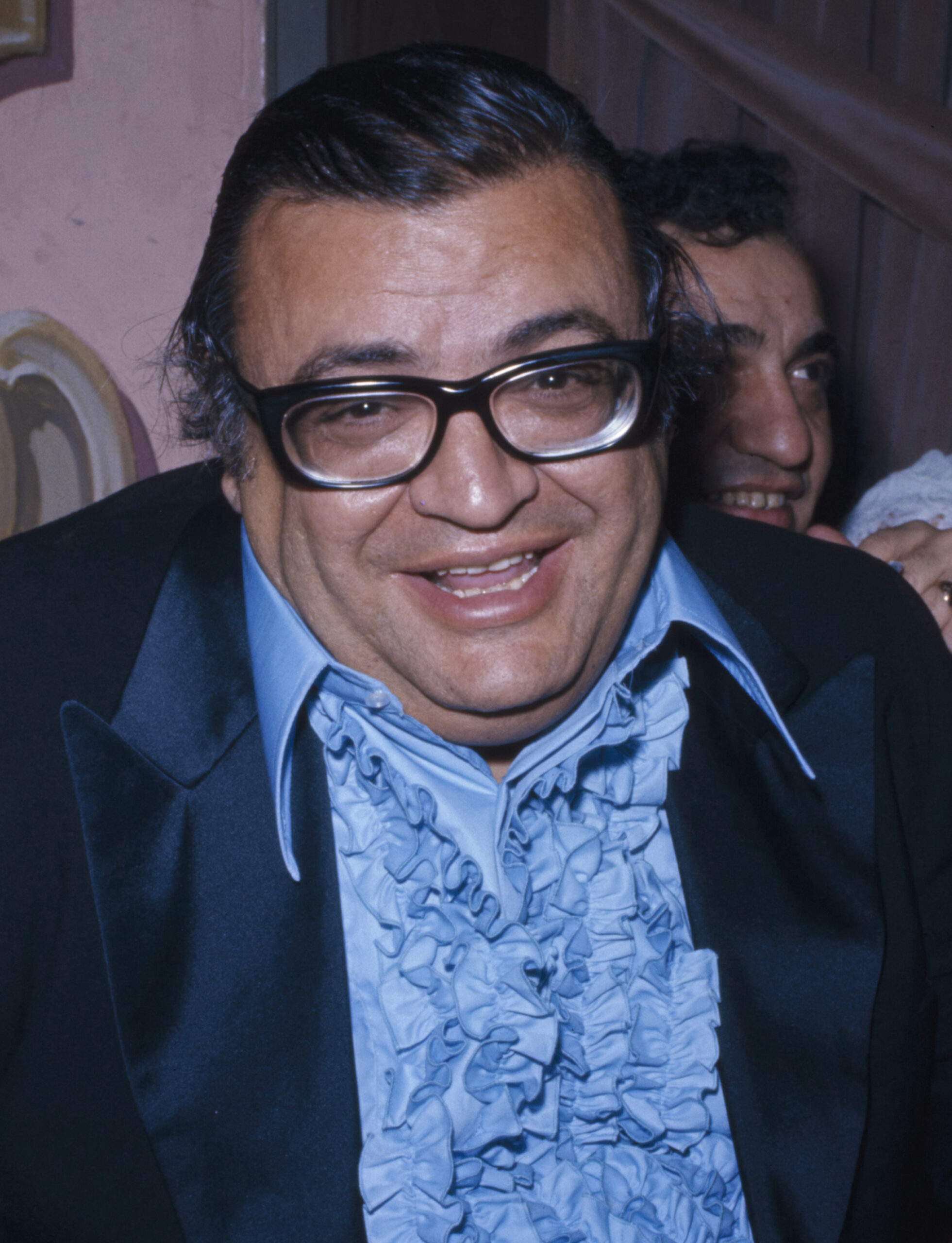
Mario Puzo, born on October 15, 1920, in New York City, is a name synonymous with the gritty underworld of organized crime, largely due to his groundbreaking novel The Godfather. Puzo’s works not only brought the world of the Mafia into the mainstream but also provided a nuanced and humanized portrayal of its characters, forever changing the landscape of American literature and film. This article delves into the life of Mario Puzo, exploring his age, rise to fame, and the key highlights of his illustrious career.
Early Life and Background
Mario Puzo was born into a large Italian-American family, the son of immigrants from the Campania region of Italy. Growing up in the rough neighborhood of Hell’s Kitchen in New York, Puzo was exposed to the harsh realities of urban life from an early age. This environment would later serve as a rich backdrop for his literary explorations of crime, power, and family loyalty.
Puzo was the penultimate child in a family of eight siblings. His father, Antonio, was a trackman for the New York Central Railroad, and his mother, Maria, was a homemaker. The Puzo family lived in relative poverty, a situation that deeply influenced Mario’s worldview and his later portrayals of immigrant life in America. Despite these challenges, Puzo developed a love for reading and writing, which he pursued with determination.
After graduating from high school, Puzo enlisted in the U.S. Army Air Forces during World War II. However, his poor eyesight prevented him from serving in combat, and he was instead stationed in Germany as a public relations officer. This experience broadened Puzo’s perspective on life and provided him with material that would later influence his writing.
Education and Early Writing Career
Following his military service, Puzo attended the New School for Social Research and later Columbia University, where he studied literature and creative writing. It was during this time that Puzo began to seriously pursue a career as a writer. He published his first short story, “The Last Christmas,” in 1950, which was well-received and marked the beginning of his literary journey.
Puzo’s first novel, The Dark Arena (1955), explored the psychological impact of war and was set in post-war Germany, reflecting his own experiences during World War II. Although the novel did not achieve significant commercial success, it established Puzo as a serious writer with a keen understanding of human nature and the complexities of moral choices.
His second novel, The Fortunate Pilgrim (1965), drew on his Italian-American heritage and portrayed the struggles of an immigrant family in New York City. Although the book was critically acclaimed and is considered one of Puzo’s finest works, it did not achieve the commercial success that Puzo desired. Financial pressures and the need to support his family led Puzo to consider a different direction for his writing.
The Creation of The Godfather
In the mid-1960s, Puzo made the decision to write a novel that would have broad commercial appeal. Drawing on his childhood experiences in Hell’s Kitchen and his observations of the Mafia’s influence in Italian-American communities, Puzo began working on The Godfather. Published in 1969, the novel became an instant bestseller and a cultural phenomenon.
The Godfather offered a gripping portrayal of the Corleone family, a powerful Mafia dynasty, and explored themes of loyalty, power, and betrayal. Puzo’s vivid characters, such as the patriarch Vito Corleone and his sons Michael and Sonny, became iconic figures in American culture. The novel’s success was due not only to its compelling narrative but also to Puzo’s ability to humanize the Mafia, presenting its members as complex individuals caught in a web of familial and societal obligations.
The book’s success catapulted Puzo to fame and provided him with the financial security he had long sought. However, it also pigeonholed him as a writer of crime fiction, a label that he would struggle with for the rest of his career.
Hollywood and The Godfather Film Adaptation
The success of The Godfather novel caught the attention of Hollywood, and in 1972, it was adapted into a film directed by Francis Ford Coppola. Puzo co-wrote the screenplay with Coppola, ensuring that the film remained faithful to the book’s vision. The movie became a cinematic masterpiece, winning three Academy Awards, including Best Picture, and solidifying Puzo’s place in American cultural history.
The film adaptation of The Godfather not only brought Puzo critical acclaim but also earned him an Academy Award for Best Adapted Screenplay. The film’s success led to two sequels, The Godfather Part II (1974) and The Godfather Part III (1990), both of which Puzo co-wrote. The Godfather Part II was particularly notable for its innovative structure, blending the story of young Vito Corleone with the continuation of Michael Corleone’s story, and it won Puzo his second Oscar.
The collaboration between Puzo and Coppola is often cited as one of the most successful writer-director partnerships in film history. Together, they created a trilogy that not only captured the imagination of audiences worldwide but also set a new standard for storytelling in cinema.
Later Works and Legacy
Following the success of The Godfather, Puzo continued to write novels that explored themes of crime, power, and the American dream. His subsequent works included The Sicilian (1984), a novel set in post-war Sicily and revolving around the legendary bandit Salvatore Giuliano, and The Last Don (1996), which delved into the world of Hollywood and organized crime.
Puzo also co-wrote the screenplay for the 1978 film Superman, further showcasing his versatility as a writer. Despite his continued success in both literature and film, Puzo always felt the weight of his early financial struggles and the pressure to replicate the success of The Godfather.
In the 1990s, Puzo returned to the Mafia genre with Omertà (2000) and The Family (published posthumously in 2001). Omertà explored the concept of the Mafia code of silence, while The Family was a historical novel about the Borgias, one of the most notorious families in Renaissance Italy. These works, while not as celebrated as The Godfather, demonstrated Puzo’s enduring fascination with power, corruption, and family dynamics.
Puzo passed away on July 2, 1999, at his home in Bay Shore, Long Island, shortly after completing the manuscript for Omertà. His death marked the end of a prolific career that had spanned over five decades and left an indelible mark on both literature and cinema.
Impact on Popular Culture
Mario Puzo’s work, particularly The Godfather, has had a profound impact on popular culture. The novel and its film adaptations have become cultural touchstones, influencing countless works of fiction, from television shows to movies and even video games. The phrases “I’ll make him an offer he can’t refuse” and “Keep your friends close, but your enemies closer” have become ingrained in the American lexicon.
Puzo’s portrayal of the Mafia also shaped the public’s perception of organized crime, romanticizing the figure of the mob boss while also highlighting the brutal realities of their world. This duality—of glamorizing and demystifying the Mafia—has been a topic of debate among critics and scholars, but there is no denying the power and influence of Puzo’s narrative.
Moreover, Puzo’s exploration of the immigrant experience, the American dream, and the complexities of familial loyalty resonate with readers and viewers to this day. His ability to create characters who are both larger-than-life and deeply human has ensured that his stories remain relevant and compelling.
Conclusion: The Lasting Legacy of Mario Puzo
Mario Puzo’s journey from the streets of Hell’s Kitchen to the heights of literary and cinematic fame is a testament to his talent, perseverance, and deep understanding of human nature. His works, particularly The Godfather, have left an indelible mark on the cultural landscape, shaping the way we think about crime, power, and family.
Puzo’s legacy is not just in the stories he told, but in the way he told them—with a keen eye for detail, a deep empathy for his characters, and a narrative style that drew readers in and held them captive. He took the world of the Mafia, a shadowy and often misunderstood part of American life, and brought it into the light, revealing its complexities, its horrors, and its humanity.
Today, Mario Puzo is remembered not just as the author of The Godfather, but as a writer who understood the power of storytelling and its ability to capture the essence of the human experience. His works continue to be read, studied, and adapted, ensuring that his influence will endure for generations to come.


