
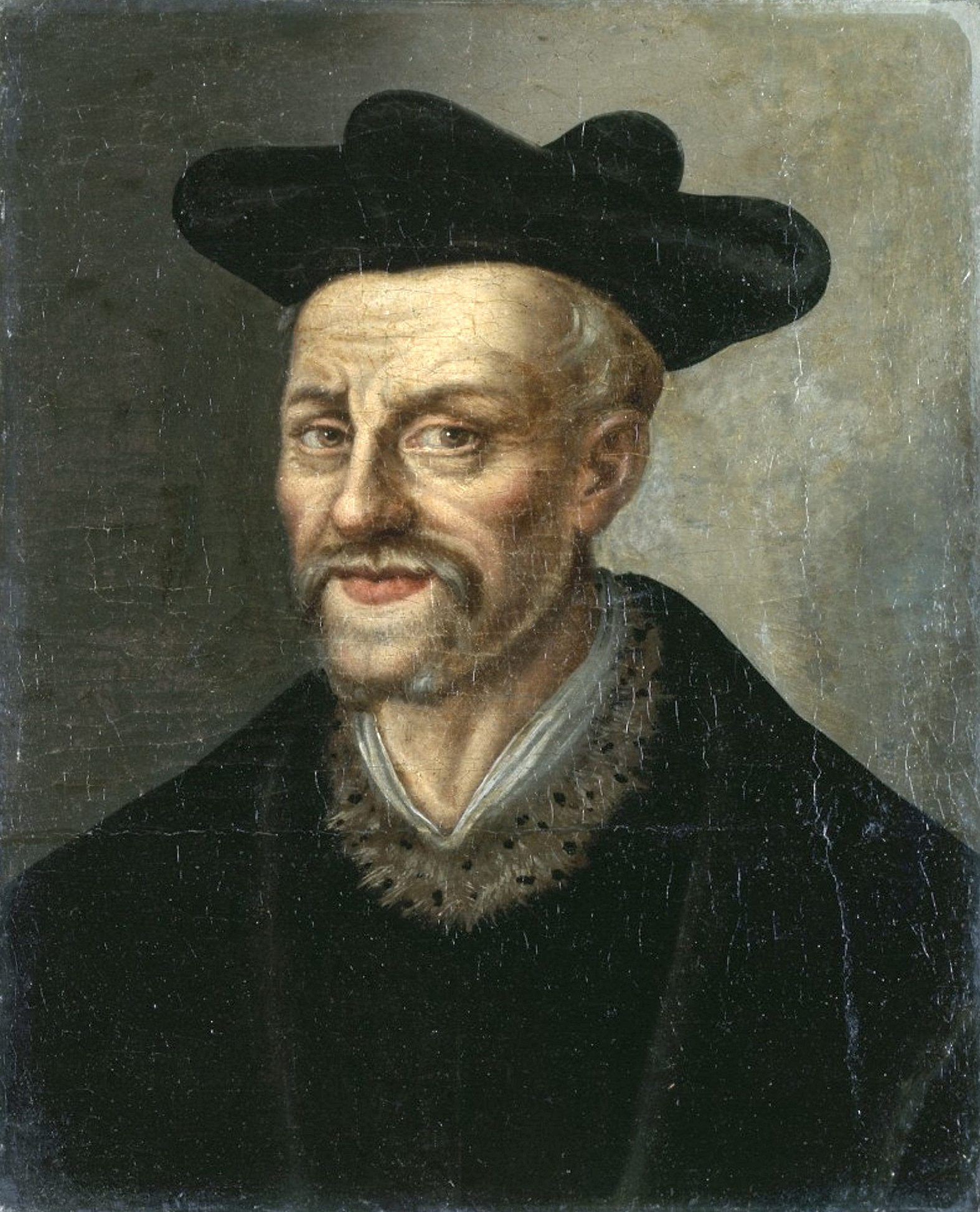
François Rabelais, born between 1483 and 1494 in Chinon, France, is an iconic figure in the annals of French literature. He is best known for his satirical and comedic works, most notably the Gargantua and Pantagruel series. Despite the uncertainty surrounding his exact birthdate, Rabelais’ contributions to the Renaissance and the broader cultural landscape are indisputable.
Early Life and Education
Rabelais was born into a well-to-do family; his father, Antoine Rabelais, was a lawyer and a prominent figure in their community. From an early age, François was exposed to the intellectual and cultural vibrancy that would later define his works. His education began in earnest when he joined the Franciscan monastery of La Baumette around 1510, where he immersed himself in theological studies. Although records suggest that he may have also studied at the abbey of Seuilly, these claims remain unconfirmed.
During his time in the monastery, Rabelais developed a reputation for his intellectual prowess, particularly in classical languages such as Latin and Greek. His mastery of these languages allowed him to translate significant works, including those of Herodotus and Galen, into French, further cementing his status as a learned humanist. His correspondence with Guillaume Budé, a renowned philologist, reflects his deep engagement with classical literature and his growing dissatisfaction with the rigid dogma of the church.
The Controversial Monk
Rabelais’ intellectual curiosity and unorthodox views soon put him at odds with the Franciscan order. His possession of Greek texts, which were frowned upon by the conservative Sorbonne, led to suspicions of heresy. The Franciscans seized this opportunity to confiscate his library, a move that could have ended his scholarly pursuits. However, Rabelais found a powerful ally in Geoffroy d’Estissac, the Bishop of Maillezais, who facilitated his transfer to the Benedictine order, thereby saving him from ecclesiastical censure.
As a Benedictine monk, Rabelais accompanied Bishop d’Estissac on various journeys across France, visiting monasteries and universities, including those in Bordeaux, Toulouse, Orléans, and Paris. Despite his monastic obligations, Rabelais continued his studies, even enrolling in law courses at the University of Poitiers around 1527. However, by 1528, he grew increasingly disillusioned with the monastic life and ultimately left the order.
Medical Career and Literary Ascent
After leaving the monastery, Rabelais moved to Paris, where he became involved with a widow, with whom he allegedly fathered two children. He then turned his attention to medicine, enrolling at the University of Montpellier in 1530. Within a year, he earned his medical degree and began practicing at the Hôtel-Dieu in Lyon, a city that was at the heart of the French Renaissance.
Lyon provided the perfect environment for Rabelais to explore his literary talents. In 1532, he published the first book of his famous series, Pantagruel, under the pseudonym Alcofribas Nasier—an anagram of his own name. This work, along with its sequel Gargantua (published in 1534), introduced readers to the larger-than-life characters of Pantagruel and Gargantua, two giants whose adventures satirized contemporary society and the excesses of the church.
Rabelais’ works were revolutionary in their blending of humor, satire, and intellectual discourse. They offered a sharp critique of religious and political institutions while advocating for a more humanistic and rational approach to life. However, his writings also attracted the ire of the Sorbonne, which attempted to suppress them. Despite these challenges, Rabelais continued to write and publish, eventually securing the protection of powerful patrons such as Jean du Bellay, a French cardinal who served as his protector and mentor.
Later Years and Legacy
In the 1540s, Rabelais’ literary and medical careers intertwined as he continued to serve in both capacities. His association with Cardinal du Bellay allowed him to travel to Rome, where he sought the favor of Pope Clement VII. Although he faced accusations of apostasy and other charges related to the Affair of the Placards—a Protestant campaign against the Catholic Church—Rabelais managed to avoid severe punishment thanks to du Bellay’s influence.
By 1546, Rabelais had published the Third Book of his series, which continued the stories of Pantagruel and Gargantua. This work was notable for its more introspective tone and its exploration of philosophical and ethical questions, reflecting Rabelais’ growing disillusionment with the world around him. The following year, he was appointed a city physician in Metz, where he continued to write while serving the local community.
Rabelais returned to Paris in 1547, where he began work on the Fourth Book of his series. However, this book, like its predecessors, was met with hostility from the church, leading to its censorship. Undeterred, Rabelais persisted in his writing, although the pressures of censorship and declining health took their toll. In 1551, he was granted the parishes of Meudon and Saint-Christophe-du-Jambet by Cardinal du Bellay, but his tenure there was short-lived.
On January 7, 1553, Rabelais resigned from the priesthood, marking the end of his official ties to the church. He died later that year, on April 9, 1553, in Paris. His death was followed by the posthumous publication of The Isle of the Blessed in 1562, a work that some scholars believe may be part of the lost Fifth Book of his series. However, the authenticity of this work remains a subject of debate among literary historians.
François Rabelais’ Influence and Historical Context
Rabelais lived during a time of great social, political, and religious upheaval. The Renaissance was a period of intense intellectual activity, marked by a resurgence of interest in classical antiquity and a questioning of traditional authority. Rabelais’ works are deeply rooted in this context, reflecting the humanist ideals of the time while also challenging the dogmatic constraints of the church.
His use of satire and grotesque humor to address serious issues such as education, religion, and politics was groundbreaking. Rabelais’ characters, particularly Gargantua and Pantagruel, became symbols of the boundless potential of the human spirit, free from the constraints of superstition and ignorance. His works have been interpreted as both a celebration of humanism and a critique of the excesses of the Renaissance itself.
Rabelais’ legacy extends beyond his literary achievements. He is often cited as a precursor to modern novelists, with his innovative use of language, narrative structure, and character development. His influence can be seen in the works of later writers such as Laurence Sterne, Jonathan Swift, and James Joyce, all of whom drew inspiration from Rabelais’ unique blend of humor and intellectual rigor.
In addition to his literary contributions, Rabelais’ impact on the development of the French language cannot be overstated. His inventive use of words and phrases helped to shape the vernacular, making it more expressive and versatile. Rabelais’ works are a testament to the power of language as a tool for both social critique and artistic expression.
Conclusion
François Rabelais was a man of many talents—monk, physician, scholar, and writer—whose life and works continue to resonate with readers today. His fearless exploration of the human condition, coupled with his sharp wit and deep understanding of classical literature, make him a towering figure in the history of French and European culture. Despite the controversies that surrounded him, Rabelais’ legacy endures, a testament to the enduring power of literature to challenge, entertain, and inspire.


