
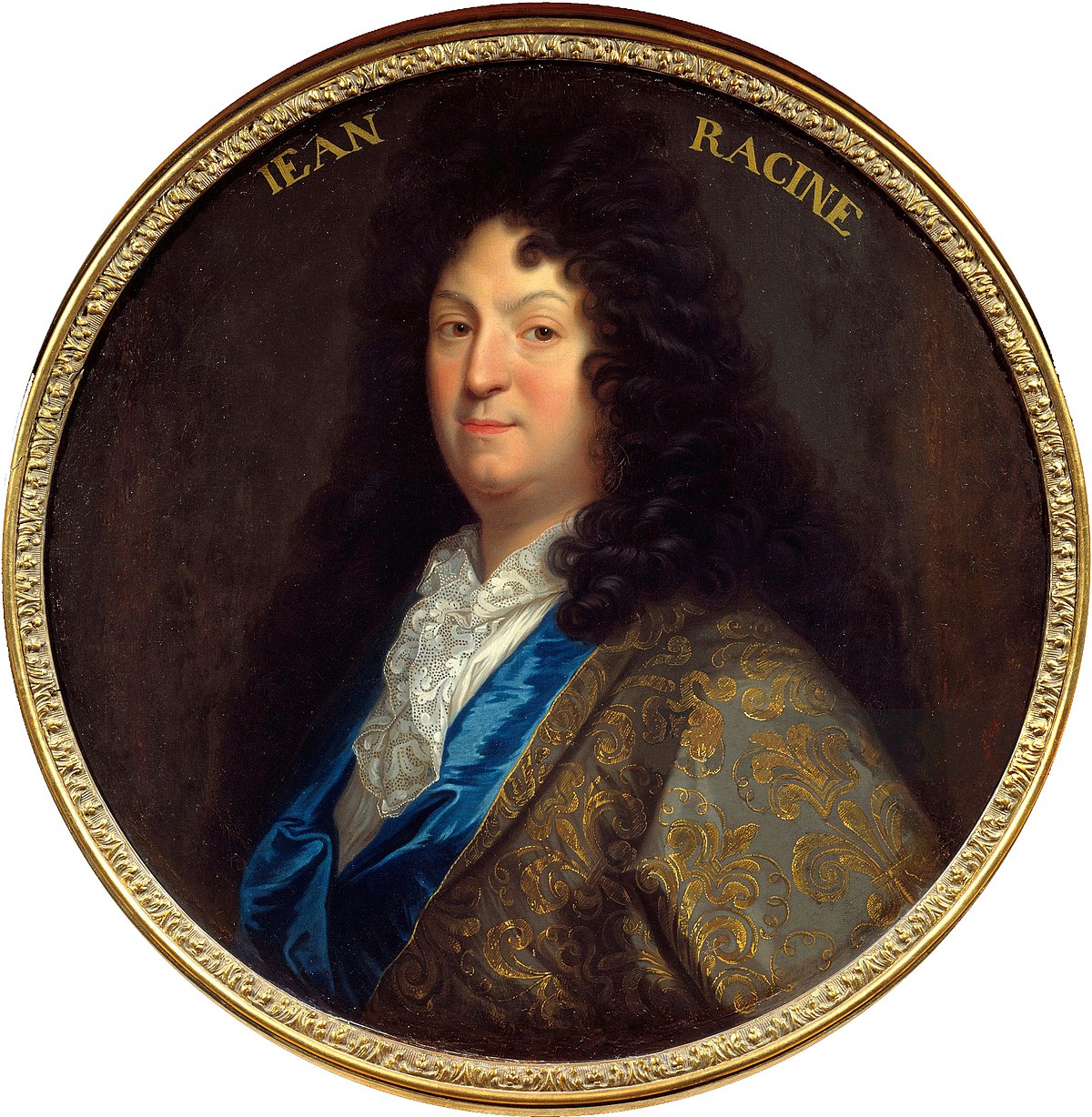
Jean-Baptiste Racine, known simply as Jean Racine, is one of the most significant figures in the history of French literature, particularly renowned for his contributions to tragic drama. Born on December 22, 1639, in La Ferté-Milon, France, Racine’s works are celebrated for their poetic brilliance, psychological depth, and exploration of human emotion. Alongside Pierre Corneille, Racine is considered one of the two pillars of French classical tragedy in the 17th century. This article provides a comprehensive look into Racine’s life, his rise to fame, and the key highlights that have defined his enduring legacy.
Early Life and Education
Jean Racine was born into a family deeply rooted in the Jansenist tradition, a Catholic theological movement that emphasized original sin, human depravity, and the necessity of divine grace. His parents, Jean Racine and Jeanne Sconin, both passed away when he was very young, leaving him an orphan by the age of four. Following their deaths, Racine was raised by his grandparents, who were also devout Jansenists.
Racine’s early education took place under the tutelage of prestigious Hellenists, thanks to his grandparents’ influence. This early exposure to Greek classics laid the foundation for his future as a dramatist. In 1649, he was sent to the Petites Écoles of Port-Royal, where he received a rigorous education in the humanities. The Petites Écoles were known for their strict Jansenist teachings, and it was here that Racine developed a deep appreciation for classical literature, particularly the works of Euripides and Sophocles, which would later inspire his tragedies.
During his time at Port-Royal, Racine was also exposed to the Jansenist doctrine, which had a profound impact on his worldview. However, despite his strict religious upbringing, Racine would later distance himself from the Jansenist community, pursuing a path that led him to the vibrant and worldly life of the Parisian literary scene.
Early Literary Career and Breakthrough
After completing his studies, Racine moved to Paris with the intent of pursuing a career in philosophy. However, his interests quickly shifted to literature and theater. In 1660, Racine made his literary debut with the publication of “La Nymphe de la Seine à la Reine,” a poem written to celebrate the marriage of King Louis XIV. This work earned him some recognition at court, and Racine began to establish connections with influential figures in the literary and political spheres.
Racine’s first foray into drama came in 1663 with “La Thébaïde ou les frères ennemis,” a tragedy that was produced by Molière’s theater company. Although the play was not an immediate success, it marked the beginning of Racine’s career as a playwright. His next play, “Alexandre le Grand” (1665), fared better, showcasing Racine’s growing talent for blending romance and adventure in a dramatic setting.
Despite these early successes, Racine faced criticism from his former mentors at Port-Royal, who disapproved of his involvement in the theater, which they viewed as morally corrupting. In response, Racine wrote a satirical letter, “Lettre à l’auteur des Hérésies imaginaires et de deux Visionnaires,” defending his work and lambasting his critics. This marked a definitive break from the Jansenist community, as Racine fully embraced the life of a playwright.
Rise to Prominence with “Andromaque”
Racine’s breakthrough came in 1667 with the premiere of “Andromaque,” a tragedy that solidified his reputation as one of France’s leading dramatists. The play, set in the aftermath of the Trojan War, explores themes of love, revenge, and political intrigue through the complex relationships between its characters. Andromaque was a triumph both at court and with the public, establishing Racine as a master of tragic drama.
The success of “Andromaque” also marked the beginning of Racine’s rivalry with Pierre Corneille, the other great tragedian of the time. This rivalry would fuel Racine’s creativity, leading to some of his most famous works.
Following “Andromaque,” Racine continued to produce a series of successful tragedies, including “Britannicus” (1669), a Roman tragedy that delves into the power struggles and moral corruption of the imperial court, and “Bérénice” (1670), which was written in direct competition with Corneille’s “Tite et Bérénice.” Racine’s “Bérénice” was praised for its emotional depth and its exploration of unrequited love, further enhancing his reputation as a playwright.
The Height of Racine’s Career: “Phèdre” and Entry into the Académie Française
The early 1670s saw Racine at the peak of his career. In 1672, he was elected to the Académie Française, a prestigious institution dedicated to the preservation and promotion of the French language and literature. This honor was a testament to Racine’s standing as one of France’s foremost literary figures.
In 1677, Racine produced what is widely regarded as his masterpiece, “Phèdre.” The play, based on the Greek myth of Phaedra, tells the story of a woman consumed by forbidden love and the devastating consequences of her passion. “Phèdre” is often praised for its intense emotional power, its exploration of human frailty, and its poetic beauty. The play remains one of the most performed works in the French theatrical canon and is a cornerstone of Racine’s legacy.
Despite its enduring acclaim, “Phèdre” was also controversial at the time of its release. Some critics accused Racine of immorality due to the play’s themes of incestuous desire and its portrayal of human weakness. However, these criticisms did little to diminish the play’s impact, and “Phèdre” has since been recognized as a crowning achievement in French literature.
Retreat from Theater and Later Works
Following the success of “Phèdre,” Racine made a surprising decision to retire from the theater. In 1677, he married Catherine de Romanet and reestablished ties with the Jansenist community at Port-Royal. This return to his religious roots marked a significant shift in Racine’s life and work.
After his retirement from public theater, Racine was appointed as the royal historiographer by King Louis XIV, a position he shared with his friend, the poet Nicolas Boileau. In this role, Racine was responsible for documenting the reign of Louis XIV, a task that took him away from his previous focus on drama.
Despite his withdrawal from the public stage, Racine did not completely abandon writing. At the request of Madame de Maintenon, the influential wife of Louis XIV, Racine composed two biblical tragedies, “Esther” (1689) and “Athalie” (1691), for the students of the Maison Royale de Saint-Louis, a school for girls founded by Madame de Maintenon. These plays were written with a moral and educational purpose, reflecting Racine’s renewed commitment to his faith.
While “Esther” and “Athalie” were well-received, they did not achieve the same level of fame as Racine’s earlier works. However, they are notable for their stylistic purity and their exploration of themes such as divine justice and the power of faith.
Legacy and Influence
Jean Racine’s influence on French literature and drama is profound and enduring. His works are characterized by their psychological depth, poetic elegance, and the intense emotional experiences of their characters. Racine’s tragedies often focus on the destructive power of passion, the conflict between duty and desire, and the inevitable consequences of human flaws.
Racine’s mastery of the French language, particularly his use of alexandrine verse, set a standard for poetic drama that has influenced countless writers and playwrights. His ability to convey complex emotions with clarity and precision has made his works timeless, continuing to resonate with audiences centuries after they were written.
Racine’s legacy is also reflected in his impact on the development of French classical tragedy. He refined the genre, moving away from the more grandiose and rhetorical style of Corneille to create dramas that were more intimate and focused on the inner lives of his characters. This shift towards psychological realism has had a lasting influence on the evolution of drama, both in France and beyond.
In addition to his contributions to literature, Racine’s life story offers a fascinating glimpse into the cultural and intellectual currents of 17th-century France. His journey from a strict Jansenist upbringing to the heights of literary fame, and eventually back to a life of religious devotion, reflects the complex interplay between faith, art, and society during this period.
Final Years and Death
In his later years, Racine largely withdrew from public life, focusing on his duties as a royal historiographer and on the education of his seven children. Despite his retreat from the theater, he remained a respected figure in French society and continued to influence the literary world through his writings and his association with the Académie Française.
Jean Racine passed away on April 21, 1699, at the age of 59, in Paris. He was buried at Port-Royal des Champs, the Jansenist abbey that had played such a significant role in his early life. His death marked the end of an era in French literature, but his works have continued to be celebrated and studied as masterpieces of tragic drama.
Racine’s life and career serve as a testament to the power of literature to explore the deepest aspects of the human experience. His tragedies remain a vital part of the Western literary canon, offering timeless insights into the complexities of the human soul.


