
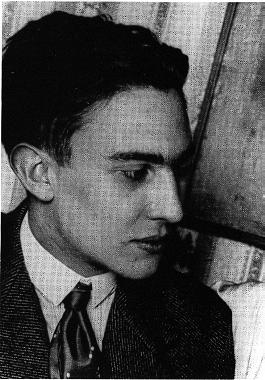
Raymond Radiguet, born on June 18, 1903, in Saint-Maur-des-Fossés, near Paris, is a name that resonates in the annals of French literature despite his tragically short life. Radiguet’s contributions to literature, particularly his pioneering work in the early 20th century, have left an indelible mark on the literary world. In this article, we delve into the life, career, and enduring legacy of Raymond Radiguet, exploring his rise to fame, his literary achievements, and the personal experiences that shaped him.
Early Life and Background
Raymond Radiguet was born into a culturally rich environment. His father, Maurice Radiguet, was a caricaturist and illustrator, which likely influenced young Raymond’s early exposure to the arts. Growing up in such an environment, Raymond developed an early interest in literature. He was particularly drawn to the classics, devouring works from the 17th and 18th centuries. Among his influences were Madame de La Fayette, Marcel Proust, and Stendhal, as well as poets like Arthur Rimbaud, Stéphane Mallarmé, and Paul Verlaine.
Despite his intellectual leanings, Radiguet’s academic performance was lackluster. He attended the Lycée Charlemagne in Paris, where his teachers recognized his potential but noted his lack of interest in artistic disciplines. Raymond eventually dropped out of school to pursue his passion for writing and journalism, a decision that would set the stage for his brief but impactful career.
The Formative Years
At the tender age of 14, Radiguet embarked on a romantic relationship with a neighbor named Alice, a relationship that would profoundly influence his later works. Although their relationship lasted only a year, it was emblematic of the themes of love and passion that would permeate Radiguet’s literary output.
By 1918, Radiguet had distanced himself from Alice and began to focus more intently on his writing. His first foray into the literary world was through journalism, a path facilitated by his meeting with the poet André Salmon, the editor of the newspaper “L’Intransigeant.” This encounter opened doors for Radiguet, allowing him to publish some of his early writings and gain recognition in Paris’s literary circles.
The Influence of Jean Cocteau and the Modernist Movement
Raymond Radiguet’s immersion into the world of literature was further deepened by his association with the modernist movement. He became acquainted with prominent figures such as Juan Gris, Jean Hugo, Max Jacob, and Pablo Picasso. However, it was his relationship with Jean Cocteau that would prove to be the most significant. Cocteau, a leading figure in the avant-garde movement, took Radiguet under his wing, becoming his mentor and collaborator. Together, they worked on various avant-garde publications, and Cocteau’s influence is evident in Radiguet’s literary style and themes.
Radiguet’s precocious talent earned him the nickname “Monsieur Bébé” within literary circles, a moniker that reflected both his youthful appearance and his remarkable intellect. His relationships with women, including those of a romantic nature, became a topic of gossip and intrigue, with some, like Ernest Hemingway, describing him as “perverse.” Despite the controversies, Radiguet’s reputation as a literary prodigy continued to grow.
The Creation of “Le Diable au Corps” (The Devil in the Flesh)
In 1923, at just 20 years old, Raymond Radiguet published his first and most famous novel, “Le Diable au Corps” (The Devil in the Flesh). The novel tells the story of a young woman, married and left alone while her husband fights in World War I, who embarks on a passionate affair with a 16-year-old boy. The book’s exploration of themes such as infidelity, youthful desire, and the complexities of love sparked controversy, particularly because it was published in the immediate aftermath of the war.
Although Radiguet denied that the novel was autobiographical, parallels between the story and his own life, particularly his affair with Alice, were difficult to ignore. The novel’s candid exploration of taboo subjects, combined with Radiguet’s unique literary style—marked by psychological depth, irony, and a keen sense of observation—earned him critical acclaim. “Le Diable au Corps” was lauded for its mature treatment of love and desire, and it remains a seminal work in the canon of French literature.
The Tragic Death of Raymond Radiguet
Raymond Radiguet’s burgeoning career was tragically cut short when he died on December 12, 1923, at the age of 20. He succumbed to typhoid fever, a disease he contracted during a trip with Jean Cocteau. Just three days before his death, Radiguet reportedly confided in Cocteau, saying, “Within three days, I will be struck down by the soldiers of God.” His untimely death sent shockwaves through the literary community, and his funeral was attended by prominent figures such as Constantin Brancusi and Pablo Picasso. The ceremony was organized by the iconic fashion designer Coco Chanel, further cementing Radiguet’s status as a figure of cultural significance.
Posthumous Works and Legacy
Despite his short life, Radiguet’s literary legacy endures. In 1924, a year after his death, his second novel, “Le Bal du Comte d’Orgel” (The Ball of Count Orgel), was published posthumously. The novel, which explores themes of adultery and unrequited love, was inspired by Madame de La Fayette’s “La Princesse de Clèves.” Like his first novel, “Le Bal du Comte d’Orgel” was celebrated for its psychological insight and elegant prose. It portrayed the inner turmoil of its characters with a sophistication that belied Radiguet’s youth.
In 1925, another posthumous collection, “Les Joues en Feu” (Cheeks on Fire), was published, bringing together Radiguet’s poetry. These poems further showcased his talent for capturing complex emotions and his ability to blend traditional poetic forms with modernist sensibilities.
Historical Context and Influence
To fully appreciate Raymond Radiguet’s contributions to literature, it’s essential to understand the historical context in which he lived and wrote. The early 20th century was a period of significant social and cultural change, particularly in France. The horrors of World War I had left a profound impact on the collective psyche, and the literary world was grappling with new ways of expressing the complexities of modern life.
Radiguet’s work, with its focus on youthful passion, moral ambiguity, and the psychological intricacies of love, resonated with a generation disillusioned by war and the rigid conventions of the past. His novels, particularly “Le Diable au Corps,” challenged societal norms and offered a candid exploration of themes that were often considered taboo.
Radiguet’s influence extended beyond his own generation. His work anticipated many of the themes that would become central to modernist literature in the years that followed. His ability to combine the precision of classical French literature with the boldness of modernist experimentation made him a forerunner of the literary movements that would dominate the 20th century.
Raymond Radiguet’s Enduring Legacy
Nearly a century after his death, Raymond Radiguet’s work continues to captivate readers and scholars alike. His novels are studied for their psychological depth, their exploration of love and desire, and their elegant prose. Radiguet’s ability to capture the complexities of human emotion with such maturity and insight, despite his youth, has earned him a lasting place in the pantheon of French literature.
Moreover, Radiguet’s life story—marked by early success, scandalous relationships, and a tragic, untimely death—has contributed to his enduring mystique. He remains a symbol of youthful genius, a literary prodigy who achieved greatness in the brief span of his life.
Conclusion
Raymond Radiguet’s life and career, though brief, were marked by extraordinary talent and a profound understanding of the human condition. His contributions to literature, particularly his novels “Le Diable au Corps” and “Le Bal du Comte d’Orgel,” continue to be celebrated for their psychological insight and literary sophistication. Radiguet’s work not only reflects the cultural and historical milieu of early 20th-century France but also transcends it, offering timeless explorations of love, desire, and the complexities of the human heart.
As we reflect on Raymond Radiguet’s legacy, we are reminded of the enduring power of literature to capture the essence of the human experience. Radiguet’s work stands as a testament to the potential of youth, the depth of literary expression, and the lasting impact of a life dedicated to the pursuit of art.


