
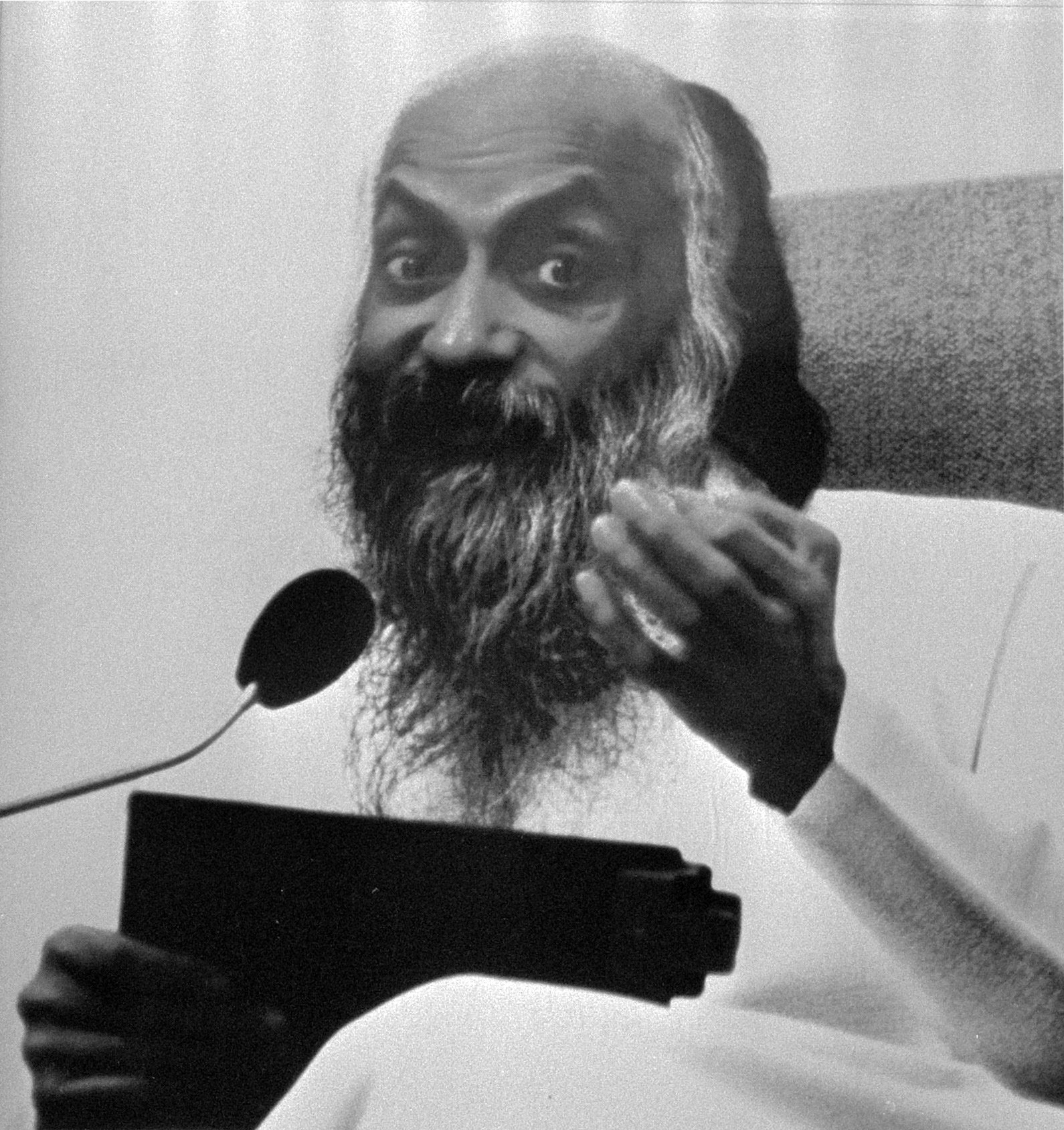
Osho Rajneesh is one of the most enigmatic and controversial spiritual figures of the 20th century. His life, marked by fame, scandal, and spiritual teachings, has left a lasting legacy that continues to influence people around the world. Born on December 11, 1931, in Kuchwada, a small village in the Madhya Pradesh district of Raisen, India, Osho’s journey from a small-town boy to an international spiritual guru is both fascinating and complex.
Early Life and Spiritual Awakening
Osho was born into a Jain family and was raised by his grandparents until the age of seven. From a young age, he exhibited a rebellious and independent spirit, challenging societal norms and conventions. The death of his grandfather and a cousin deeply affected him, leading Osho to withdraw into himself and seek happiness from within. This period of introspection and isolation contributed significantly to his development as a spiritual thinker.
By the age of twelve, Osho had already begun expressing his thoughts through writing. He created a handwritten magazine called “Prayas,” which means “effort,” showcasing his early leadership qualities and intellectual prowess. His childhood was marked by a thirst for knowledge, and he was recognized as a leader among his peers. As he grew older, Osho embraced atheism and Marxism, ideologies that shaped his early adult years.
In March 1953, at the age of twenty-one, Osho experienced what he described as “Enlightenment,” a profound spiritual awakening that he claimed dissolved all illusions and veils of perception. This experience became the foundation of his teachings, as he encouraged others to share in this state of heightened awareness and self-realization.
Academic Pursuits and Rise to Prominence
Osho’s intellectual journey led him to complete a Bachelor’s degree in Arts and Philosophy from D.N. Jail College in 1955. He then pursued a Master’s degree in Philosophy at Sagara University, where he graduated with top honors. His academic success, however, did not shield him from controversy.
After obtaining his Master’s degree, Osho began his career as a teacher at the Raipur Sanskrit College. However, his tenure was short-lived, as his unconventional views and teachings were deemed detrimental to the moral and educational development of his students. This setback did not deter Osho, who continued to teach philosophy at Jabalpur University from 1958 onwards.
During this time, Osho’s reputation as a charismatic and provocative speaker began to grow. He attracted a following of students and seekers who were drawn to his ideas on meditation, spirituality, and personal freedom. By the early 1960s, Osho was conducting daily meditation sessions and workshops, which laid the groundwork for his future as a spiritual leader.
Establishment of the Jivan Jagruti Kendra and Advocacy for Sexual Freedom
In 1962, Osho established the Jivan Jagruti Kendra, a meditation center based on his teachings. His methods and ideas were unconventional, and he was not afraid to challenge societal taboos. One of the most controversial aspects of Osho’s teachings was his advocacy for sexual freedom. In a conservative society like India, this stance shocked many and earned him both admirers and detractors.
Osho’s views on sex were revolutionary for his time. He believed that sexual repression was a significant cause of human suffering and that true spiritual liberation could only be achieved through the acceptance and transcendence of one’s sexual nature. This perspective, combined with his teachings on meditation and self-awareness, attracted a diverse group of followers.
The Pune Ashram and Global Fame
By the late 1960s, Osho’s following had grown significantly, and in 1969, with the help of his disciples, he founded an ashram in Pune, India. This ashram would become the epicenter of his teachings and the birthplace of the Rajneesh movement. Osho’s influence continued to expand, particularly among Western seekers who were disillusioned with traditional religious institutions.
The Pune ashram became a haven for spiritual seekers from around the world. Osho’s daily discourses covered a wide range of topics, including love, religion, psychology, and education. His teachings emphasized the importance of meditation, self-awareness, and living in the present moment. He also introduced new meditation techniques, such as Dynamic Meditation, which involved a combination of physical movement, breathing exercises, and cathartic release.
Osho’s popularity grew rapidly, and by the early 1970s, he was one of the most sought-after spiritual leaders in the world. His fame, however, was not without controversy. His outspoken views on sex, religion, and politics attracted criticism from both religious leaders and government authorities.
Relocation to the United States and the Oregon Commune
In 1981, Osho made a pivotal decision to move to the United States due to health reasons. He established a new commune in Wasco County, Oregon, on a large ranch that would soon be transformed into a bustling community. This commune, known as Rajneeshpuram, became a self-sufficient city with thousands of residents and its own infrastructure, including an airport, public transportation, and a dam.
The creation of Rajneeshpuram marked a significant chapter in Osho’s life and the history of the Rajneesh movement. The commune attracted followers from around the world, and the annual festivals held there drew tens of thousands of visitors. However, the rapid growth of Rajneeshpuram and its unconventional practices soon led to tensions with local residents and authorities.
In 1984, the commune became embroiled in a series of scandals, including a bioterrorism attack orchestrated by members of Osho’s inner circle. This attack, which involved contaminating salad bars with salmonella bacteria in an attempt to influence local elections, brought negative attention to the commune and led to legal repercussions.
In October 1985, Osho was arrested in North Carolina for immigration violations. He was subsequently deported from the United States after serving a brief prison sentence. The scandal surrounding Rajneeshpuram and Osho’s arrest marked the beginning of the decline of the Rajneesh movement in the United States.
Return to India and Final Years
Following his deportation, Osho returned to India in 1985. He continued to teach and write, but his health had begun to deteriorate. Despite his declining health, Osho embarked on a world tour, visiting countries such as Nepal, Greece, and Italy. However, he faced resistance from authorities in several countries, who refused to grant him entry.
In 1986, Osho returned to Bombay, where he resumed his public discourses. The following year, he returned to his ashram in Pune, where he continued to teach until his death. During this period, Osho’s teachings evolved, and he adopted the name “Osho,” a term derived from the Japanese word for “master” or “teacher.”
Osho’s final years were marked by personal tragedy and declining health. In 1989, his long-time companion, Vivek, committed suicide, a loss that deeply affected him. Osho’s health continued to deteriorate, and he believed that he had been poisoned with thallium during his time in an American prison. On January 19, 1990, Osho passed away in Pune. His body was cremated, and his ashes were placed in his ashram, which remains a place of pilgrimage for his followers.
Legacy and Influence
Osho Rajneesh’s life was a paradox of spiritual enlightenment and worldly controversy. His teachings, which emphasized meditation, self-awareness, and the breaking of societal norms, continue to resonate with millions of people worldwide. The Pune ashram, now known as the Osho International Meditation Resort, remains a thriving center for spiritual seekers.
Osho’s legacy is complex, marked by both admiration and criticism. His teachings have been interpreted in various ways, and his influence can be seen in the New Age movement, contemporary spirituality, and even psychotherapy. Despite the controversies surrounding his life, Osho’s message of inner freedom, love, and meditation continues to inspire people to this day.
Osho’s life story is a testament to the power of ideas and the impact one individual can have on the world. From a small village in India to the global stage, Osho’s journey is a remarkable example of how spirituality and controversy can intersect, creating a legacy that endures long after one’s death.


