
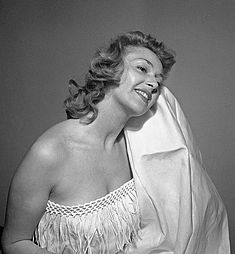
Franca Rame, born on July 18, 1929, in Villastanza, a small town in the province of Milan, Italy, was an influential Italian actress, playwright, and political activist. Her life and career were deeply rooted in the world of theater, a legacy inherited from her family, which had been involved in the art form for centuries. Rame’s journey in the arts and activism, intertwined with personal and historical events, paints a portrait of a woman whose impact resonated far beyond the stage.
Early Life and Family Influence
Franca Rame was born into a family steeped in theatrical tradition. Her father, Domenico Rame, was an actor, and her mother, Emilia Baldini, was both a teacher and an actress. The Rame family’s connection to the theater extended back to the 17th century, particularly in the realm of puppetry and marionettes. This rich cultural heritage undoubtedly influenced Rame’s early exposure to the performing arts. In fact, she made her debut on stage as an infant, participating in her family’s touring theater company.
Growing up in such an environment, it was almost inevitable that Rame would pursue a career in the arts. By the age of 21, she had already begun to establish herself in the world of theater. In 1950, she joined her sister in the world of revue theater, a popular form of entertainment that combined music, comedy, and satire. Her big break came when she was cast in the play “Ghe pensi mi” by Marcello Marchesi, performed at the Teatro Olimpia in Milan.
Marriage to Dario Fo and Professional Partnership
On June 24, 1954, Franca Rame married Dario Fo, a celebrated actor, playwright, and future Nobel laureate. Their marriage marked the beginning of one of the most significant partnerships in Italian theater. Together, they founded the “Compagnia Dario Fo-Franca Rame” in 1958, where Rame played a central role as the lead actress and company manager, while Fo took on the responsibilities of director and playwright.
During the 1960s, their theater company achieved great success, particularly in Italy’s institutional theaters. Their productions were known for their sharp wit, social commentary, and innovative use of satire to challenge the status quo. However, their work was not without controversy, as it often critiqued political and social issues, leading to clashes with authorities and conservative elements in Italian society.
Political Engagement and Feminist Activism
The late 1960s were a period of significant social and political upheaval in Italy, marked by student protests, labor strikes, and a growing counterculture movement. Franca Rame and Dario Fo were at the forefront of this movement, aligning themselves with the leftist ideals of the time. In 1968, they left the Italian Theatrical Institute (Ente Teatrale Italiano) and founded the “Nuova Scena” collective, which sought to bring theater to the people by performing in non-traditional venues such as factories, schools, and community centers.
Their commitment to political theater led to the creation of the “La Comune” group, which continued the work of “Nuova Scena” but with a more radical edge. Rame and Fo’s productions from this period, including “Morte accidentale di un anarchico” (Accidental Death of an Anarchist) and “Non si paga! Non si paga!” (We Can’t Pay! We Won’t Pay!), were characterized by their biting satire and critique of political corruption and social injustice.
Franca Rame’s activism extended beyond the stage. In the 1970s, she became actively involved in the feminist movement, using her platform to address issues such as gender inequality, domestic violence, and women’s rights. She wrote and performed in plays like “Tutta casa, letto e chiesa” (All Home, Bed, and Church), which tackled the oppression of women in Italian society.
The Assault and Its Aftermath
One of the darkest chapters in Franca Rame’s life occurred in March 1973, during the height of the “Anni di Piombo” (Years of Lead), a period of intense political violence in Italy. Rame was kidnapped by far-right extremists and subjected to physical and sexual assault. This traumatic event had a profound impact on her, both personally and professionally. Years later, in 1981, she would recount her harrowing experience in the powerful monologue “Lo stupro” (The Rape), which became one of her most acclaimed and impactful works.
The assault did not silence Rame; instead, it galvanized her commitment to social justice and activism. She continued to use her art as a means of raising awareness about the issues she cared deeply about, including the pervasive violence against women.
Later Career and Political Involvement
In the later years of her career, Franca Rame continued to be a force in Italian culture and politics. In 1999, she and Dario Fo were awarded honorary degrees from the University of Wolverhampton in recognition of their contributions to theater and activism.
Rame’s political involvement took a new turn in 2006 when she was elected to the Italian Senate as a representative of the Italia dei Valori (Italy of Values) party. Her decision to enter politics was motivated by her desire to effect change from within the system. During her time in the Senate, Rame was known for her outspoken criticism of government policies, particularly those related to social justice and women’s rights. However, disillusioned with the political process, she resigned from the Senate in 2008.
Autobiography and Final Years
In 2009, Franca Rame co-authored her autobiography, “Una vita all’improvvisa” (A Life Unexpected), with Dario Fo. The book offered a candid reflection on her life, career, and the many challenges she faced, both personally and professionally. It also served as a testament to her resilience and unwavering commitment to her principles.
In April 2012, Rame suffered a stroke, and her health began to decline. She passed away on May 29, 2013, at the age of 84, leaving behind a legacy that continues to inspire generations of artists, activists, and feminists.
Legacy and Influence
Franca Rame’s life and work left an indelible mark on Italian culture and society. As an actress, playwright, and activist, she used her talents to challenge the status quo, advocate for social change, and give voice to the marginalized. Her partnership with Dario Fo produced some of the most innovative and provocative works of 20th-century theater, and her involvement in the feminist movement helped to bring attention to issues that were often ignored or dismissed.
Rame’s contributions to theater and activism were recognized with numerous awards and honors throughout her life. However, her true legacy lies in the impact she had on those who saw her performances, read her works, and were inspired by her courage and conviction.
In a world where the arts are often seen as a mirror of society, Franca Rame’s life serves as a powerful reminder of the role that artists can play in shaping the world around them. Her work continues to resonate today, as new generations discover the power of her words and the strength of her spirit.


