
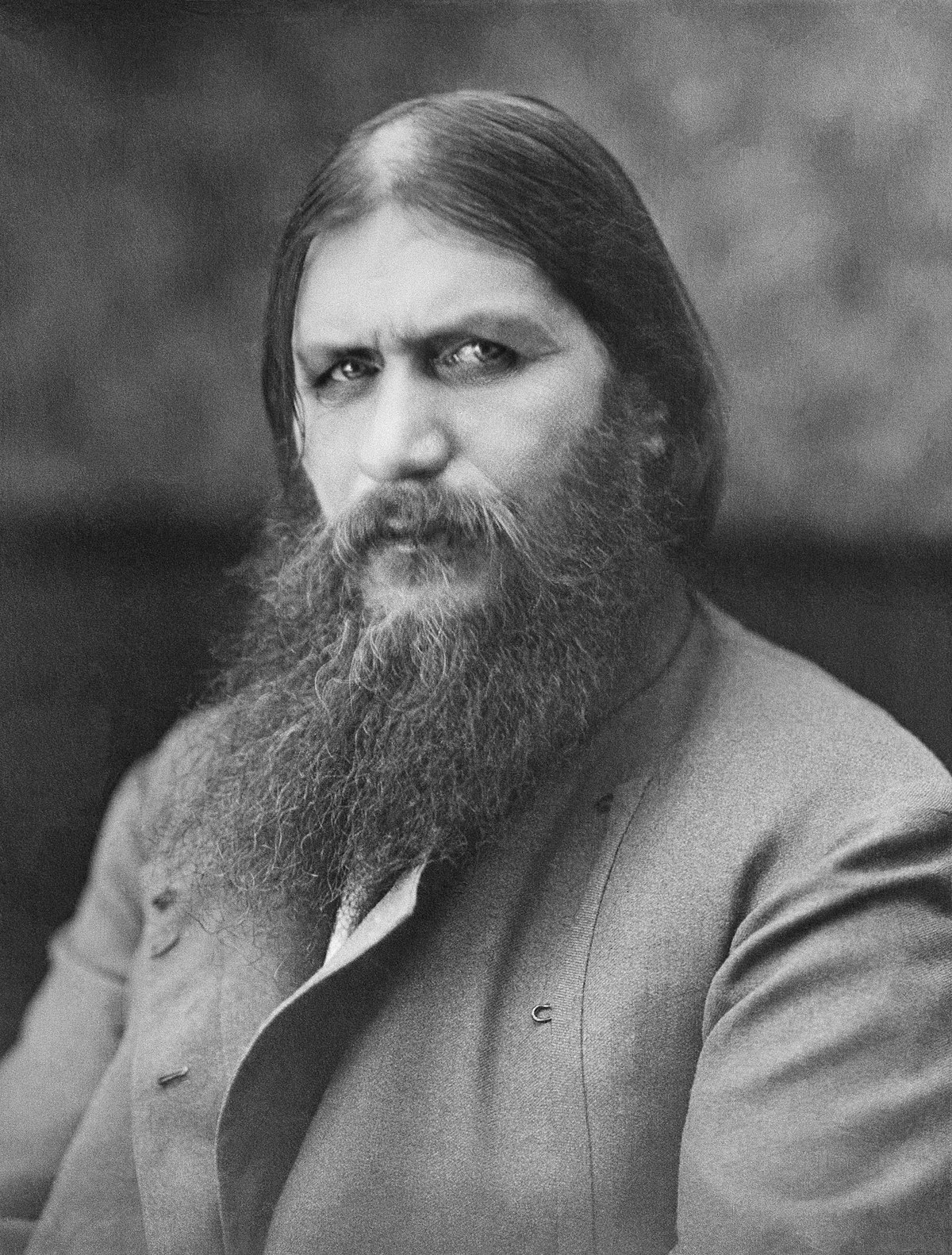
Grigori Yefimovich Rasputin, one of the most enigmatic and controversial figures in Russian history, continues to captivate the imagination of historians and the general public alike. Known for his deep involvement with the Russian royal family, particularly Tsar Nicholas II and Tsarina Alexandra, Rasputin’s life is shrouded in mystery, intrigue, and a mix of fact and fiction. This article explores the life, rise to fame, and the complex legacy of Rasputin, a man whose influence over the Romanovs played a pivotal role in the final years of the Russian Empire.
Early Life and Mystical Beginnings
Grigori Rasputin was born on January 10, 1869, in the remote village of Pokrovskoye in Siberia, Russia. His family, like many in the region, were peasants, and Rasputin grew up in a rural, impoverished environment. Despite his humble beginnings, Rasputin displayed an intense religious fervor from a young age. However, his early life was marked by tragedy when his brother, Misha, died after a long illness. The loss had a profound impact on Rasputin, who began experiencing visions and mystical encounters, which he claimed were communications from the Virgin Mary.
These early experiences drove Rasputin to explore his spirituality further, leading him to join a local monastery for a brief period. Although he did not take monastic vows, the time he spent there deepened his religious beliefs and introduced him to the concept of the “starets,” or holy elder—a title that would later become closely associated with him.
Journey as a Wandering Mystic
At the age of 20, Rasputin married Praskovia Dubrovina, with whom he had several children. However, his domestic life did not quell his spiritual restlessness. After the death of one of his children, Rasputin fell into a deep depression, during which he claimed to have received another divine vision. This time, he believed he was called to leave his family and embark on a pilgrimage across Russia.
For several years, Rasputin wandered the country, visiting monasteries, holy sites, and religious communities. During these travels, he came into contact with various sects, including the Khlysty, a controversial and secretive religious group that combined elements of Orthodox Christianity with ecstatic rituals. While there is no concrete evidence that Rasputin officially joined the Khlysty, their beliefs and practices likely influenced his own unorthodox views on religion and spirituality.
Rasputin’s travels brought him into contact with many people, and his reputation as a mystic, healer, and holy man began to grow. His intense gaze, charismatic presence, and ability to connect with ordinary people earned him a following, and by the early 1900s, he had become a well-known figure in certain religious circles.
Arrival in St. Petersburg and the Royal Connection
Rasputin’s life took a dramatic turn when he arrived in St. Petersburg in 1905. The Russian capital was a hub of political intrigue, religious fervor, and social unrest, and Rasputin quickly found his way into the city’s aristocratic circles. His reputation as a healer and mystic caught the attention of the Russian Orthodox clergy and, eventually, the royal family.
At the time, Tsar Nicholas II and Tsarina Alexandra were desperate for a cure for their son, Alexei, who suffered from hemophilia, a life-threatening condition that caused uncontrolled bleeding. Traditional medicine had failed to provide relief, and the royal couple turned to Rasputin, who was believed to possess miraculous healing powers.
Rasputin’s first encounter with Alexei reportedly had a profound effect. Through what many believe to be a form of hypnosis, Rasputin was able to calm the boy and stop his bleeding episodes. This apparent miracle solidified his position within the Romanov family, particularly with Tsarina Alexandra, who became convinced that Rasputin was divinely sent to save her son and, by extension, the Russian monarchy.
Influence and Controversy at the Russian Court
Rasputin’s influence over the royal family quickly grew, and he became a close confidant of the Tsarina. This relationship, however, did not sit well with the Russian nobility, clergy, or public. Rumors and scandalous stories about Rasputin’s behavior began to circulate. He was accused of everything from debauchery to political manipulation, with some even claiming that he was seducing the Tsarina.
Despite the controversies, Tsar Nicholas II remained largely indifferent to the negative reports, trusting Alexandra’s judgment and believing that Rasputin’s presence was necessary for his son’s health. Alexandra, in particular, saw Rasputin as a spiritual guide and protector, which further deepened his influence over the royal family.
Rasputin’s growing power extended beyond his role as a healer. As World War I began, Nicholas II took personal command of the Russian army, leaving Alexandra and Rasputin with significant influence over domestic affairs. Rasputin used his position to sway the Tsarina’s decisions on appointments to key government positions, often favoring individuals who were loyal to him rather than those who were competent.
Political Intrigue and Opposition
Rasputin’s involvement in political matters made him a target for various factions within Russia. The aristocracy, military leaders, and even members of the Duma (Russia’s parliament) viewed Rasputin as a dangerous influence on the royal family and a threat to the stability of the nation. His pacifist stance during World War I, which included attempts to convince the Tsarina to seek peace with Germany, further fueled the animosity against him.
Efforts were made to discredit Rasputin, but the Tsarina’s unwavering support protected him from official action. However, his enemies grew more determined, and a conspiracy to eliminate him began to take shape. Prince Felix Yusupov, a member of the Russian nobility, led the plot to assassinate Rasputin, believing that his death was necessary to save the Russian Empire from disaster.
The Assassination of Rasputin
The plot to kill Rasputin is one of the most infamous events in Russian history, surrounded by myths and exaggerations. On the night of December 16, 1916, Rasputin was invited to Yusupov’s palace under the pretext of meeting Yusupov’s wife. There, he was served cakes and wine laced with cyanide. To the conspirators’ shock, the poison seemed to have no effect on Rasputin. In a panic, Yusupov shot Rasputin multiple times, but even this did not immediately kill him. According to some accounts, Rasputin managed to escape the palace but was recaptured and beaten before being thrown into the icy waters of the Neva River, where he finally drowned.
The autopsy conducted on Rasputin’s body revealed that he had water in his lungs, indicating that he was still alive when he was submerged in the river. This detail only added to the legend of Rasputin’s near-supernatural resilience and further fueled the mystique surrounding his life and death.
The Legacy of Rasputin
The assassination of Rasputin did little to stabilize Russia. Within a few months, the Russian Revolution of 1917 led to the abdication of Tsar Nicholas II and the eventual execution of the Romanov family. Many historians believe that Rasputin’s influence and the scandals surrounding him contributed to the growing discontent with the monarchy, hastening its downfall.
Rasputin’s legacy is a complex one. To some, he is seen as a villain who exploited his position for personal gain, contributing to the collapse of the Romanov dynasty. To others, he is a misunderstood mystic whose real intentions were to help and heal. His life has inspired countless books, films, and conspiracy theories, making him one of the most enduring figures of Russian history.
The story of Rasputin raises important questions about the nature of power, influence, and the role of spirituality in politics. His rise from a peasant in Siberia to one of the most powerful men in Russia is a testament to the unpredictable nature of history and the ways in which individuals can shape the fate of nations.
Conclusion
Rasputin’s life and death are emblematic of the turbulent times in which he lived. His influence over the Russian royal family, particularly during the final years of the Romanov dynasty, makes him a key figure in the history of Russia. Despite the many controversies and mysteries that surround him, Rasputin remains a fascinating character whose story continues to captivate and intrigue people around the world.


