
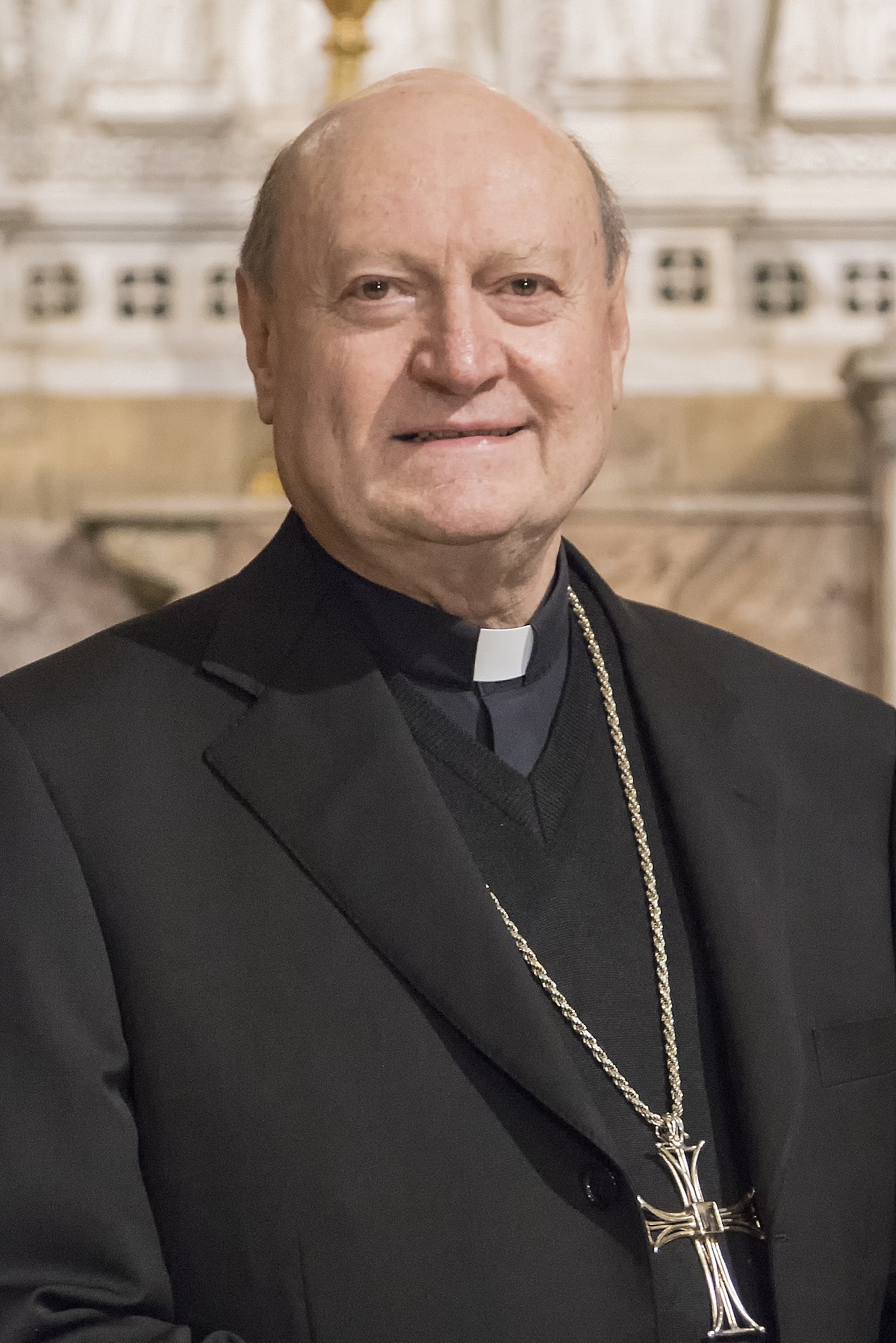
Gianfranco Ravasi is a towering figure in the Roman Catholic Church, renowned not only for his theological acumen but also for his profound influence on religious culture, biblical scholarship, and the broader dialogue between faith and science. Born on October 18, 1942, in Merate, Italy, Ravasi has risen through the ecclesiastical ranks to become a cardinal and a key advisor to the Vatican. His life is a testament to the power of intellect, faith, and cultural engagement, making him one of the most influential religious figures of our time.
Early Life and Academic Foundations
Gianfranco Ravasi was born in Merate, a small town in the Lombardy region of Italy. He was the first of three children in a family that valued education and intellectual pursuits. His father was an official in the tax administration, while his mother was a schoolteacher, a profession that Ravasi initially aspired to follow. However, his path would lead him to the seminary, where he began his formal education in theology.
Ravasi’s early academic life was marked by a deep engagement with ancient languages, particularly Hebrew and Greek, which would later become instrumental in his biblical scholarship. He was ordained as a priest on June 28, 1966, for the Archdiocese of Milan by Cardinal Giovanni Colombo. Following his ordination, Ravasi continued his studies at the prestigious Pontifical Gregorian University and later at the Pontifical Biblical Institute, where he earned a license in Sacred Scripture.
Scholarly Pursuits and Biblical Expertise
Ravasi’s academic career quickly blossomed, and he became a member of the Pontifical Biblical Commission, an advisory body to the Pope on biblical interpretation and scholarship. He was also appointed as a professor at the Theological Faculty of Northern Italy and taught biblical exegesis at the Archdiocesan Seminary of Milan. His expertise in biblical languages and his deep understanding of scripture made him a respected figure in theological circles.
During this time, Ravasi also developed a passion for archaeology, which he pursued through extensive travels in the Middle East. He participated in archaeological expeditions in Turkey, Iraq, Jordan, and Syria, often working alongside prominent archaeologists such as Roland de Vaux and Kathleen Kenyon. These experiences enriched his understanding of the historical and cultural contexts of the Bible, further enhancing his scholarly work.
Rise to Prominence in the Church
Gianfranco Ravasi’s contributions to biblical scholarship and his growing reputation as a theologian led to his involvement in broader church activities. In 1988, he began hosting “Le frontiere dello spirito” (The Frontiers of the Spirit), a religious program on Canale 5, one of Italy’s major television networks. This program allowed him to reach a wider audience, bringing theological reflections and biblical commentary into the homes of many Italians.
The following year, in 1989, Ravasi was appointed Prefect of the Ambrosian Library, a prestigious role that placed him at the helm of one of the most important libraries in the world. Founded by Cardinal Federico Borromeo in 1609, the Ambrosian Library is home to a vast collection of manuscripts, books, and artworks. Ravasi’s tenure as Prefect lasted until 2007, during which he modernized the library and made significant contributions to its research and academic output.
Theological Controversy and Ecclesiastical Roles
Despite his many achievements, Ravasi’s career was not without controversy. In 1995, he was appointed Protonotary Apostolic by Pope John Paul II, a senior ecclesiastical title. However, in 2005, he was considered the leading candidate for the Diocese of Assisi-Nocera Umbra-Gualdo Tadino, a role that would have made him a bishop. His appointment was ultimately blocked by the Congregation for Bishops due to an article he wrote for the “Sole 24 Ore,” a major Italian newspaper. In the article, Ravasi referred to Jesus as “he who rises” rather than “he who is raised,” a subtle distinction that some interpreted as theologically unorthodox.
This incident, however, did not impede Ravasi’s rise within the Church. In 2007, Pope Benedict XVI entrusted him with the task of composing the meditations for the Via Crucis at the Colosseum, a significant honor that demonstrated the Pope’s confidence in Ravasi’s theological insight. Later that year, Benedict XVI appointed him President of the Pontifical Council for Culture, a position that placed him at the forefront of the Church’s engagement with contemporary culture.
Cardinal and Cultural Advocate
On November 20, 2010, Gianfranco Ravasi was elevated to the rank of Cardinal by Pope Benedict XVI, receiving the diaconate of San Giorgio in Velabro, a historic church in Rome. As a cardinal, Ravasi’s influence within the Vatican expanded, and he took on additional responsibilities, including serving as President of the Pontifical Commission for Sacred Archaeology and President of the Pontifical Commission for the Cultural Heritage of the Church.
One of Ravasi’s most significant contributions as President of the Pontifical Council for Culture has been his efforts to foster dialogue between the Church and the secular world. He has championed the idea of a “court of the Gentiles,” a metaphorical space for dialogue between believers and non-believers, inspired by the area in the ancient Jewish Temple where Gentiles were allowed to enter. This initiative has led to a series of high-profile events and discussions aimed at bridging the gap between faith and reason, and engaging with contemporary issues from a Catholic perspective.
Literary Contributions and Intellectual Legacy
In addition to his ecclesiastical duties, Gianfranco Ravasi is a prolific author, having written extensively on a wide range of topics, including biblical studies, theology, philosophy, and cultural criticism. His works often reflect his deep knowledge of scripture, his interest in the intersection of faith and culture, and his commitment to making theological concepts accessible to a broader audience.
Ravasi has published commentaries on several books of the Bible, including the Song of Songs, the Book of Job, and the Psalms. These works are noted for their scholarly rigor as well as their ability to connect ancient texts with contemporary issues. His writings are regularly featured in prominent Italian publications, such as “Avvenire,” “Il Sole 24 Ore,” and “L’Osservatore Romano,” as well as in international Catholic journals.
Ravasi’s intellectual contributions have been recognized with numerous honors, including an honorary doctorate from the University of Urbino in Anthropology and Epistemology of Religions. His ability to engage with a wide range of disciplines and his willingness to address complex and sometimes controversial issues have made him a respected figure not only within the Church but also in the broader intellectual community.
A Legacy of Faith and Dialogue
As he continues to serve as a cardinal and a leading voice in the Catholic Church, Gianfranco Ravasi’s legacy is one of intellectual rigor, cultural engagement, and a deep commitment to dialogue. His work has bridged the gap between the sacred and the secular, between faith and reason, and between the Church and the wider world.
Ravasi’s efforts to create spaces for conversation between believers and non-believers, his dedication to biblical scholarship, and his leadership within the Vatican have all contributed to his lasting impact on the Church and on contemporary religious thought. His life and work serve as a reminder of the importance of faith in dialogue with culture, and of the Church’s role in addressing the challenges of the modern world.
In summary, Gianfranco Ravasi is a figure of immense importance in the Catholic Church, whose influence extends far beyond the confines of the Vatican. His contributions to theology, culture, and dialogue continue to resonate, making him a pivotal figure in the ongoing conversation about the role of religion in the contemporary world.


