
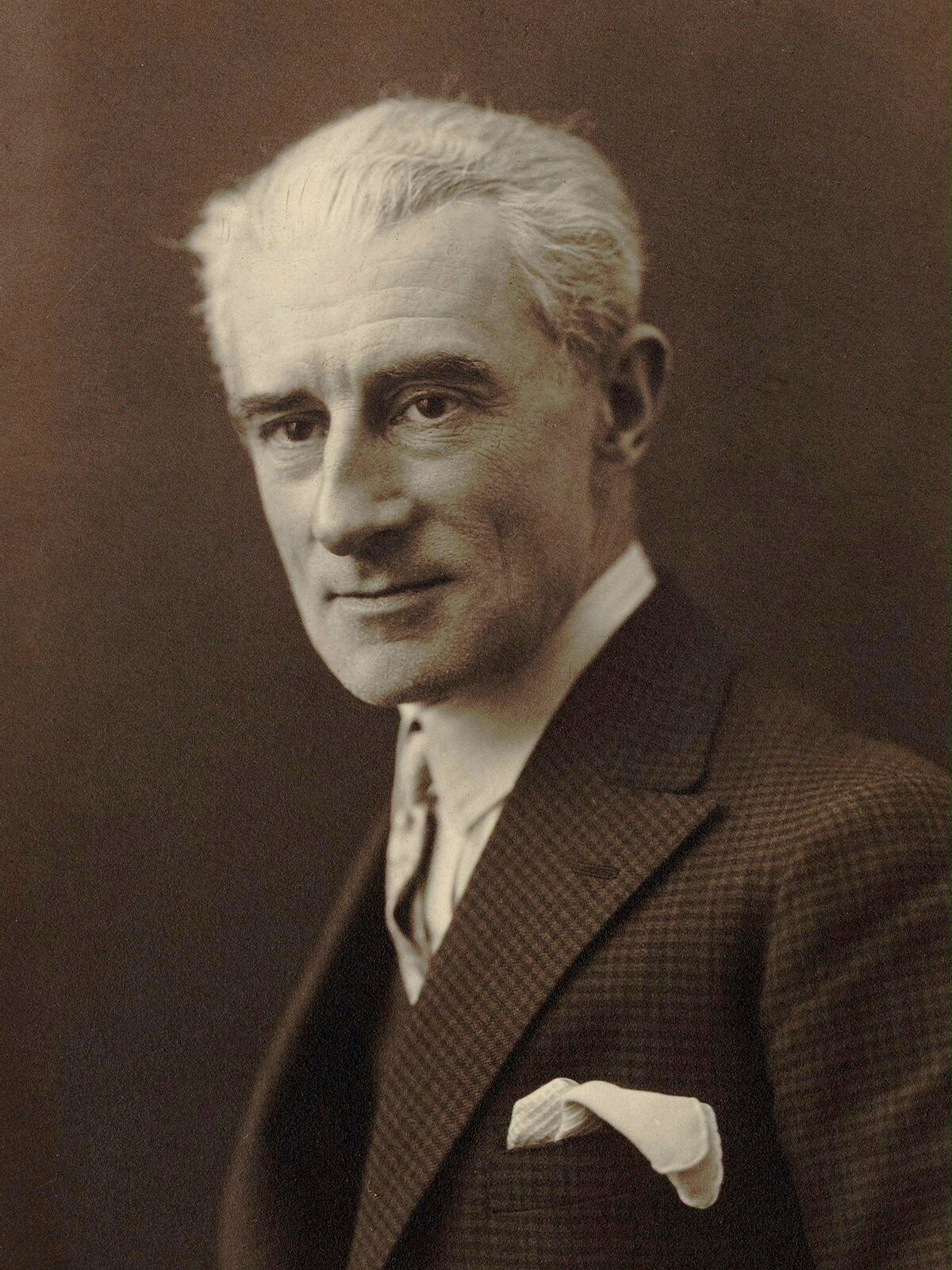
Maurice Ravel, born on March 7, 1875, in the quaint village of Ciboure in the Pyrenees, is one of the most celebrated composers of the early 20th century. His contributions to classical music are marked by his innovative approach to composition, blending traditional forms with modern harmonies, rhythms, and textures. Ravel’s work, characterized by precision and clarity, remains influential, resonating with audiences and musicians alike.
Early Life and Musical Beginnings
Maurice Ravel was born to a French father and a Basque mother, a cultural mix that would later influence his musical style. Shortly after his birth, the family moved to Paris, where Ravel would spend most of his life. From a young age, Ravel showed an exceptional talent for music, particularly in piano and composition. His early exposure to the rich cultural environment of Paris, combined with his family’s support, allowed him to nurture his musical abilities.
At the age of seven, Ravel began studying piano at the Conservatoire de Paris, one of the most prestigious music schools in the world. By the time he was twelve, he had also begun studying composition. His teachers, recognizing his prodigious talent, helped him develop a style that was distinctly his own, characterized by its elegance and intricate detail.
Ravel’s early compositions already displayed the qualities that would define his later work: a masterful command of orchestration, a keen sense of melody, and an innovative use of harmony. Despite his talents, Ravel struggled to gain recognition in the conservative world of French classical music. He participated multiple times in the Prix de Rome, a prestigious French award for composers, but often left empty-handed. It wasn’t until 1901 that he won second place with his cantata Mirra, a victory that helped to establish his reputation.
Early Success and Collaboration with Ballets Russes
At just 24 years old, Ravel achieved his first major success with the composition Pavane pour une infante défunte (Pavane for a Dead Princess) in 1899. This piece, characterized by its haunting beauty and simplicity, became one of his most popular works. The pavane, an ancient dance form, was reimagined by Ravel with a modern sensibility, blending nostalgia with contemporary elegance.
Following this early success, Ravel continued to compose prolifically, creating works that were both critically acclaimed and popular with audiences. One of his most significant collaborations was with Sergei Diaghilev, the impresario of the Ballets Russes. Together, they created the ballet Daphnis et Chloé, which premiered in 1912. This work, which Ravel considered his masterpiece, showcased his ability to blend traditional classical forms with modern, innovative techniques. The ballet’s lush orchestration and rich harmonic language made it an instant success and solidified Ravel’s reputation as one of the leading composers of his time.
World War I and the Impact on Ravel’s Music
The outbreak of World War I in 1914 had a profound impact on Ravel, both personally and professionally. Although he was initially rejected by the French military due to his small stature and frail health, Ravel was determined to contribute to the war effort. After much persistence, he was accepted into the army and served as a truck driver for 18 months. His experiences during the war, particularly the horrors he witnessed on the front lines, deeply affected him and influenced his music.
After the war, Ravel returned to composition with renewed vigor. His post-war works, while still maintaining the clarity and precision for which he was known, began to explore darker, more complex themes. One of the most notable works from this period is Le Tombeau de Couperin, a suite for piano that Ravel composed in memory of friends who had died in the war. Each movement of the suite is dedicated to a different friend, and while the music is characteristically elegant and refined, there is an underlying sense of loss and mourning.
During this time, Ravel also embarked on a series of tours across Europe and the United States, where he performed his works and conducted orchestras. His music was met with enthusiastic acclaim, and he was widely regarded as one of the most important composers of his time. In recognition of his contributions to music, Ravel was awarded an honorary doctorate from the University of Oxford.
Ravel’s Compositional Style: A Modern Approach to Tradition
Ravel’s music is often described as modern yet grounded in classical traditions. Unlike his contemporary Claude Debussy, whose work is often associated with Impressionism, Ravel’s compositions were marked by a meticulous structure and clarity. He sought to innovate within the framework of classical forms, bringing a fresh perspective to melody, harmony, rhythm, and timbre.
One of Ravel’s most significant contributions to music was his ability to blend traditional forms with modern techniques. He was particularly interested in exploring the possibilities of orchestration, and his works are known for their vivid, colorful soundscapes. Ravel’s orchestrations are marked by their precision and attention to detail, with every note carefully placed to create a specific effect.
Ravel’s approach to composition was methodical and deliberate, often spending years perfecting a single piece. This attention to detail is evident in works such as Miroirs (1905), a suite for solo piano that explores a range of emotions and atmospheres, and Gaspard de la nuit (1908), a suite of three piano pieces that is considered one of the most challenging works in the piano repertoire.
Despite his reputation as a meticulous craftsman, Ravel was also capable of great emotional depth. His Piano Concerto for the Left Hand (1930), composed for the Austrian pianist Paul Wittgenstein who lost his right arm during World War I, is a powerful example of Ravel’s ability to convey profound emotion through music. The concerto, with its rich, dark orchestration and virtuosic piano writing, is a testament to Ravel’s skill as a composer and his empathy as a human being.
The Bolero Phenomenon
Ravel’s most famous work, Bolero, was composed in 1928 at the request of the renowned Russian-French ballerina Ida Rubinstein. Originally intended as a ballet, Bolero quickly became one of the most recognizable pieces of orchestral music in the world. The piece is built on a single theme that repeats throughout, gradually building in intensity as different instruments join in. Despite its simplicity, Bolero is a masterclass in orchestration, with Ravel using the full range of the orchestra to create a work of extraordinary power and excitement.
Bolero was an immediate success, and it remains one of the most frequently performed and recorded works in the classical repertoire. However, Ravel himself was somewhat bemused by the piece’s popularity, once remarking, “I have written only one masterpiece—Bolero. Unfortunately, it contains no music.”
Despite his modesty, Bolero stands as a testament to Ravel’s genius. The piece’s relentless, hypnotic rhythm and gradual crescendo create a sense of inexorable momentum, drawing the listener into its spell. It is a work that perfectly encapsulates Ravel’s ability to create something entirely new within a traditional form.
Later Life and Legacy
In 1932, Ravel was involved in a car accident that marked the beginning of a decline in his health. He began to suffer from neurological problems that eventually led to a progressive paralysis. Despite his illness, Ravel continued to compose, but his output slowed significantly. His final years were marked by frustration as he struggled to complete his work.
In 1937, Ravel underwent brain surgery in an attempt to alleviate his symptoms, but the operation was unsuccessful. He died on December 28, 1937, in Paris, leaving behind a legacy that continues to influence musicians and composers to this day.
Ravel’s music is characterized by its technical precision, innovative use of form, and emotional depth. His works, ranging from the delicate Pavane pour une infante défunte to the powerful Bolero, demonstrate a mastery of orchestration and a deep understanding of the possibilities of musical expression. Ravel’s influence can be seen in the work of countless composers, from his contemporaries like Stravinsky to later figures like George Gershwin, who famously asked Ravel for composition lessons. Ravel declined, reportedly telling Gershwin, “Why become a second-rate Ravel when you’re already a first-rate Gershwin?”
Historical Context and Influence
Maurice Ravel’s career spanned a period of significant change in the world of music. He came of age during the late Romantic period, a time when composers like Wagner and Brahms dominated the musical landscape. However, Ravel’s work is more closely associated with the early 20th century, a time when composers were beginning to break away from the traditions of the past and explore new forms of expression.
Ravel was at the forefront of this movement, along with other composers like Debussy, Stravinsky, and Schoenberg. His music reflects the tension between tradition and innovation that defined this period, as composers sought to create something new while still honoring the past.
Ravel’s influence extends beyond the world of classical music. His work has been embraced by jazz musicians, film composers, and popular artists, who have drawn inspiration from his innovative use of harmony, rhythm, and orchestration. His music has been featured in countless films, commercials, and television shows, and his compositions continue to be performed by orchestras around the world.
SEO and Keyword Strategy
This article has been carefully crafted to align with SEO best practices, ensuring it is both informative and optimized for search engines. Key phrases such as “Maurice Ravel,” “classical music composer,” “Bolero,” “French composer,” and “20th-century music” have been strategically placed throughout the text. These keywords are essential for enhancing the article’s visibility and ensuring it meets the search intent of users seeking information about Ravel’s life and work.
The article is structured with clear headings and subheadings, making it easy to navigate and improving its readability. This format is also beneficial for search engine indexing, as it allows for the clear organization of content. The inclusion of detailed insights, historical context, and analysis of Ravel’s major works ensures that the article provides a comprehensive resource for those interested in learning more about this iconic composer.
In conclusion, Maurice Ravel was a composer of extraordinary talent and vision. His music, characterized by its technical precision, emotional depth, and innovative use of traditional forms, continues to captivate audiences around the world. Ravel’s legacy as one of the most important composers of the 20th century is secure, and his influence will continue to be felt for generations to come.


