
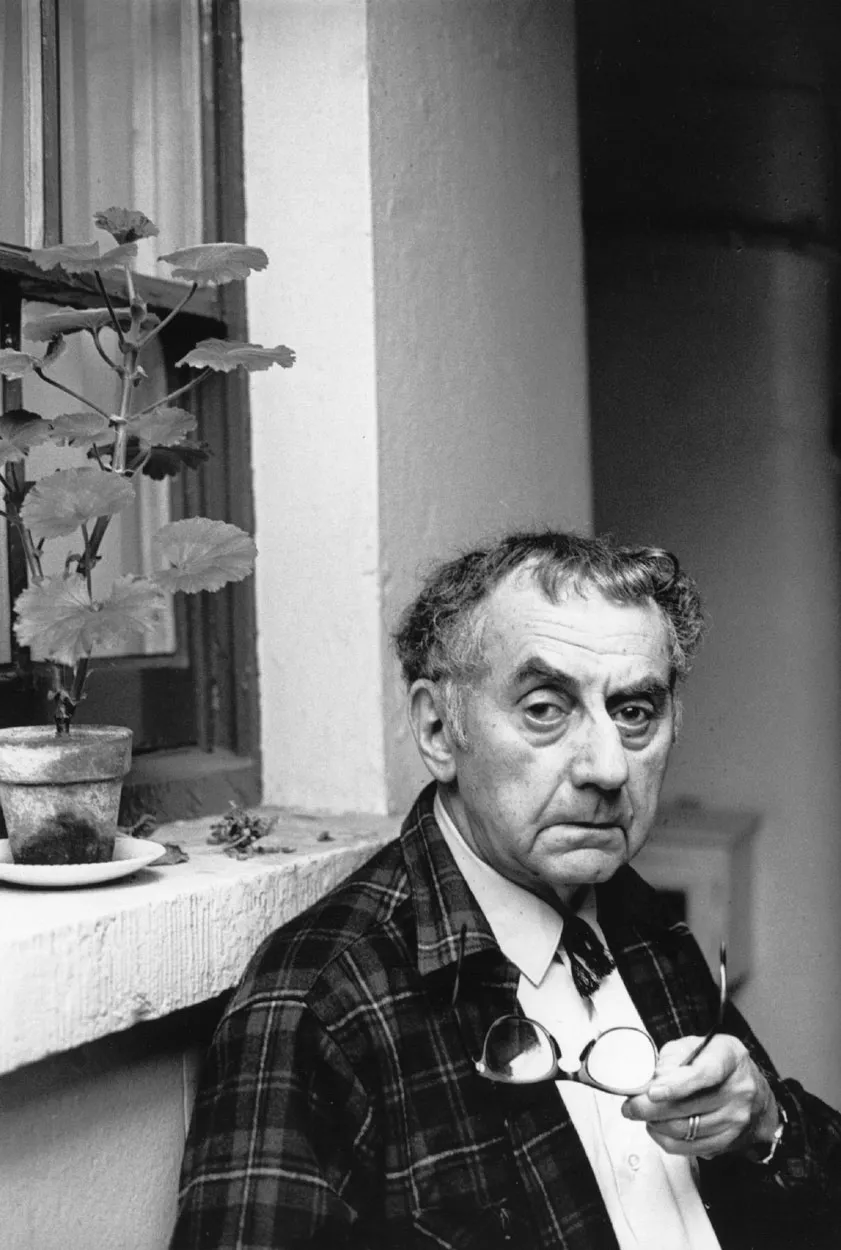
Man Ray, born Emmanuel Radnitzky on August 27, 1890, in Philadelphia, Pennsylvania, is a towering figure in the world of modern art. His contributions to photography, painting, film, and sculpture have left an indelible mark on the art world. Widely recognized as a pioneer of the Dada and Surrealist movements, Man Ray’s work transcends simple categorization, embodying a blend of innovation, rebellion, and creative exploration. This article delves into his life, achievements, and the lasting legacy he left behind.
Early Life and Artistic Beginnings
Emmanuel Radnitzky grew up in Williamsburg, Brooklyn, New York, alongside his two sisters and brother. His parents, who were involved in the textile industry, expected him to follow in their footsteps. However, from an early age, Man Ray exhibited a strong inclination toward the arts. He demonstrated a natural aptitude for drawing and manual skills, which led him to pursue art over a more conventional career.
After completing high school at the Boys’ High School in Brooklyn, Man Ray decided to dedicate his life to art. He declined a scholarship for architecture, choosing instead to immerse himself in the vibrant art scene of New York City. By 1908, he was working as a graphic designer and illustrator, honing his skills in a city that was rapidly becoming a hub for artistic innovation.
In 1912, the Radnitzky family changed their surname to “Ray” in response to the rampant racial and anti-Semitic discrimination of the time. Emmanuel, who had long been called “Manny,” took on the name “Man,” becoming “Man Ray,” a name that would become synonymous with avant-garde art.
The Birth of a Photographer
Man Ray’s journey into photography began in 1914 when he purchased his first camera to document his paintings. Photography quickly became more than a mere tool for documentation; it evolved into a medium of artistic expression in its own right. His early works caught the attention of collectors and artists alike, most notably Marcel Duchamp, whom he met through the collector Walter Arensberg in 1915. Duchamp and Ray formed a close friendship that would have a profound influence on both their careers.
Man Ray’s initial foray into the world of photography coincided with his involvement in the Dada movement, an anti-art cultural movement that originated in Europe as a reaction to the horrors of World War I. Alongside Duchamp, Ray sought to establish a Dada presence in New York. However, the movement struggled to gain the same traction in America as it had in Europe. Disillusioned by this, Man Ray famously declared, “Dada cannot live in New York.”
Paris and the Surrealist Movement
In 1921, Man Ray moved to Paris, following Duchamp, who introduced him to some of the most influential artists of the time, including André Breton, the leader of the Surrealist movement. Paris, with its rich cultural milieu, became the perfect environment for Man Ray to flourish. His photographic work, particularly in portraiture, began to gain widespread acclaim. His studio in Paris became a meeting place for the intellectual and artistic elite, with figures like Jean Cocteau, Gertrude Stein, and James Joyce posing for his camera.
One of Man Ray’s most significant contributions to photography was the development of the “rayograph,” a technique he discovered by accident in 1922. A rayograph is created by placing objects directly onto photographic paper and exposing them to light, producing a shadowy, abstract image. This method became a hallmark of his work and exemplified his belief that photography was not just a means of replication but an art form in its own right.
In 1924, Man Ray became the first photographer associated with the Surrealist movement. He worked as a fashion photographer for Vogue and other high-profile magazines while continuing his artistic experiments. His romantic relationship with Alice Prin, better known as Kiki de Montparnasse, became legendary. Kiki was not only his lover but also his muse, appearing in some of his most iconic works, including Le Violon d’Ingres (1924), a photograph in which he transformed Kiki’s back into a violin.
Innovations in Film and Art
Man Ray’s creative exploration was not limited to photography. He was also a pioneer in experimental film. In 1923, he produced Retour à la raison (Return to Reason), a short avant-garde film that further showcased his innovative use of the camera. The film featured his rayographs and was a testament to his belief that film, like photography, could transcend traditional narrative structures to become pure visual art.
He continued his work in film throughout the 1920s, collaborating with Duchamp on Anemic Cinema (1925) and directing other groundbreaking films such as Emak-Bakia (1926), L’Étoile de mer (1928), and Les Mystères du Château de Dé (1929). These films, characterized by their surreal imagery and abstract narratives, played a crucial role in the development of surrealist cinema.
Man Ray’s work in Paris continued to push the boundaries of artistic expression. In 1934, he photographed Méret Oppenheim, the Swiss Surrealist artist known for her fur-covered teacup, in a series of nude poses beside a printing press. This series exemplified Man Ray’s ability to blend eroticism with industrial imagery, creating a provocative juxtaposition that challenged conventional artistic norms.
Another significant contribution Man Ray made to photography was the rediscovery and refinement of the solarization technique. With the assistance of his lover and photographic assistant, Lee Miller, Man Ray developed this method, which involved partially exposing a developing photograph to light, resulting in a reversed tone effect that gave the images an ethereal, otherworldly quality.
Return to the United States and Later Life
The outbreak of World War II forced Man Ray to leave Paris due to his Jewish heritage. He returned to the United States, settling in Los Angeles, California. During this period, he continued to create art, teaching painting and photography while exhibiting his work. In Los Angeles, he met Juliet Browner, a dancer of Jewish descent, who would become his lifelong partner. They married in a double wedding ceremony alongside their friends, Max Ernst and Dorothea Tanning, before returning to Paris after the war.
Man Ray’s post-war years were marked by a continued exploration of various artistic mediums. In 1963, he published his autobiography, Self-Portrait, offering insights into his life, artistic philosophy, and the evolution of his work. The 1970s saw a renewed interest in his photography, culminating in a major retrospective at the Venice Biennale in 1975, where he exhibited many of his iconic photographs.
Man Ray passed away on November 18, 1976, in Paris. He was buried in the Montparnasse Cemetery, and his epitaph, “Unconcerned, but not indifferent,” encapsulates his approach to life and art. Juliet Browner, who survived him, was buried alongside him in 1991 with the epitaph “Together again,” symbolizing their enduring bond.
Historical Context and Legacy
Man Ray’s career spanned one of the most transformative periods in modern art. His work not only reflects the radical changes in artistic expression during the early 20th century but also helped to shape those changes. The Dada and Surrealist movements, both of which Man Ray was deeply involved in, challenged traditional notions of art, rejecting the idea that art should represent reality. Instead, they embraced chaos, spontaneity, and the subconscious, elements that are evident in Man Ray’s diverse body of work.
Man Ray’s legacy extends beyond his individual contributions to photography, film, and visual art. His work influenced a generation of artists, photographers, and filmmakers, including the likes of Salvador Dalí, René Magritte, and Andy Warhol. His innovative techniques, such as the rayograph and solarization, have become fundamental tools in the field of photography, studied and employed by artists worldwide.
Moreover, Man Ray’s life and work underscore the importance of cross-cultural exchanges in the development of modern art. His move from New York to Paris facilitated a fusion of American and European avant-garde ideas, resulting in a unique artistic perspective that resonated on both sides of the Atlantic. His ability to navigate and contribute to different artistic movements, from Dada to Surrealism, highlights his versatility and openness to experimentation.
SEO and Keyword Strategy
In crafting this detailed biography of Man Ray, careful attention has been paid to SEO best practices to ensure the content is both informative and optimized for search engines. Key phrases such as “Man Ray,” “Surrealist photography,” “Dada movement,” “avant-garde art,” and “experimental film” have been strategically incorporated throughout the text to enhance its visibility. Additionally, the article’s structure, with clear headings and subheadings, improves readability and aligns with search engine indexing protocols.
By providing a comprehensive exploration of Man Ray’s life and achievements, this article serves not only as a resource for those seeking to learn about his work but also as a tool for driving organic search traffic. The emphasis on historical context, artistic innovation, and personal anecdotes ensures that the content appeals to a broad audience, from art historians to casual readers.
In conclusion, Man Ray’s contributions to modern art cannot be overstated. As a pioneer in photography, film, and visual arts, he challenged the boundaries of artistic expression and left a legacy that continues to inspire and influence. His life, marked by innovation, collaboration, and a relentless pursuit of creative freedom, remains a testament to the transformative power of art.


