
Introduction
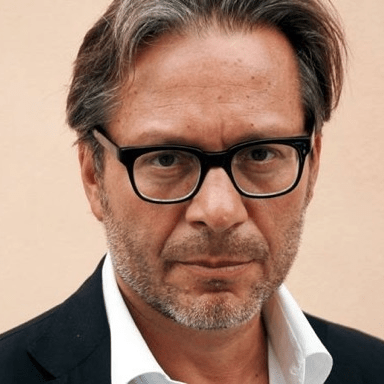
Massimo Recalcati is a name that resonates within the realm of psychoanalysis, not only in Italy but across Europe. Born on November 28, 1959, in Milan, Italy, Recalcati has established himself as one of the most prominent figures in psychoanalysis, especially within the Italian context. Over the years, his fame has grown, particularly in the late 2010s, thanks to his television appearances. However, to fully appreciate the depth and significance of his contributions, it’s essential to explore the life, achievements, and intellectual journey of this distinguished psychoanalyst.
Early Life and Education
Recalcati’s early years were spent in Cernusco Sul Naviglio, a small town near Milan, where he was raised in a family of floriculturists. His father, who was deeply involved in the family business, expected Massimo to follow in his footsteps. Consequently, young Massimo enrolled in a two-year professional course in floriculture and later obtained a diploma from an agricultural technical institute in Quarto Oggiaro, Milan.
Despite the pressure to continue the family tradition, Recalcati harbored a different ambition. His true passion lay in becoming a teacher, which led him to pursue a degree in Philosophy at the University of Milan, where he graduated in 1985. This decision marked the beginning of his journey toward psychoanalysis, a field that would eventually define his career.
The Path to Psychoanalysis
After obtaining his philosophy degree, Recalcati took a significant step forward by specializing in Social Psychology. This marked the beginning of his intensive training in psychoanalysis, a journey that continued until 2007. During this period, he divided his time between Milan and Paris, where he studied under Jacques-Alain Miller, a prominent figure in the field and a close associate of the renowned psychoanalyst Jacques Lacan.
Recalcati’s dedication to his studies and his deep understanding of psychoanalysis soon made him one of the most sought-after professionals in Italy. He became a member of the Italian Lacanian Association and served as the director of the Institute of Applied Psychoanalysis Research. His contributions to the field were not limited to clinical practice; he also played a pivotal role in academia, holding teaching positions at several prestigious European universities, including those in Lausanne, Milan, Urbino, and Pesaro.
Professional Achievements and Contributions
Massimo Recalcati’s career is characterized by his relentless pursuit of knowledge and his commitment to advancing the field of psychoanalysis. From 1994 to 2002, he served as the scientific director of ABA (Associazione per lo studio e la ricerca sui disturbi del comportamento alimentare), an organization dedicated to studying the causes of eating disorders such as anorexia and bulimia. His work in this area laid the foundation for his later explorations into other psychological conditions, including addictions, panic disorders, and depression.
In 2003, Recalcati founded Jonas Onlus, a clinical center for psychoanalytic treatment of new symptoms, demonstrating his commitment to providing practical solutions for emerging psychological issues. This initiative further solidified his reputation as a leading figure in contemporary psychoanalysis.
Recalcati’s intellectual curiosity and dedication to psychoanalysis extended beyond clinical practice. In 2007, he established Palea, a permanent seminar that focuses on the intersection of social sciences and psychoanalysis. This initiative reflects his belief in the importance of interdisciplinary approaches to understanding the complexities of the human mind.
Literary and Editorial Contributions
Massimo Recalcati’s influence is not confined to the clinical and academic spheres; he has also made significant contributions to the world of literature and publishing. He has collaborated with prominent publishing houses such as Feltrinelli, where he curated the series “Eredi,” and Mimesis, where he oversaw the “Studies in Psychoanalysis” collection. His editorial work has helped disseminate psychoanalytic knowledge to a broader audience, further enhancing his impact on the field.
In addition to his editorial work, Recalcati is a prolific author. Since the early 1990s, he has written numerous books and essays on various aspects of psychoanalysis. His works have been translated into multiple languages, making his insights accessible to an international audience. Some of his most notable publications include “L’uomo senza inconscio” (The Man Without an Unconscious), “Ritorno a Jean-Paul Sartre” (Return to Jean-Paul Sartre), and “Jacques Lacan. La clinica psicoanalitica” (Jacques Lacan: The Psychoanalytic Clinic).
Television and Public Recognition
While Massimo Recalcati’s work in psychoanalysis has earned him recognition within academic and clinical circles, it was his television appearances that brought him widespread fame. In 2018, he became a household name in Italy through the television program “Lessico famigliare” (Family Lexicon) on Rai 3. This series, which consisted of four weekly episodes, explored the theme of family through a psychoanalytic lens. The program’s format, which resembled a university lecture, featured Recalcati discussing various aspects of family life, including the roles of mothers, fathers, children, and schools. The show was well-received, and its success led to subsequent series, including “Lessico amoroso” (Love Lexicon) in 2019 and “Lessico civile” (Civil Lexicon) in 2020.
Recalcati’s television presence extended beyond Rai 3. In 2018, he appeared on the La Effe channel in the autobiographical documentary “A libro aperto” (An Open Book), which intertwined his personal history with that of his generation. This program, like his television series, was based on one of his books, further demonstrating his ability to connect with a broad audience.
Theater and Artistic Collaborations
Massimo Recalcati’s interests are not limited to psychoanalysis and literature; he has also made significant contributions to the world of theater. Between 2018 and 2019, he collaborated with Mario Perrotta, an actor, playwright, and theater director, on a trilogy of plays titled “In nome del padre, della madre, dei figli” (In the Name of the Father, the Mother, and the Children). Recalcati’s psychoanalytic insights informed the dramaturgy of these plays, which explored the dynamics of family relationships.
In 2019, Recalcati wrote “La notte di Gibellina” (The Night of Gibellina), a theatrical text that was performed by the actor Alessandro Preziosi at the Grande Cretto di Gibellina, a large land artwork in Sicily. This performance, set against the backdrop of a site that symbolizes both destruction and rebirth, reflects Recalcati’s ongoing exploration of the intersections between art and psychoanalysis.
Personal Life
Despite his public persona, Massimo Recalcati has always been discreet about his personal life. He is married to Valentina, and together they have two children, Tommaso, born in 2004, and Camilla. While Recalcati’s professional commitments are demanding, he has managed to maintain a balance between his work and family life. This balance, however, is something he has guarded carefully, choosing to keep the details of his private life away from the public eye.
Philosophical and Psychoanalytic Thought
At the core of Massimo Recalcati’s psychoanalytic thought is the influence of Jacques Lacan, one of the most influential psychoanalysts of the 20th century. Recalcati’s work is deeply rooted in Lacanian principles, particularly the concepts of desire and enjoyment, which are central to Lacan’s psychoanalytic theory. According to Lacan, human behavior is driven by the tension between these two forces, and this dualism is a recurring theme in Recalcati’s writings and teachings.
Recalcati has also focused on the relationship between fathers and sons, a topic that he explores through the lens of Lacanian psychoanalysis. He examines the symbolic role of the father in the development of the individual, emphasizing the importance of the paternal figure in the formation of identity and the regulation of desire.
In addition to his work on family dynamics, Recalcati has also addressed the broader social changes of contemporary society. He has explored how these changes impact individual psychology, particularly in the context of the weakening of traditional family structures and the rise of new forms of social organization. His reflections on these issues have earned him the prestigious Ernest Hemingway Prize from the city of Lignano Sabbiadoro in 2017.
Conclusion
Massimo Recalcati’s life and work exemplify the profound impact that psychoanalysis can have on our understanding of the human mind and society. His contributions to the field, whether through clinical practice, academic teaching, writing, or media appearances, have made him one of the most influential psychoanalysts of our time. As he continues to explore the complexities of human behavior and relationships, Recalcati’s insights remain as relevant as ever, offering valuable perspectives on the challenges of modern life.


