
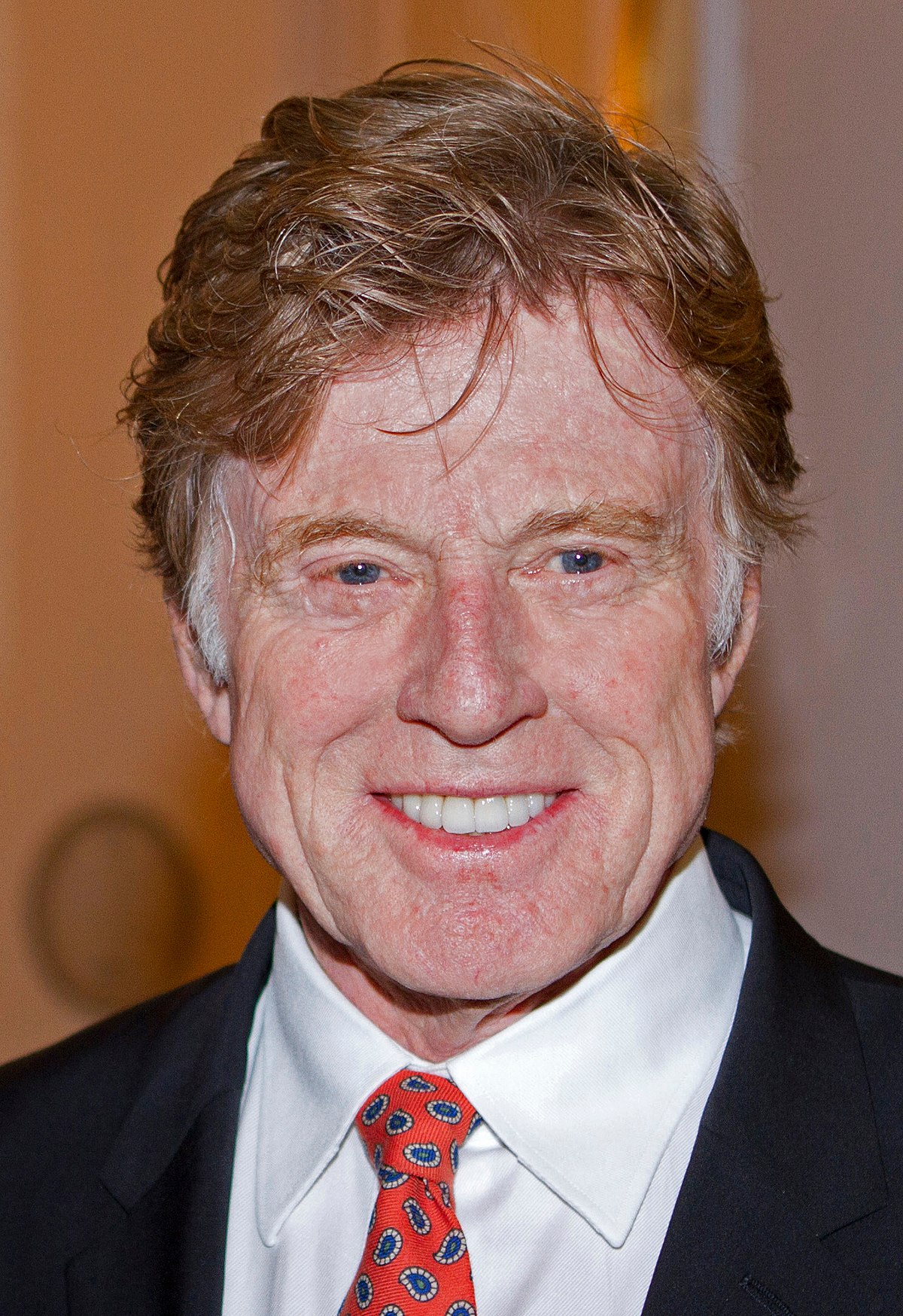
Robert Redford, an iconic figure in American cinema, is known for his contributions as an actor, director, and producer. Born Charles Robert Redford Jr. on August 18, 1936, in Santa Monica, California, Redford’s career spans over six decades, making him one of the most enduring and influential personalities in Hollywood. His journey from a troubled youth to a celebrated artist and activist is as compelling as the characters he has portrayed on screen.
Early Life and Education
Robert Redford was born into a middle-class family, the son of Martha Redford and Charles Robert Redford Sr., an accountant for the Standard Oil Company. Redford’s early life was marked by rebellion and a lack of direction. His mother passed away in 1955, the same year he graduated from high school. This tragic event coincided with a period of personal turmoil for Redford. After World War II, his family moved to Van Nuys, California, where Redford attended Van Nuys High School. Although he excelled in sports, particularly baseball, his academic performance was inconsistent.
In 1955, Redford received a baseball scholarship to the University of Colorado. However, his college years were troubled; he lost interest in academics and sports, turning instead to alcohol. This behavior led to his expulsion from the baseball team and eventually from the university. Redford’s disenchantment with conventional life led him to pursue a different path—one that would take him across the Atlantic and into the world of art.
Artistic Beginnings and the Call of Acting
Following his departure from the University of Colorado, Redford developed an interest in painting. He enrolled in various art courses and took on odd jobs in Los Angeles to support himself. In a bid to further his artistic aspirations, Redford embarked on a journey to Europe. He initially planned to study art in Paris but instead spent time traveling across Europe, hitchhiking, and staying in youth hostels. This period of self-discovery culminated in a stint at an artist’s studio in Florence, Italy. However, Redford soon realized that his talents in painting were limited, prompting him to return to the United States.
Back in California, Redford met Lola Jean Van Wagenen, a girl from Utah who shared his bohemian lifestyle. The couple married on September 12, 1958, and moved to New York City, where Redford pursued his interest in the arts. While in New York, Redford enrolled at the Pratt Institute to study painting and also took courses in set design. It was during this time that he discovered his passion for acting, enrolling in classes at the American Academy of Dramatic Arts.
Rise to Fame: Broadway and Hollywood Breakthrough
Redford’s acting career began with small roles on Broadway and in television series. His first notable appearance was in the 1962 film “War Hunt.” However, it was his performance in the 1967 film “Barefoot in the Park,” opposite Jane Fonda, that catapulted him to stardom. This film, adapted from a Neil Simon play, showcased Redford’s charm and good looks, making him a household name.
The late 1960s and early 1970s marked a turning point in Redford’s career. In 1969, he starred in “Butch Cassidy and the Sundance Kid,” alongside Paul Newman. The film was a massive success and solidified Redford’s status as one of Hollywood’s leading men. The chemistry between Redford and Newman was electric, and the film became a classic, cementing Redford’s place in the annals of American cinema.
The Golden Era: Iconic Roles and Directorial Debut
Throughout the 1970s, Redford continued to choose his roles wisely, starring in a series of critically acclaimed and commercially successful films. Some of his most notable works from this period include “Jeremiah Johnson” (1972), “The Candidate” (1972), and “The Sting” (1973), the latter of which reunited him with Paul Newman. “The Sting” was a box office hit and won seven Academy Awards, including Best Picture.
Another milestone in Redford’s career was his role in the 1973 film “The Way We Were,” directed by Sydney Pollack and co-starring Barbra Streisand. The film, a romantic drama set against the backdrop of political turmoil, became a cultural touchstone and showcased Redford’s versatility as an actor.
In 1980, Redford made his directorial debut with the film “Ordinary People.” The film was a critical success, winning four Academy Awards, including Best Picture and Best Director for Redford. This achievement marked the beginning of Redford’s second career as a director and solidified his reputation as a multifaceted talent in the film industry.
The Sundance Institute and Film Festival
In 1981, Robert Redford founded the Sundance Institute, an organization dedicated to supporting independent filmmakers. The institute’s mission was to foster creativity and provide a platform for emerging talents in the film industry. The following year, Redford established the Sundance Film Festival, which has since become one of the most prestigious film festivals in the world. The festival is known for showcasing independent films that often challenge mainstream cinema, and it has played a crucial role in launching the careers of many filmmakers.
Redford’s commitment to independent cinema is a testament to his belief in the power of storytelling. Through the Sundance Institute and Film Festival, Redford has helped to shape the landscape of American cinema, promoting diversity and innovation in the industry.
Later Career: Continued Success and Legacy
As Redford moved into the later stages of his career, he continued to act, direct, and produce films. Notable works from this period include “The Milagro Beanfield War” (1988), “A River Runs Through It” (1992), and “The Horse Whisperer” (1998). While some of these films received mixed reviews, they all demonstrated Redford’s enduring passion for filmmaking and his commitment to exploring complex themes.
In 2002, Redford received an honorary Oscar for his contributions to the film industry, recognizing his work as an actor, director, and founder of the Sundance Film Festival. This award was a fitting tribute to a man who had not only excelled in front of the camera but also made significant contributions behind the scenes.
Redford’s later films, such as “The Legend of Bagger Vance” (2000) and “Spy Game” (2001), in which he starred alongside Brad Pitt, continued to showcase his talent and versatility. In addition to his film work, Redford has been an outspoken advocate for environmental conservation and social justice, using his platform to raise awareness about important issues.
Personal Life and Legacy
Robert Redford’s personal life has been marked by both triumphs and tragedies. His marriage to Lola Van Wagenen ended in divorce in 1985, after 27 years of marriage. The couple had four children, one of whom, Scott, died of sudden infant death syndrome (SIDS) at just two months old. Despite these personal challenges, Redford remained dedicated to his family and his work.
In 2009, at the age of 71, Redford married his longtime partner, German painter Sibylle Szaggars. The couple has maintained a relatively private life, splitting their time between homes in Utah and Napa Valley, California.
Redford’s legacy is not just limited to his work in film. He is also known for his philanthropic efforts, particularly in the areas of environmental conservation and the arts. His commitment to these causes is reflected in his work with the Sundance Institute and his efforts to promote independent filmmaking.
Conclusion: A Lasting Impact on Cinema
Robert Redford’s impact on American cinema is immeasurable. From his early days as a rebellious youth to his emergence as one of Hollywood’s most respected actors and directors, Redford has consistently pushed the boundaries of his craft. His work with the Sundance Institute and Film Festival has helped to shape the future of independent cinema, ensuring that new voices continue to be heard.
As he enters the later years of his life, Redford’s legacy as a pioneer of American cinema and a champion of independent film remains secure. His contributions to the industry have left an indelible mark, and his influence will continue to be felt for generations to come.


