
Introduction
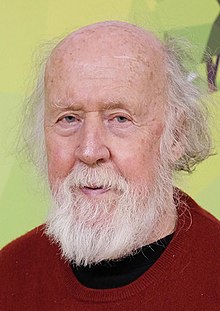
Hubert Reeves is a name synonymous with cosmology, astrophysics, and environmental advocacy. Born on July 13, 1932, in Montreal, Canada, Reeves has spent his life unraveling the mysteries of the universe, while also championing the cause of environmental protection. His work as a physicist, educator, and author has left an indelible mark on both scientific communities and the general public. This article delves into the life and career of Hubert Reeves, exploring his journey from a young scholar in Canada to a renowned figure in the global scientific arena.
Early Life and Education
Hubert Reeves was born in Montreal, Quebec, during a time when the field of physics was undergoing significant developments. From an early age, Reeves displayed a keen interest in science, particularly in the workings of the universe. His academic journey began at the Collège Jean de Brébeuf in Montreal, a prestigious institution known for nurturing some of Canada’s most brilliant minds.
After completing his early education, Reeves pursued a degree in physics at the University of Montreal, graduating in 1953. His passion for understanding the fundamental principles of the universe led him to further his studies at McGill University, one of Canada’s leading research institutions. In 1955, he earned a Master of Science degree with a thesis focused on the formation of positrons in hydrogen and helium. This early research set the stage for what would become a lifelong dedication to the study of the cosmos.
Advanced Studies and Early Career
With a strong foundation in physics, Hubert Reeves sought to deepen his understanding of the universe by pursuing a Ph.D. at Cornell University in New York. By 1960, he had completed his doctorate, marking the beginning of his professional career in academia and research.
Reeves’ early career was marked by a dual focus on teaching and research. He began teaching physics at the University of Montreal, where his ability to explain complex scientific concepts made him a popular figure among students. Simultaneously, Reeves took on a role as a consultant for NASA, contributing to the organization’s burgeoning space exploration efforts during a time when the race to the moon was at its peak.
Expanding Horizons: International Roles and Publications
In 1965, Hubert Reeves expanded his academic and research horizons by moving to Europe. He took on a teaching position in nuclear physics at the Université Libre de Bruxelles in Belgium, one of Europe’s most esteemed institutions. His work during this period focused on stellar evolution and nucleosynthesis, key areas in the field of astrophysics that explore how stars evolve and how elements are formed within them.
His research culminated in the publication of “Stellar Evolution and Nucleosynthesis” in 1968, a seminal work that gained significant recognition within the scientific community. This book laid the groundwork for understanding how stars, including our own Sun, develop over time and the processes by which they produce the elements necessary for life.
In 1971, Reeves further solidified his reputation as a leading figure in astrophysics with the publication of “Nuclear Reactions in Stellar Surfaces and Their Relations with Stellar Evolution.” This work delved into the intricate nuclear processes that occur on the surfaces of stars, contributing to the broader understanding of stellar lifecycles.
Recognition and Honors
Hubert Reeves’ contributions to science did not go unnoticed. In 1976, he was honored in France as a Knight of the Ordre National du Mérite, one of the country’s highest civilian honors. This recognition was a testament to his influence not just in Canada and Belgium, but also in France, where he had begun to establish significant academic ties.
Five years later, in 1981, Reeves published “Patience in the Azure: The Cosmic Evolution,” a book that sought to explain the evolution of the universe in a way that was accessible to the general public. This marked the beginning of his efforts to bridge the gap between complex scientific ideas and popular understanding. The book was widely acclaimed for its clear, engaging prose and its ability to make the vast, often incomprehensible, concepts of cosmology understandable to everyday readers.
In 1986, Reeves’ contributions to science and education were further recognized when he was named a Knight of the Légion d’Honneur in France. That same year, he published “L’heure de s’enivrer: l’univers a-t-il un sens?” (The Time to Get Drunk: Does the Universe Have Meaning?), a philosophical exploration of the cosmos that reflected his growing interest in the existential questions posed by science.
Academic Leadership and Teaching
Throughout the 1980s and 1990s, Hubert Reeves continued to play a prominent role in the academic community. In 1986, he began teaching cosmology at the Université Paris VII, where his lectures attracted students from around the world. His ability to connect with students and communicate complex ideas in a relatable manner made him a beloved educator and mentor.
Reeves also became a key figure at the Université de Toulouse, where he continued to teach and conduct research. His academic influence extended beyond his teaching; he was instrumental in shaping the curriculum and fostering a deeper understanding of cosmology among a new generation of scientists.
In 1991, Reeves was honored as an Officer of the Order of Canada, one of the highest civilian honors in his home country. This recognition was a testament to his contributions to science both in Canada and abroad. Two years later, he was awarded the same title by the National Order of Quebec, further solidifying his status as one of Canada’s most respected scientists.
Popularizing Science: Books and Lectures
One of Hubert Reeves’ most significant contributions to science has been his ability to communicate complex ideas to a broad audience. Throughout his career, he has written numerous books aimed at demystifying the universe for the general public. His 1994 publication, “Dernières nouvelles du cosmos” (Latest News from the Cosmos), was particularly well-received, offering readers a glimpse into the latest developments in astrophysics and cosmology.
Reeves’ work as a popularizer of science also included a series of lectures at the Sorbonne, one of the world’s most prestigious universities. These lectures, which focused on the history of the universe, attracted audiences far beyond the academic community, furthering Reeves’ reputation as a scientist who could make the complexities of the cosmos accessible to all.
In 1998, he published “Origins: Speculations on the Cosmos, Earth, and Mankind,” a book that explored the origins of the universe and life on Earth. This work was notable not just for its scientific insights, but also for its philosophical musings on humanity’s place in the cosmos.
Environmental Advocacy: A New Mission
In addition to his work in cosmology and astrophysics, Hubert Reeves has become an outspoken advocate for environmental protection. His deep understanding of the universe and its fragile nature has fueled his passion for preserving the planet. Reeves has often spoken about the interconnectedness of all life and the need for humanity to take responsibility for the stewardship of Earth.
In 2003, Reeves was named a Companion of the Order of Canada, the country’s highest civilian honor, in recognition of his contributions to science and environmental advocacy. That same year, he was also promoted to Commander of the Légion d’Honneur in France, further acknowledging his dual impact on science and society.
Reeves continued to publish works that reflected his environmental concerns, including “Chroniques du ciel et de la vie” (Chronicles of the Sky and Life) in 2005 and “Chroniques des atomes et des galaxies” (Chronicles of Atoms and Galaxies) in 2007. These books combined his scientific knowledge with his environmental activism, offering readers a comprehensive view of the universe and humanity’s role within it.
Later Life and Continued Influence
Even as he entered his later years, Hubert Reeves remained an active and influential figure in both science and environmental advocacy. In 2010, he was awarded an honorary doctorate from the Université du Quebec in Montreal, a fitting recognition from the academic community in his home country. The following year, he received a similar honor from the Université de Sherbrooke, further cementing his legacy as one of Canada’s most distinguished scientists.
Reeves’ influence has extended far beyond the scientific community. His books, lectures, and public appearances have inspired countless individuals to explore the mysteries of the universe and to take action in protecting the environment. His ability to convey the wonder of the cosmos, coupled with his urgent call for environmental responsibility, has made him a unique voice in both science and public discourse.
Legacy and Impact
Hubert Reeves’ legacy is one of profound scientific discovery and passionate advocacy for the planet. His work in cosmology has provided invaluable insights into the nature of the universe, while his environmental efforts have highlighted the importance of preserving the delicate balance of life on Earth.
Reeves’ ability to bridge the gap between complex scientific ideas and public understanding has made him a beloved figure not just among scientists, but among people of all backgrounds. His books and lectures have brought the wonders of the universe to countless readers and listeners, inspiring a sense of awe and responsibility for the world we live in.
In a career spanning more than six decades, Hubert Reeves has demonstrated that science is not just about understanding the universe, but also about understanding our place within it. His work reminds us that the cosmos is vast and mysterious, but that we, as part of that cosmos, have a responsibility to protect our planet and ensure its future.
Conclusion
Hubert Reeves is a scientist, educator, and environmental advocate whose contributions have left an indelible mark on both the scientific community and society at large. From his early days in Montreal to his distinguished career in Europe, Reeves has consistently pushed the boundaries of our understanding of the universe. His efforts to make science accessible to the public, combined with his passionate advocacy for the environment, have made him a true icon of our time. As we continue to explore the cosmos and confront the challenges of environmental preservation, the legacy of Hubert Reeves will continue to inspire and guide future generations.


