
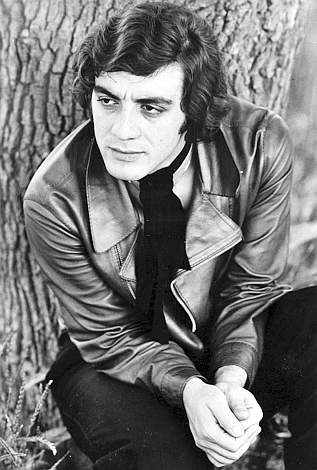
Mino Reitano, born Beniamino Reitano on December 7, 1944, in Fiumara, a small town in the province of Reggio Calabria, Italy, was an iconic Italian singer, songwriter, and actor. Known for his emotional voice and heartfelt lyrics, Reitano became a beloved figure in Italian pop culture, representing the quintessential themes of love, loss, and the beauty of his homeland. This article delves into the life, achievements, and enduring legacy of Mino Reitano, a man who touched the hearts of millions through his music.
Early Life and Musical Beginnings
Mino Reitano was born into a modest family, and his life was marked by tragedy from the start. His mother died at the age of 27 while giving birth to him, leaving his father, Rocco Reitano, a railway worker and amateur musician, to raise him. Despite the early loss of his mother, Mino’s childhood was steeped in music. His father, who played the clarinet and directed the local band, instilled in him a love for music that would shape his future.
From a young age, Reitano displayed remarkable musical talent. He attended the conservatory in Reggio Calabria for eight years, where he learned to play the piano, violin, and trumpet. His musical education laid a solid foundation for his future career, and by the age of ten, Reitano made his first television appearance on the show La Giostra dei Motivi, showcasing his budding talent.
The Road to Fame: Early Career and Breakthrough
Reitano’s journey to fame was not without challenges. In the early 1960s, he formed a rock and roll band with his brothers Antonio, Vincenzo (Gegè), and Franco. The group, known variously as the Fratelli Reitano or Beniamino e i Fratelli Reitano, began performing at local festivals and competitions, gradually gaining recognition. Their first record, a 45 RPM single titled “Tu sei la luce” b/w “Non sei un angelo,” was released in 1961, earning them a small but significant mention in TV Sorrisi e Canzoni, a popular Italian magazine.
Seeking broader horizons, Reitano and his brothers moved to Germany in the early 1960s. There, they performed in various clubs, including some in Hamburg’s famous Reeperbahn district, where they shared the stage with The Beatles, who were then at the beginning of their career as The Quarrymen. This period in Germany was crucial for Reitano, as it exposed him to different musical styles and helped him refine his craft.
Returning to Italy in 1963, Reitano released several singles, including “Robertina Twist” and “Twist Time,” but these early efforts failed to make a significant impact. Undeterred, he continued to perform and record, slowly building his reputation.
Breakthrough and National Success
Reitano’s breakthrough came in 1965 when he participated in the prestigious Festival di Castrocaro with a cover of Roy Orbison’s “It’s Over,” sung in English. Although he did not win, his performance caught the attention of industry professionals, leading to a contract with Dischi Ricordi, a major Italian record label.
In 1966, Reitano released the Italian version of “It’s Over,” titled “La fine di tutto,” which marked the beginning of his ascent in the Italian music scene. The following year, he made his debut at the Sanremo Music Festival, one of Italy’s most important music events, with the song “Non prego per me,” written by the legendary duo Mogol and Lucio Battisti. Reitano performed the song in a duet with the British band The Hollies, marking a significant milestone in his career.
Reitano’s success continued to grow with hits like “Avevo un cuore (che ti amava tanto)” and “Una chitarra cento illusioni,” both released in 1968. These songs resonated deeply with the Italian public, thanks to their emotive lyrics and Reitano’s passionate delivery. The commercial success of these records allowed Reitano to purchase land in Agrate Brianza, where he built what would become known as “Villaggio Reitano,” a family compound that housed multiple generations of the Reitano family.
Artistic Evolution: Songwriting and Theater
Beyond his singing career, Mino Reitano was also a talented songwriter. In 1969, he wrote “Il diario di Anna Frank,” a poignant song inspired by the famous diary of Anne Frank, which became a hit for the band Camaleonti. The same year, he returned to the Sanremo Music Festival with “Meglio una sera piangere da solo,” performed in collaboration with the legendary singer Claudio Villa.
Reitano’s ability to write songs that captured the emotional depth of human experience set him apart from many of his contemporaries. He penned “Una ragione di più” for Ornella Vanoni, one of Italy’s most celebrated singers, further establishing his reputation as a gifted composer.
Throughout the early 1970s, Reitano participated in several editions of “Un disco per l’estate,” a popular Italian song contest. His 1971 entry, “Era il tempo delle more,” won the competition and became one of his best-selling records. Reitano’s consistent success in these contests and his frequent appearances on television variety shows, including Canzonissima, where he was a finalist for eight consecutive years, solidified his status as one of Italy’s most beloved entertainers.
Reitano also ventured into acting, starring in the 1971 spaghetti western Tara Poki, directed by Amasi Damiani. He also contributed the main theme song, “La leggenda di Tara Poki,” to the film’s soundtrack. This foray into cinema, although brief, demonstrated Reitano’s versatility as an artist.
Continued Success and International Recognition
The late 1970s and 1980s were marked by continued success for Reitano. He released several albums and singles, including “Dolce angelo,” a cover of The Rubettes’ “Sugar Baby Love,” and “Dedicato a Frank,” an album in which he paid tribute to Frank Sinatra, whom Reitano greatly admired. Reitano even had the honor of performing alongside Sinatra in Miami during a New Year’s Eve concert in 1974, a highlight of his career.
Reitano’s music often reflected his deep love for Italy and his roots in Calabria. In 1988, he returned to the Sanremo Music Festival with the patriotic anthem “Italia,” originally written for Luciano Pavarotti. Although the song only placed sixth, it was warmly received by the public and remains one of Reitano’s most memorable performances.
In addition to his music, Reitano authored a novel titled Oh Salvatore! in 1976, a semi-autobiographical story about an emigrant’s life, which drew from his own experiences of living and working abroad. This literary endeavor further showcased his multifaceted talents.
Personal Life and Legacy
Mino Reitano married Patrizia, the love of his life, and the couple had two daughters. Throughout his career, Reitano remained deeply connected to his family, often collaborating with his brothers, who were integral to his success. Together, they founded Fremus, a music publishing company, and later a record label, which Vincenzo managed.
Reitano’s personal life was characterized by his strong Catholic faith, which provided him with comfort and strength, particularly during his battle with cancer. In 2007, Reitano was diagnosed with intestinal cancer. Despite undergoing multiple surgeries and treatments, his condition worsened. He spent his final days in his home in Agrate Brianza, where he passed away on January 27, 2009, surrounded by his family.
Reitano’s death was a significant loss to the Italian music community, and his passing was widely mourned. In recognition of his contributions to Italian music and culture, the Italian postal service issued a commemorative stamp in his honor in 2009, alongside stamps for Luciano Pavarotti and Nino Rota.
Enduring Influence and Conclusion
Mino Reitano’s legacy as a singer, songwriter, and performer is firmly entrenched in the annals of Italian music history. His ability to convey deep emotions through his music, combined with his unyielding love for his country and his roots, made him a beloved figure in Italy and beyond. Reitano’s songs continue to resonate with audiences, embodying the timeless themes of love, loss, and nostalgia.
Reitano’s journey from a small town in Calabria to the heights of fame is a testament to his talent, perseverance, and dedication to his craft. His influence on Italian popular music remains strong, and his contributions continue to be celebrated by fans and musicians alike. As a cultural icon, Mino Reitano’s life and work exemplify the power of music to touch the human soul and to bridge the gap between personal experience and universal emotion.


