
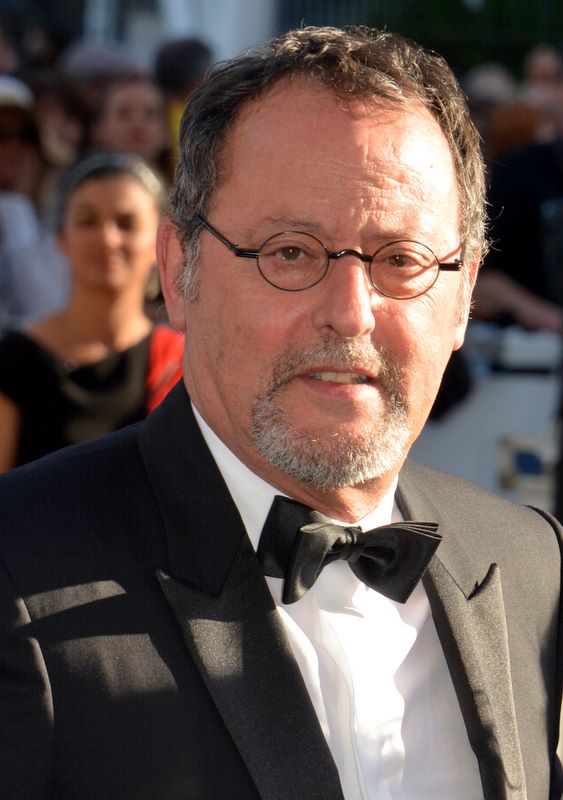
Jean Reno is one of the most recognizable faces in global cinema, celebrated for his versatility, charisma, and ability to seamlessly transition between various genres. Born on July 30, 1948, in Casablanca, Morocco, Reno’s career has spanned decades, featuring roles in iconic films across both French and Hollywood cinema. Known for his work with director Luc Besson, as well as his performances in blockbusters like Mission: Impossible and The Da Vinci Code, Reno’s career is a testament to his talent and enduring appeal.
Early Life and Beginnings in France
Jean Reno was born Juan Moreno y Herrera-Jiménez to Spanish parents who had fled the dictatorship of Francisco Franco. His early life in Casablanca, under Moroccan French control, was marked by cultural diversity and political tension. This rich cultural background would later inform his acting, giving him a unique perspective that resonated with audiences around the world.
Reno moved to France as a teenager, where he obtained French citizenship at the age of 17. In Paris, he pursued his passion for acting, studying at the French National Drama Academy. He began his career with small roles in theater and low-budget films, gradually building a reputation as a reliable and talented actor.
His early career was shaped by the French theater scene, where he honed his craft and developed a deep understanding of character work. This period of his life laid the foundation for his later success, providing him with the skills needed to navigate the complex and demanding world of cinema.
Breakthrough with Luc Besson
Jean Reno’s career took a significant turn when he met director Luc Besson in the early 1980s. Their collaboration began with the 1983 film Le Dernier Combat, a post-apocalyptic drama that marked Besson’s feature film debut. Reno played a mute, which was a challenging role that required him to convey emotion and narrative without the use of dialogue. His performance caught the attention of the French film industry, establishing him as an actor capable of taking on unconventional and demanding roles.
Reno’s association with Besson continued with Subway (1985) and The Big Blue (1988), but it was the 1990 film Nikita that brought him international recognition. In Nikita, Reno played Victor “The Cleaner,” a ruthless hitman who became one of the most memorable characters in the film. His portrayal of the cold, efficient assassin contrasted sharply with the more emotional and conflicted protagonist, highlighting Reno’s ability to bring depth and nuance to even the most hardened characters.
However, it was Léon: The Professional (1994) that cemented Reno’s status as a global star. In this film, he played the titular character, a solitary hitman who becomes the unlikely guardian of a young girl, played by Natalie Portman in her breakout role. Léon was a critical and commercial success, praised for its stylized direction, intense performances, and emotional depth. Reno’s portrayal of Léon, a character who is both lethal and tender, became iconic, earning him acclaim from audiences and critics alike.
Hollywood Success and International Fame
Following the success of Léon: The Professional, Jean Reno was catapulted into Hollywood, where he quickly became a sought-after actor for both supporting and leading roles. His first major Hollywood film was Mission: Impossible (1996), directed by Brian De Palma and starring Tom Cruise. In the film, Reno played Franz Krieger, a former IMF agent with questionable loyalties. The film was a box office hit and further established Reno as a versatile actor capable of handling big-budget action roles.
Reno continued to work in Hollywood throughout the late 1990s and early 2000s, appearing in films such as French Kiss (1995) alongside Meg Ryan and Kevin Kline, Godzilla (1998), and Ronin (1998) with Robert De Niro. In Ronin, Reno’s performance as Vincent, a seasoned mercenary, was praised for its understated intensity and professionalism, further solidifying his reputation as a reliable and compelling screen presence.
In 2003, Reno starred in The Visitors, a French comedy that was a massive hit in France. The film, which involves time travel and fish-out-of-water humor, showcased Reno’s comedic talents, proving that he could handle lighter roles with the same skill he brought to more serious films.
Reno’s international success continued with his role in The Da Vinci Code (2006), directed by Ron Howard and based on the best-selling novel by Dan Brown. In the film, Reno played Bezu Fache, a French police captain involved in the investigation of a murder at the Louvre. The film was a global success, further expanding Reno’s reach and solidifying his status as one of the most recognizable French actors in Hollywood.
Versatility in Roles and Acting Style
Jean Reno is often praised for his ability to play a wide range of characters, from hardened criminals to sympathetic heroes. His physical presence, combined with his deep, resonant voice, makes him an ideal choice for roles that require a commanding screen presence. However, Reno is also known for bringing humanity and vulnerability to his characters, even those that are morally ambiguous or outright villainous.
In addition to his work in action and thriller films, Reno has demonstrated a talent for comedy. Films like French Kiss and The Visitors allowed him to explore his lighter side, and his performances in these films were well-received by both audiences and critics. Reno’s ability to switch between genres and tones is one of his greatest strengths as an actor, allowing him to remain relevant and in demand throughout his career.
Voice Acting and Other Endeavors
Beyond live-action films, Jean Reno has also lent his voice to various animated projects and dubbed versions of international films. Notably, he provided the voice of Mufasa in the French version of Disney’s The Lion King (1994), a role originally voiced by James Earl Jones in the English version. Reno’s deep and powerful voice was a perfect match for the regal lion king, adding another dimension to his already impressive career.
Reno has also been involved in various advertising campaigns, bringing his recognizable face and voice to commercials for companies such as UPS and BMW. His participation in these campaigns further demonstrates his versatility and widespread appeal, reaching audiences far beyond the film industry.
Personal Life and Public Image
Jean Reno’s personal life has been marked by his love for family and his deep connection to his French and Spanish heritage. He has been married three times and has six children. Reno’s first marriage to Geneviève resulted in two children, Sandra and Mickael. His second marriage to Nathalie Dyszkiewicz produced a son, Tom, and a daughter, Serena. In 2006, Reno married model and actress Zofia Borucka, with whom he has two more sons.
Reno is known for being a private individual who values his family life. Despite his fame, he has managed to keep much of his personal life out of the public eye, focusing instead on his work and his family. Reno’s close friendship with former French President Nicolas Sarkozy is well-documented, and he was actively involved in Sarkozy’s presidential campaign in 2007.
In 2008, while vacationing in Martinique, Reno suffered a serious heart attack. He was quickly hospitalized and made a full recovery, but the incident highlighted the pressures and demands of his high-profile career. Despite this scare, Reno has continued to work actively in film and television, demonstrating his resilience and dedication to his craft.
Later Career and Continued Success
In recent years, Jean Reno has continued to work in both French and international cinema. He has appeared in films such as La Rafle (2010), a French historical drama about the Vel’ d’Hiv Roundup during World War II, and The Chef (2012), a French comedy where he played a renowned but temperamental chef.
Reno’s later roles have often explored more mature and reflective themes, reflecting his own evolution as an actor and individual. His performance in Vento di Primavera (2010), where he played a Jewish man deported during the Holocaust, was particularly poignant, showcasing his ability to tackle complex and emotionally challenging roles.
Legacy and Impact on Cinema
Jean Reno’s impact on cinema, particularly in bridging the gap between French and Hollywood films, cannot be overstated. He is one of the few French actors who have successfully transitioned to Hollywood while maintaining a strong presence in European cinema. His work with directors like Luc Besson has become iconic, influencing a new generation of filmmakers and actors.
Reno’s versatility, professionalism, and ability to bring depth to a wide range of characters have made him a beloved figure in global cinema. His legacy is one of excellence and dedication to his craft, and he continues to be an inspiration to aspiring actors and filmmakers around the world.
As he continues to work in film and television, Jean Reno remains a significant figure in the entertainment industry. His career, which spans over four decades, is a testament to his talent, resilience, and the timeless appeal of his performances. Whether playing a hitman, a chef, or a historical figure, Reno brings a unique blend of gravitas and humanity to each role, ensuring that his place in cinema history is secure.


