
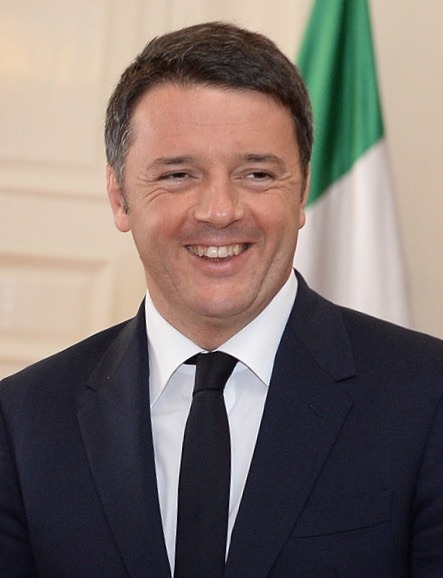
Matteo Renzi is a prominent Italian politician known for his dynamic approach to leadership and his influential role in reshaping the landscape of Italian politics. Born on January 11, 1975, in Florence, Italy, Renzi quickly rose through the political ranks, becoming the youngest Prime Minister in Italian history when he took office in 2014. This article explores the life, career, and key achievements of Matteo Renzi, offering a comprehensive look at his journey from a young political enthusiast to a major figure on the national stage.
Early Life and Education
Matteo Renzi was born into a family deeply engaged in public service and political activities. His father, Tiziano Renzi, was involved in local politics, which greatly influenced Matteo’s early interest in civic duties. Growing up in Rignano sull’Arno, a small town near Florence, Renzi was surrounded by discussions of political and social issues, which played a crucial role in shaping his future aspirations.
Renzi attended the prestigious Dante Alighieri High School in Florence, where he distinguished himself academically. His involvement in extracurricular activities, particularly the Scouts, where he served as an educator, further honed his leadership skills. Renzi’s early engagement with community service and education reflected his burgeoning interest in politics and his desire to make a meaningful impact on society.
In 1994, Renzi took his first step into the political arena by contributing to the creation of the “Comitato per Prodi Presidente,” a campaign supporting Romano Prodi, who would later become Prime Minister of Italy. This experience solidified Renzi’s commitment to politics, and he soon became actively involved in various political movements.
Academic Pursuits and Initial Political Involvement
Matteo Renzi pursued higher education at the University of Florence, where he studied law. He graduated in 1999 with a thesis titled “Firenze 1951-1956: La Prima Esperienza di Giorgio La Pira Sindaco di Firenze,” which examined the first term of the famous Florentine mayor Giorgio La Pira. Renzi’s academic work reflected his deep interest in political history and governance, particularly within the context of his hometown.
During his time at university, Renzi continued to be involved in political activities. In 1996, he officially joined the Italian Popular Party (Partito Popolare Italiano, PPI), a centrist political party that later merged into the Democratic Party (Partito Democratico, PD). His commitment and enthusiasm quickly earned him recognition within the party, and in 1999, Renzi was appointed as the provincial secretary of the PPI in Florence, marking the beginning of his ascent in the political landscape.
Before fully immersing himself in politics, Renzi worked for CHIL srl, a marketing services company owned by his family. His role in the company provided him with valuable experience in management and business operations, skills that would later benefit his political career.
Rising Through the Ranks: From Local Politics to National Prominence
The early 2000s marked a period of rapid political advancement for Matteo Renzi. In 2001, he was elected as the coordinator of the Margherita Party (a precursor to the Democratic Party) in Florence. His leadership abilities and innovative approach to politics quickly made him a prominent figure within the party.
In 2004, Renzi took a significant step forward in his political career by running for the presidency of the Province of Florence. He campaigned as a moderate candidate and was successful in winning the election with 58.8% of the vote. As President of the Province, Renzi became known for his youthful energy and commitment to reform. His administration focused on reducing provincial taxes, implementing effective waste management strategies, and promoting cultural initiatives such as the “Genio Fiorentino,” an event aimed at celebrating Florence’s rich artistic heritage.
During his tenure as provincial president, Renzi also authored his first book, “Tra De Gasperi e gli U2: I Trentenni e il Futuro” (“Between De Gasperi and U2: The Thirty-Somethings and the Future”), published in 2006. The book outlined his political philosophy, which was heavily influenced by the ideas of post-war Italian statesman Alcide De Gasperi and contemporary cultural references. This work highlighted Renzi’s vision for a modern and progressive Italy, blending traditional values with innovative ideas.
Becoming Mayor of Florence: A New Era of Leadership
Matteo Renzi’s political career continued its upward trajectory when he announced his candidacy for the mayoralty of Florence in 2008. His campaign was characterized by a focus on innovation, transparency, and direct engagement with the electorate. Renzi’s use of new media and his ability to connect with voters through modern communication channels set him apart from his competitors.
In February 2009, Renzi won the Democratic Party’s primary election with 40.52% of the vote, paving the way for his candidacy in the general election. He was elected Mayor of Florence on June 9, 2009, after securing 47.57% of the vote in the first round and winning the runoff with 59.96% of the vote.
As mayor, Renzi implemented a series of ambitious reforms aimed at modernizing the city’s administration and infrastructure. One of his first major actions was the pedestrianization of Florence’s iconic Piazza del Duomo, a move that was both symbolic and practical in reducing traffic congestion and preserving the city’s historic center.
Renzi’s tenure as mayor was marked by his efforts to streamline the municipal government, reduce bureaucratic inefficiencies, and promote sustainable urban development. He was a vocal advocate for cultural and educational initiatives, and his administration worked to enhance Florence’s reputation as a global cultural capital.
The “Rottamatore” and National Ambitions
During his time as Mayor of Florence, Matteo Renzi earned the nickname “Il Rottamatore” (The Scrapper) for his outspoken criticism of the old guard within the Democratic Party. In 2010, during a conference in Florence titled “Prossima Fermata Italia” (Next Stop Italy), organized by Renzi and fellow politician Giuseppe Civati, Renzi publicly called for the “scrapping” of the party’s aging leadership. He argued that the Democratic Party needed to renew itself by embracing younger, more dynamic leaders who could better connect with the electorate.
Renzi’s bold stance resonated with many within the party and the broader Italian public, positioning him as a leading voice for political renewal in Italy. In 2011, he expanded on these ideas in his book “Fuori!” (“Out!”), published by Rizzoli. The book outlined his vision for a reformed Italian political system and criticized the entrenched political elites who, in his view, were hindering the country’s progress.
Renzi’s growing popularity and influence within the Democratic Party culminated in his election as the party’s secretary in December 2013, after winning the primary election with a decisive majority. His victory marked a significant shift in the party’s direction, as Renzi sought to implement his reformist agenda on a national scale.
Prime Minister of Italy: A Transformative Leader
In February 2014, after a period of internal party struggles, Matteo Renzi succeeded Enrico Letta as Italy’s Prime Minister, becoming the youngest person ever to hold the office at the age of 39. Renzi’s government was characterized by a strong emphasis on reform and modernization, with a focus on revitalizing Italy’s economy and addressing long-standing structural issues.
One of Renzi’s first major initiatives as Prime Minister was the Jobs Act, a comprehensive labor market reform aimed at increasing flexibility and reducing unemployment. The legislation introduced new forms of employment contracts, streamlined the hiring and firing process, and provided greater protections for workers in precarious positions. While the Jobs Act was met with both praise and criticism, it represented a significant attempt to address Italy’s chronic unemployment and stimulate economic growth.
Renzi also pushed for extensive constitutional reforms, including changes to the structure of the Italian Senate and the electoral system. These reforms were designed to streamline the legislative process, reduce the power of the Senate, and create a more stable and effective government. However, these efforts culminated in a national referendum in December 2016, where the proposed constitutional changes were rejected by 59% of voters. Following the referendum’s defeat, Renzi fulfilled his promise to resign as Prime Minister.
Post-Premiership and the Formation of Italia Viva
After stepping down as Prime Minister, Matteo Renzi continued to play a significant role in Italian politics. He briefly resumed his position as Secretary of the Democratic Party, but the party’s disappointing performance in the 2018 general election led to his resignation from the leadership role.
In September 2019, Renzi made a bold move by leaving the Democratic Party to form a new political party, Italia Viva. The new centrist party aimed to offer a fresh alternative to Italy’s traditional political forces, focusing on reform, innovation, and pro-European policies. Italia Viva played a crucial role in supporting the second government of Prime Minister Giuseppe Conte, with two ministers from Renzi’s party serving in key positions.
In early 2021, Renzi made headlines by withdrawing Italia Viva’s support from Conte’s government, effectively triggering a political crisis that led to Conte’s resignation. This move was seen as a calculated effort by Renzi to assert his influence over the direction of Italian politics, though it also drew criticism for contributing to political instability during a period of national crisis.
Recent Developments and Future Prospects
In April 2023, Matteo Renzi was appointed as the director of the daily newspaper Il Riformista, signaling his continued engagement in public discourse and political commentary. Later that year, Renzi announced his candidacy for the European Parliament elections under the new political brand “Il Centro,” reflecting his ongoing ambition to influence both Italian and European politics.
Throughout his career, Matteo Renzi has been a polarizing figure in Italian politics. His tenure as Prime Minister was marked by significant achievements, but also by controversial decisions and a style of leadership that some viewed as confrontational. Nevertheless, Renzi’s impact on Italian politics is undeniable, and his continued presence in the political arena suggests that his influence will remain strong in the years to come.
Conclusion: Matteo Renzi’s Legacy
Matteo Renzi’s journey from a young political activist in Florence to the highest office in Italy is a testament to his ambition, resilience, and dedication to public service. As a leader, Renzi has consistently pushed for reform and modernization, often challenging the status quo in pursuit of his vision for a more dynamic and prosperous Italy.
While his tenure as Prime Minister was cut short by the 2016 referendum defeat, Renzi’s contributions to Italian politics, particularly his efforts to modernize the labor market and streamline government operations, have left a lasting legacy. His continued involvement in politics, whether through Italia Viva or his new role with Il Riformista, indicates that Renzi remains a significant force in shaping the future of Italy and Europe.


