
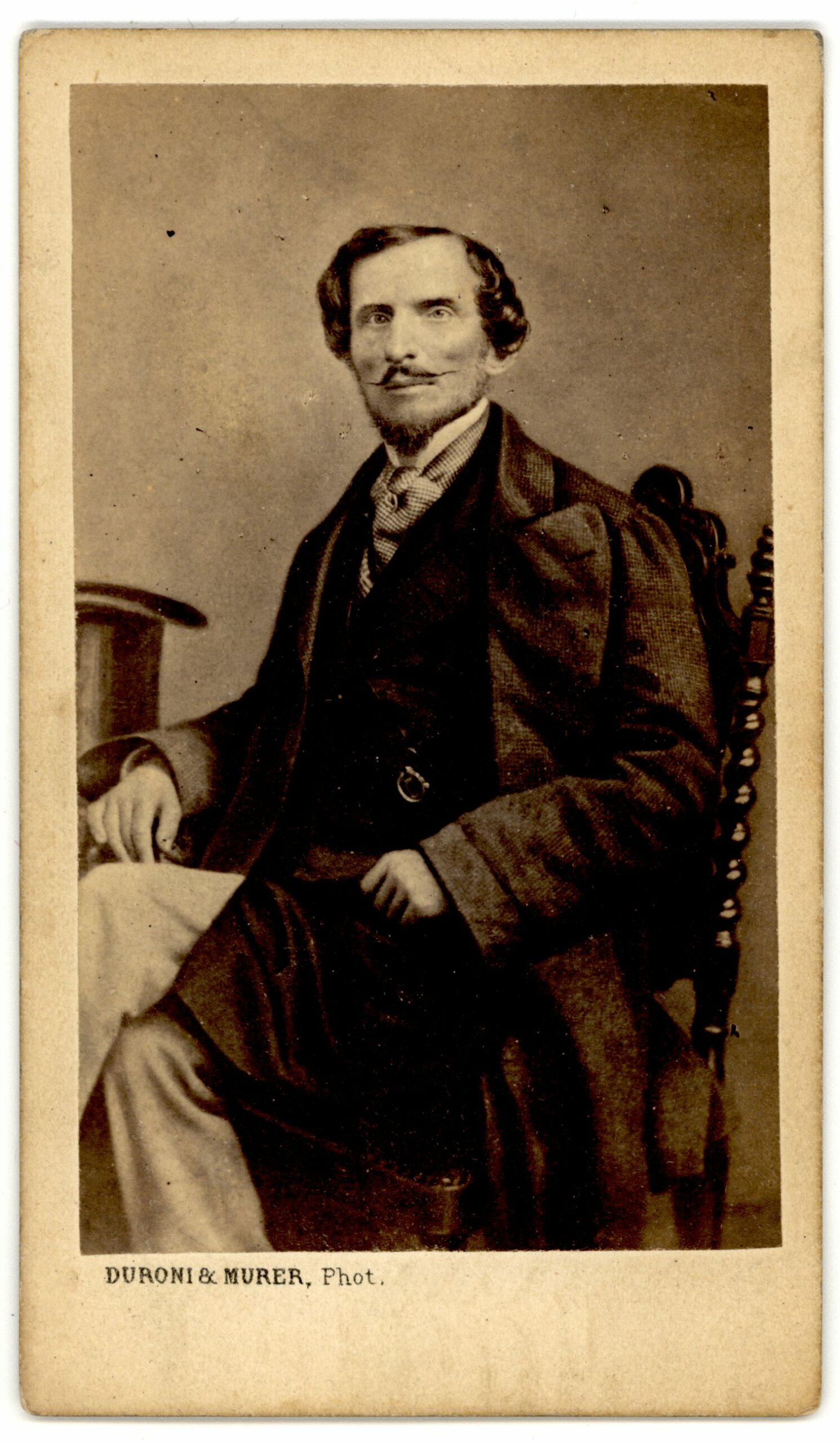
Bettino Ricasoli is a name that resonates with the history of Italy, particularly in the context of its unification in the 19th century. Known as the “Iron Baron,” Ricasoli was a pivotal figure in the Risorgimento, the movement that led to the unification of Italy. His life, marked by political ambition, intellectual rigor, and a commitment to the idea of a unified Italy, offers a fascinating insight into one of the most transformative periods in European history. This article delves into Bettino Ricasoli’s life, exploring his early years, rise to political prominence, and the key milestones that defined his legacy.
Early Life and Background: The Formation of an Ideologue
Bettino Ricasoli was born on March 9, 1809, in Florence, Italy, into an aristocratic family with a long history of influence and power. His father, Luigi Ricasoli, and his mother, Elisabetta Peruzzi, ensured that young Bettino received a comprehensive education, focusing on agronomy—a field that would later play a significant role in his life as he managed his family’s vast estates.
Growing up in post-Napoleonic Italy, a country divided into various states and duchies under foreign domination, Ricasoli was deeply influenced by the political ideas of the time. The influence of liberal thinkers, particularly those like Massimo d’Azeglio and Italo Balbo, played a significant role in shaping his views. These ideas, which were rooted in the principles of national unity, independence, and moderate liberalism, would become the cornerstone of his political career.
As a young man, Ricasoli took on the responsibility of managing his family’s estates, which were in a state of financial disrepair. Through his knowledge of agronomy and a deep commitment to the land, he succeeded in revitalizing the estates, demonstrating his ability to manage and reform. This experience not only solidified his reputation as a capable administrator but also reinforced his belief in the importance of applying rational and scientific principles to both agriculture and governance.
Entry into Politics: The Birth of a Statesman
Ricasoli’s entry into the political arena was driven by a growing passion for the ideas of national unity and independence. In 1847, he founded the newspaper “La Patria,” through which he advocated for the unification of Italy under a constitutional monarchy. This period was marked by increasing unrest and demands for reform across the Italian states, and Ricasoli’s voice became one of the leading proponents of moderate liberalism.
During this time, Ricasoli also became closely associated with other like-minded thinkers and political figures, such as Raffaele Lambruschini and Vincenzo Salvagnoli. These relationships helped Ricasoli to build a network of support among the Italian liberal elite, positioning him as a key figure in the burgeoning movement for Italian unification.
Ricasoli’s political activities during the early years of the Risorgimento were marked by a pragmatic approach. Although he initially supported the return of Grand Duke Leopold II to Tuscany, he quickly became disillusioned with Leopold’s pro-Austrian policies. This disillusionment led Ricasoli to withdraw temporarily from active politics, choosing instead to focus on agricultural reforms and the reclamation of the coastal areas of Maremma. However, the events of the 1850s, particularly the growing momentum for Italian unification, drew him back into the political fray.
The Road to Unification: Leadership in Tuscany
The year 1859 marked a turning point in Bettino Ricasoli’s political career. With the outbreak of the Second Italian War of Independence and the subsequent flight of Grand Duke Leopold II, Ricasoli emerged as a key leader in Tuscany. On April 27, 1859, he was appointed Minister of the Interior in the provisional Tuscan government, and shortly thereafter, he assumed the role of Prime Minister.
As Prime Minister, Ricasoli faced the daunting task of navigating Tuscany through a period of political uncertainty. His administration, which was effectively a provisional dictatorship, was focused on achieving the annexation of Tuscany to the Kingdom of Sardinia, which he believed was essential for the broader goal of Italian unification. Ricasoli’s vision of a unified Italy went beyond the regionalism that had dominated Italian politics for centuries. He believed in the creation of a modern nation-state that could stand as an equal among the great powers of Europe.
Ricasoli’s efforts in Tuscany culminated in the successful annexation of the region to the Kingdom of Sardinia in March 1860. This was a significant achievement, as it marked a crucial step towards the unification of Italy. Ricasoli’s leadership during this period demonstrated his ability to combine pragmatic governance with a clear ideological commitment to the cause of national unity.
Ascension to National Leadership: Prime Minister of Italy
Bettino Ricasoli’s most significant contribution to Italian history came in 1861, following the death of Camillo Benso, Count of Cavour, the architect of Italian unification. Ricasoli was appointed as the Prime Minister of Italy, a position he held during a critical phase in the nation’s development.
As Prime Minister, Ricasoli faced numerous challenges, including the integration of the newly unified states into a cohesive national entity and addressing the complex issue of Rome. At the time, Rome was still under the control of the Papal States, and its status was a contentious issue. Ricasoli, a devout Catholic, was committed to resolving the “Roman Question” in a way that respected both the spiritual authority of the Pope and the sovereignty of the Italian state.
One of Ricasoli’s most notable initiatives as Prime Minister was his effort to redefine the relationship between the Italian state and the Catholic Church. He believed in the necessity of establishing a clear separation between church and state, with the church focusing on spiritual matters and the state on temporal governance. In January 1867, he introduced a bill aimed at securing the “freedom of the Church,” which sought to reduce the temporal power of the papacy while ensuring religious freedom. However, this initiative met with strong opposition, both from within the church and from conservative elements in Italian society, leading to his resignation in April 1867.
Despite his relatively short tenure as Prime Minister, Ricasoli’s impact on the early years of the Italian state was profound. His vision of a unified Italy, stretching from the Alps to Sicily, was instrumental in shaping the policies of his successors and in the eventual resolution of the Roman Question.
Later Years and Legacy: The Iron Baron’s Enduring Influence
After stepping down as Prime Minister, Bettino Ricasoli remained an influential figure in Italian politics and culture. He continued to serve as a member of the Italian Parliament until 1870, where he played an active role in debates on key issues facing the young nation.
Ricasoli’s later years were marked by a return to his roots in agronomy and a renewed focus on the development of his family estates. He spent much of his time at the Castello di Brolio, his ancestral home in Gaiole in Chianti, where he devoted himself to improving viticulture and winemaking techniques. Ricasoli is credited with pioneering efforts to improve the quality of Chianti wine, establishing standards that would influence the region’s winemaking practices for generations.
Throughout his life, Ricasoli was known for his stern demeanor and uncompromising principles, earning him the nickname “The Iron Baron.” This characterization reflected his steadfast commitment to his ideals, particularly his belief in the necessity of a unified, secular Italian state. Ricasoli’s legacy is one of intellectual rigor and a deep commitment to the public good, qualities that have left an indelible mark on Italian history.
Bettino Ricasoli passed away on October 23, 1880, at the age of 71, at his beloved Castello di Brolio. His death marked the end of an era, but his influence continued to be felt in the policies and institutions of the Italian state. Today, Ricasoli is remembered as one of the founding fathers of modern Italy, a statesman whose vision and leadership helped to shape the nation during its formative years.
Conclusion: A Visionary Leader and Nation-Builder
Bettino Ricasoli’s life and career are emblematic of the challenges and triumphs of the Italian Risorgimento. From his early days as a reform-minded aristocrat in Tuscany to his leadership as Prime Minister of Italy, Ricasoli’s contributions to the unification and development of Italy were both profound and lasting.
Ricasoli’s commitment to the idea of a unified Italy, governed by principles of constitutional liberalism and secularism, set him apart from many of his contemporaries. His efforts to redefine the relationship between the church and the state, while controversial, were rooted in a deep belief in the need for a modern, rational approach to governance.
As a statesman, Ricasoli demonstrated that the unification of Italy required not only military and political action but also a vision for the future that transcended regional and sectarian divisions. His legacy as “The Iron Baron” endures, not only in the annals of Italian history but also in the continued influence of his ideas on the nation he helped to build.
In the vineyards of Chianti, where Ricasoli spent his later years perfecting the art of winemaking, one can still sense the presence of a man whose life was dedicated to the betterment of his country. His story is a reminder of the power of ideas and the enduring impact of principled leadership.


