
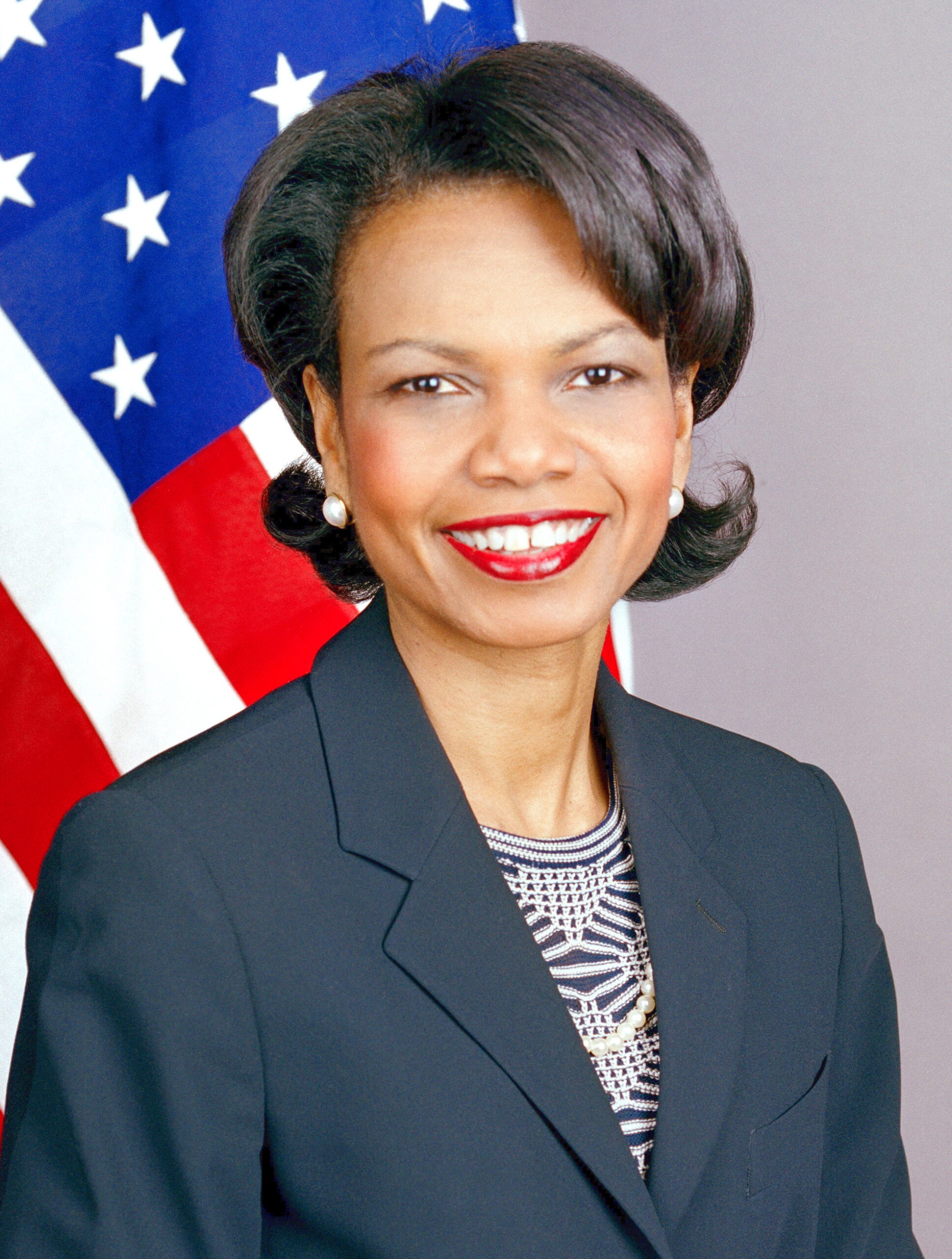
Condoleezza Rice is a towering figure in American history, a woman whose influence has reached far beyond the realms of academia and politics. Known for her sharp intellect, political acumen, and resilience, Rice has been a trailblazer in many aspects of her career, from her academic achievements to her pivotal role in U.S. foreign policy. This article provides a comprehensive look into Condoleezza Rice’s life, exploring her early years, rise to prominence, and the lasting impact of her contributions.
Early Life and Education: The Foundation of a Leader
Born on November 14, 1954, in Birmingham, Alabama, Condoleezza Rice’s early life was shaped by the harsh realities of segregation and racial discrimination in the American South. Birmingham, a city that would later become synonymous with the civil rights movement, was a challenging environment for African Americans, and Rice’s experiences growing up there undoubtedly influenced her worldview.
Rice was the only child of John Wesley Rice Jr., a Presbyterian minister, and Angelena Ray, a schoolteacher. Her parents were deeply committed to her education, instilling in her the values of hard work, discipline, and the pursuit of excellence. The unique name “Condoleezza” was derived from the Italian musical term “con dolcezza,” meaning “with sweetness,” reflecting her parents’ aspirations for her to live a life filled with grace and kindness.
Despite the oppressive environment of segregation, Rice thrived academically. She entered the University of Denver at the age of 15, a remarkable achievement that set the stage for her future success. In 1974, she graduated with a Bachelor’s degree in Political Science, inspired by a course on international politics taught by Josef Korbel, the father of Madeleine Albright, who would later become the first female U.S. Secretary of State.
Rice continued her studies at the University of Notre Dame, where she earned a Master’s degree in Political Science in 1975. She then returned to the University of Denver to pursue a Ph.D. in Political Science, which she completed in 1981. Her doctoral dissertation focused on military and political science, with a particular emphasis on the Soviet Union, which would become a central theme in her later career.
Academic Career: Breaking Barriers at Stanford
Condoleezza Rice’s academic career began in earnest when she joined the faculty of Stanford University in 1981 as an assistant professor of Political Science. Her academic focus on the Soviet Union and international relations quickly earned her a reputation as an expert in her field. By 1987, she had been promoted to associate professor, and by 1993, she became a full professor.
Rice’s contributions to Stanford were not limited to teaching and research. From 1993 to 1999, she served as the university’s Provost, the chief academic and budget officer. This role made her the first woman and the first African American to hold such a high-ranking position at Stanford. During her tenure, she was credited with balancing the university’s budget, a task that required both financial acumen and strong leadership skills.
Her time at Stanford also solidified her reputation as a leading scholar in Soviet and Eastern European affairs. Rice’s insights into the inner workings of the Soviet Union and its satellite states were invaluable during a time of significant global change. Her academic work laid the groundwork for her eventual entry into the world of politics.
Entry into Politics: Shaping U.S. Foreign Policy
Rice’s transition from academia to politics occurred in the late 1980s when she was recruited to serve as an advisor on Soviet affairs to President George H.W. Bush. This was a period of profound change in the world, with the dissolution of the Soviet Union and the reunification of Germany. Rice’s expertise in Soviet and Eastern European affairs made her an invaluable asset to the Bush administration during these tumultuous times.
In 1989, she was appointed Director of Soviet and East European Affairs at the National Security Council (NSC), and later served as the Senior Director for Soviet Affairs. Her role in these positions involved advising the President on key issues related to the end of the Cold War, including arms control negotiations and the reunification of Germany. Rice’s work during this period earned her widespread recognition as a key architect of U.S. foreign policy at a time of global transformation.
The Bush Administration: A Pioneering Role
Condoleezza Rice’s influence in American politics reached new heights when she was appointed as National Security Advisor by President George W. Bush in December 2000. She was the first woman to hold this position, and her appointment marked a significant milestone in the representation of women and African Americans in high-level government roles.
As National Security Advisor, Rice played a crucial role in shaping U.S. foreign policy during one of the most challenging periods in modern history. The terrorist attacks of September 11, 2001, transformed the global security landscape, and Rice was at the forefront of the U.S. response. She was a key figure in the development of the Bush administration’s strategy on the War on Terror, including the invasion of Afghanistan and the controversial decision to go to war in Iraq.
Rice’s tenure as National Security Advisor was marked by intense debate and scrutiny. While she was praised for her decisive leadership, she also faced criticism for the administration’s handling of intelligence related to weapons of mass destruction in Iraq. Despite the controversies, Rice’s influence on U.S. foreign policy during this period was undeniable, and she continued to be a central figure in the Bush administration.
Secretary of State: A Historic Appointment
In November 2004, Condoleezza Rice made history once again when she was nominated by President George W. Bush to succeed Colin Powell as Secretary of State. She was confirmed by the Senate in January 2005, becoming the first African American woman to hold this prestigious position. Her appointment was a significant milestone, not only for her personally but also for the representation of African Americans and women in the highest levels of government.
As Secretary of State, Rice was responsible for overseeing U.S. foreign relations during a time of great global tension. Her tenure was marked by efforts to promote democracy in the Middle East, a central theme of the Bush administration’s foreign policy. Rice was a strong advocate for the spread of democracy as a means of combating terrorism and promoting global stability. However, her tenure also saw significant challenges, including the ongoing conflict in Iraq and the complexities of the Israeli-Palestinian conflict.
Rice’s approach to diplomacy was characterized by her belief in the importance of American leadership on the global stage. She was a proponent of what she called “transformational diplomacy,” which aimed to build and sustain democratic, well-governed states around the world. This approach was not without its critics, but it reflected Rice’s deep commitment to the principles of democracy and human rights.
Post-Political Career: Academia, Business, and Public Service
After leaving the State Department in 2009, Condoleezza Rice returned to Stanford University, where she resumed her academic career. She became a professor of Political Science and also served as the Thomas and Barbara Stephenson Senior Fellow on Public Policy at the Hoover Institution, a conservative think tank based at Stanford. In addition to her academic work, Rice has written several books, including memoirs that offer insights into her time in government and her views on foreign policy.
Rice’s post-political career has also included significant roles in the private sector. She has served on the boards of several major corporations, including Chevron, where she had previously worked as a consultant. Her experience in both the public and private sectors has made her a sought-after speaker and advisor on issues ranging from international relations to corporate governance.
In addition to her work in academia and business, Rice has continued to engage in public service. She co-founded the Center for a New Generation, an after-school academic enrichment program for underserved youth, demonstrating her ongoing commitment to education and social justice. Rice has also been involved in various initiatives aimed at promoting global democracy and security.
Legacy and Impact: A Trailblazer in Every Sense
Condoleezza Rice’s legacy is one of breaking barriers and challenging norms. Throughout her career, she has consistently shattered glass ceilings, becoming the first woman, the first African American woman, and often the first African American to hold various high-profile positions in academia and government. Her achievements have inspired countless individuals, particularly women and minorities, to pursue careers in fields where they have been historically underrepresented.
Rice’s influence extends far beyond her individual achievements. She has played a pivotal role in shaping U.S. foreign policy during some of the most critical moments in recent history. Her work during the end of the Cold War, her leadership in the aftermath of 9/11, and her efforts to promote democracy around the world have left an indelible mark on global affairs.
Moreover, Rice’s commitment to education and public service underscores the breadth of her contributions. From her work in academia to her efforts to improve educational opportunities for underserved communities, Rice has demonstrated a deep commitment to using her influence and resources to effect positive change.
Conclusion: A Life of Service and Leadership
Condoleezza Rice’s life and career are a testament to the power of determination, intelligence, and a commitment to public service. From her early years in segregated Birmingham to her role as one of the most influential figures in U.S. foreign policy, Rice has consistently demonstrated an unwavering dedication to her principles and her country.
Her journey is not just a story of personal achievement but also a reflection of the progress that has been made in the United States regarding race and gender equality. While challenges remain, Rice’s career serves as an example of what is possible when barriers are challenged and opportunities are seized.
As Condoleezza Rice continues to contribute to academia, business, and public discourse, her legacy as a trailblazer, leader, and public servant remains secure. She stands as a reminder of the impact that one individual can have on the world and the importance of striving for excellence in all endeavors.


